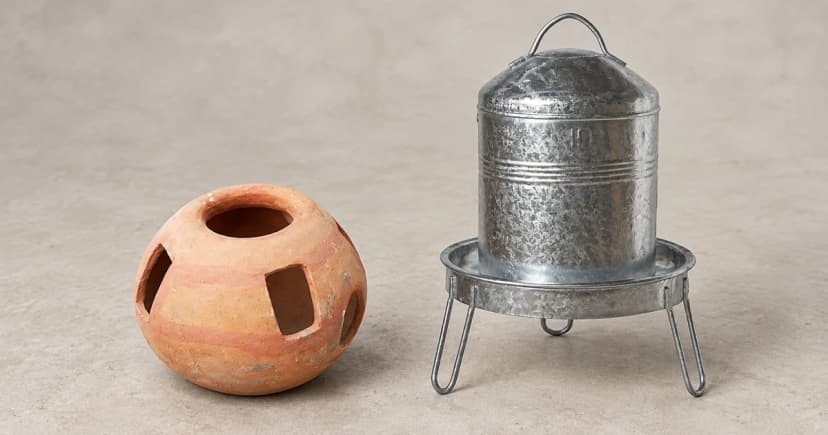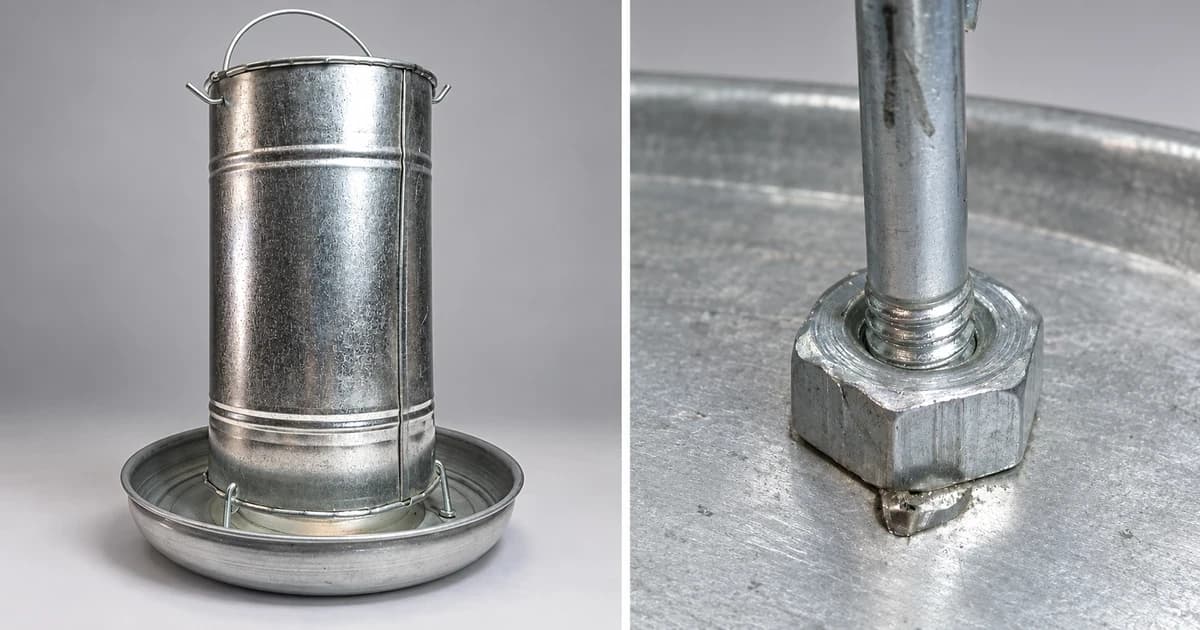
Choose a chicken feeder by matching its permitted feed forms and target birds to your flock, comparing the widest pan or port footprint alongside the hopper capacity, and verifying the exact refill, hanging, and cleaning requirements before purchase. A large pound rating on a hopper label answers only how much feed the cylinder holds under test conditions—you also need floor or hanging clearance for the tray around it and an unobstructed route to open, fill, and clean every removable component.
Build a side-by-side shortlist before comparing listings: record the feed texture you serve, your sheltered floor or overhead hanging clearance, the widest footprint of the tray or ports, what accessories are included in the box, and how each part detaches for washing.
Side-by-Side Feeder Comparison Card: Cited Models vs. Your Candidate
Instead of scattering capacity, pan width, and hanging rules across separate notes, keep each model's exact specifications locked to a single row. Rated capacity is a storage figure only—never treat it as a daily portion calculation, a universal bird-count formula, or the number of days a flock can be left unattended:
| Comparison Field | Omlet No Waste Chicken Feeder (Non-Smart Family) | Miller Hanging Metal Poultry Feeder (12 / 30 / 40 lb) | Your Candidate Feeder (To Verify) |
|---|---|---|---|
| Exact Model & Size Variant | Omlet non-smart No Waste Chicken Feeder (electronic smart feeder is a separate family with its own rules) | Miller Manufacturing Hanging Metal Poultry Feeder — 12 lb, 30 lb, and 40 lb variants | Record exact brand, model name, and capacity variant |
| Permitted Feed Forms & Target Birds | Adult chickens only (not recommended for chicks or other poultry); permits crumble, scratch, and pellets; excludes particularly dusty feeds, wet or fermented food, and grit | Dry poultry feed (verify specific feed-texture flow and bird-size compatibility on the selected variant sheet) | Confirm allowed feed textures (crumble, pellet, mash) and target bird age/species |
| Rated Capacity (Storage Only — Not Unattended Days) | Check exact hopper volume on the selected variant sheet; never convert capacity into unattended days | 12 lb, 30 lb, or 40 lb rated hopper capacity (does not establish actual loaded weight, daily ration, or days between checks) | Record stated capacity and any fill-line limit |
| Tube vs. Widest Pan / Port Footprint | Port-access cylindrical housing (verify overall width and port approach clearance on product sheet) | 40 lb variant: 11-inch-diameter tube and 17-inch-diameter pan (12 lb and 30 lb variants have their own dimensions) | Measure the widest tray, rain hood, or port extension—not just the tube diameter |
| Refill Channel & Overhead Clearance | Top-fill lid access; requires overhead clearance to open lid and lift internal components | Open top tube loading (verify clearance to lift optional cover or remove hanging unit if refilled off-hook) | Check whether refilling happens in place or requires unhooking and lifting |
| Explicit Hanging & Placement Rules | Sheltered position avoiding rain from any direction and excessive direct sunlight; hang only with Omlet's purpose-designed strap on approved support—never hang directly from run mesh | Includes a metal hanging handle; handle presence alone does not verify an arbitrary hook, chain, or overhead rafter rating | Verify approved floor stand, post mount, or rated overhead support structure |
| Included Hardware vs. Separate Purchases | Check exact bundle contents on listing (strap or stand options vary by kit) | Hanging handle included; cover is sold as a separate purchase | List included lid/cover, hanging strap, chain, or anti-roost guard separately |
Identify the Exact Feeder and Its Permitted Feed Forms
Omlet's non-smart No Waste Chicken Feeder support page permits crumble, scratch, and pellets, while excluding particularly dusty feeds, wet or fermented food, and grit. That support documentation identifies this family for adult chickens and does not recommend it for chicks or other poultry. Its care directions belong strictly to that non-smart family; an electronic smart feeder requires its own model-specific instructions.
Use this distinction to verify mechanical compatibility before buying. Confirm the exact model name and permitted feed textures before assuming a covered port feeder, an open trough, or a gravity tube can handle wet mash, grit, or chick starter interchangeably.
Read the Capacity Label Beside the Pan and Tube Dimensions
Miller Manufacturing's Hanging Metal Poultry Feeder lists 12-, 30-, and 40-pound versions, with separate tube and pan measurements on its larger variants. Specifically, the 40-pound version pairs an 11-inch-diameter tube with a 17-inch-diameter pan, includes a hanging handle, and identifies the cover as a separate purchase.
Always record the selected variant's rated capacity, widest pan diameter, and included vs. optional hardware on the same line. Planning floor or hanging clearance from an 11-inch tube diameter alone leaves out the 17-inch feeding pan extending around the base.
A rated weight in pounds does not establish how much usable feed you loaded, a daily portion size, or how many days you can leave a feeder unattended. Check what the stated capacity refers to, follow any fill-line limits, and schedule daily flock checks independently of hopper size.
Compare Feeding Access as Well as Storage Space
An open circular pan and hooded individual feeding ports create different bird spacing around the unit. Do not confuse a lid's locking-tab count with a feeding-port count, and note that the equipment documentation reviewed here does not establish a single universal number of chickens per feeder.
Mark both the widest equipment footprint and the bird approach ring on your coop or run floor plan so nearby walls, framing posts, and waterers do not block half the feeding perimeter.
Separate the bird access ring from your own handling path. You need overhead and side clearance to lift the cover, pour feed into the top opening, and remove the unit for cleaning without hitting a low roost bar or coop roof.
Check Placement and Refill Access Before Choosing a Mount
Omlet recommends placing its non-smart feeder in a sheltered spot that avoids rain from any direction and excessive direct sunlight. For hanging setups, its instructions specify using Omlet's purpose-designed strap and approved support arrangements, and explicitly do not permit hanging the feeder directly from run mesh.
Do not mix mounting rules across brands. A metal hanging handle on a Miller feeder does not turn wire run mesh or an unrated hook into an approved support point, and Omlet's strap rules apply specifically to Omlet's non-smart feeder family. Check whether refilling happens while the feeder stays hung or requires lifting the full unit down.
Inspect the Care Route While Comparing Designs
The University of New Hampshire Extension's equipment guidance discusses round metal hanging feeders and troughs and emphasizes choosing a cleanable design—making disassembly and wash access a core purchase criterion alongside capacity and shape.
Omlet's non-smart instructions describe taking the feeder apart to clear accumulated dust, hosing the components or wiping them with a soft cloth, and drying every part completely before adding fresh feed. Keep those washing permissions attached to that non-smart family rather than applying them to motorized or electronic feeders.
Use your completed comparison table—permitted feed forms, rated capacity, tube vs. widest pan footprint, refill clearance, mounting support, and cleaning access—when browsing the poultry feeders and waterers category so every requirement is verified against the exact variant before setup.