

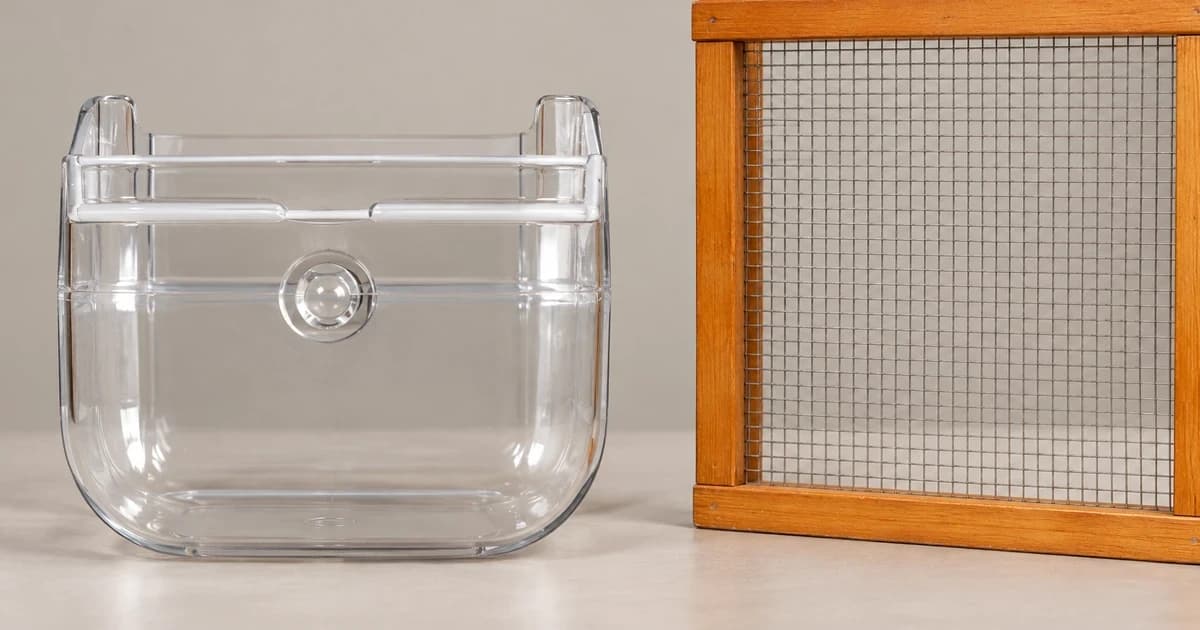
Knowing how to clean bird food and water dishes safely starts with separating the removable food or water container from the holder or bracket that anchors it to the cage. A dish that is approved for hand washing or a specific dishwasher cycle does not make its wire bracket, central cage mount, or wooden support washable by the same method. Complete the job in three distinct stages: clear organic residue from each removable part using its permitted cleaning method, dry all rims and seams, and verify that the container seats securely back into its holder before refilling.
This guide walks through that component-by-component workflow using the documented Omlet Geo feeder and drinker alongside standard cage cup-and-holder stations, and connects daily dish care to when you clean a bird cage as a whole.
Follow the four-stage dish removal, cleaning, and refit workflow
When checking how to clean bird food water dishes, treat removal, component washing, drying, and mechanical refitting as separate checkpoints. A dish that looks clean on the inside can still spill or trap moisture if its lid, insert, or holder seating is skipped.
Compare component permissions: Omlet Geo example and general stations
In the Omlet Geo feeder and drinker design, the food and water containers rest inside the central feeding unit without clips so they lift straight out for emptying and washing. By contrast, many wire-mounted stainless or plastic cups use a twist-lock tab, spring door, or bolt-on ring holder that must be released first rather than pulled by force.
Omlet's Geo Bird Cage support centre states that the Geo plastic parts—including the feeder, drinker, and bird bath—can be washed in a dishwasher up to a stated limit of "60 degrees" (note that the FAQ text writes "60 degrees" without specifying Celsius or Fahrenheit on the page, so keep machine temperatures conservative or wash by hand if your appliance scale is uncertain). That dishwasher allowance applies only to the Geo plastic parts, never to cage wire mesh, wooden perches, or other brands' dishes.
| Feeding station component | Removal & disassembly check | Permitted cleaning method & boundary | Drying & refit inspection |
|---|---|---|---|
| Omlet Geo food container & drinker | Lifts directly out of the central unit without clips; separate any removable top cover before washing | Dishwasher permitted for Geo plastic parts within the stated "60 degrees" limit, or hand wash to clear organic food and water residue | Check inner lip and seating base for trapped hulls; dry and seat flush in the central support before refilling |
| Omlet Geo central support & cage mesh | Inspect whether the central holder remains mounted or detaches per the cage manual; do not force fixed bar fittings | Follow cage frame care rather than applying the plastic dish's dishwasher cycle to metal mesh or structural fittings | Confirm the support sits level on the cage frame so returned containers cannot tip |
| General removable cup, reservoir, or lid | Release any twist tab, bail wire, or anti-throw latch before lifting the bowl out of its ring | Use only the washing method permitted for that specific material (stainless steel, ceramic, or graded plastic) | Inspect rim seams and gasket grooves; verify all detergent and moisture are removed |
| Fixed ring holder, bracket, or wood mount | Leave fixed brackets in place unless routine removal is specified; never pry hardware attached to cage bars | Wipe or clean according to bracket material limits; never soak untreated wood supports or unrated hardware | Verify clamp washers and ring locks hold the refitted bowl securely without wobble |
Distinguish organic residue removal from visual appearance
RSPCA Australia's enclosure guidance explains that the goal of cleaning feeding equipment is removing organic material, and emphasizes that dish materials must suit the bird species. A quick rinse that leaves a slick biofilm inside a water drinker or damp seed paste under a rim lip does not count as completed cleaning—nor does visual cleanliness replace veterinary disinfection protocols when those are separately required.
Empty leftover hulls, wet pellets, or water first, then wash accessible food-contact surfaces and outer seating ridges using the method approved for that part. If food residue is trapped inside a narrow drinker channel that you cannot reach without prying apart a sealed joint, take that container out of service rather than improvising an unapproved chemical soak or forcing sealed plastic apart.
Verify the refit before adding food or water
Return each dry component to its station using the exact seating or latching sequence. On an unclipped central station like the Geo feeder, confirm the base rests flat and level in the holder; on a ring-mounted cup, verify the retaining tab or anti-tip lock engages completely. When comparing replacement bowls in our bird food dishes category, review both how the container detaches for daily washing and how its holder secures to your cage bars.