

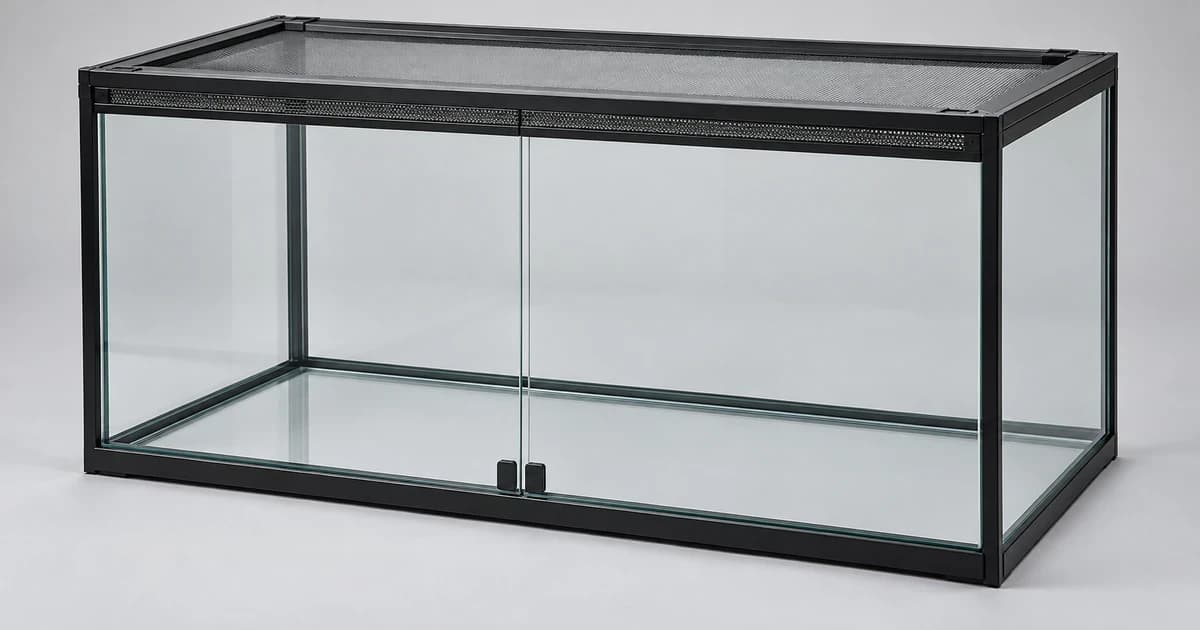
To clean a reptile tank safely, separate three distinct jobs—removing visible animal waste, treating mineral marks on a glass or plastic panel, and disinfecting the habitat—and match each job to the enclosure material, the exact product label, and your reptile's species care rules. A glass-cleaner gel sequence never substitutes for whole-tank disinfection, and CDC wastewater and sink boundaries apply before you carry any reptile supply to a tap.
Start by identifying which of the three jobs you are doing today rather than running a single generic scrub routine:
Choose the Cleaning Job Before Choosing a Product
Use this three-row selector to match your task to the required documentation before touching the enclosure:
| Your Intended Job | What to Identify First | Documentation to Have Ready |
|---|---|---|
| 1. Remove visible daily waste | The soiled spot, substrate type, or removable decor piece | Your species' husbandry guide (e.g., immediate spot-cleaning per the RSPCA bearded dragon guide) and the item's material rules |
| 2. Address a mineral mark on a panel (See Mineral stains only — PT2668 example) | The panel material (glass, plastic, or coated surface) and the mineral/calcium deposit | A mineral-stain product permitted for that exact panel (such as the Exo Terra PT2668 mineral-deposit gel box below) and its rinse/dry steps |
| 3. Disinfect an item or full enclosure | The exact enclosure/decor material and the reptile-safe disinfectant bottle | The disinfectant's complete label (preparation, dilution ratio, contact time, thorough rinsing, and drying before animal return) |
Keep these three tasks separate in your maintenance log: a watermark that remains after spot-cleaning is a panel-stain question rather than a reason to mix stronger disinfectants, and a crystal-clear glass pane after mineral-gel treatment is an appearance observation—never proof of disinfection.
Choose a Cleanup Location Before Carrying Supplies There
The US CDC's reptile and amphibian guidance warns that reptile habitats and accessories can carry germs such as Salmonella even when the animal looks healthy and clean. Never wash reptile bowls, decor, or tank parts in kitchens or anywhere human food is prepared, stored, served, or eaten.
The CDC advises washing reptile supplies outdoors whenever possible—away from gardens and food or drinking-water sources. If outdoor washing is not practical, use a laundry sink or bathtub, and thoroughly clean and disinfect the bathtub afterward before anyone else uses it. Pour tank water and habitat wastewater down the toilet rather than kitchen or bathroom sinks or drains, and wash your hands with soap and running water right after handling equipment.
Check the Exact Surface and Complete Product Label
Identify your enclosure's brand, model, and the specific surface you are touching: glass pane, silicone corner seal, foam/resin 3D background, substrate mat, or light fixture guard. Check the product label in your hand for surface restrictions, dilution ratios, contact times, and rinsing requirements before applying any liquid.
Mineral Stains Only — Exo Terra PT2668 Example (Not Whole-Tank Cleaning or Disinfection)
When your specific goal is removing hard-water calcium or lime deposits from a smooth terrarium pane, keep the product identity, surface limits, and non-disinfection boundary locked inside one procedure:
Mineral stains only — Exo Terra Terrarium Glass Cleaner PT2668 example: Exo Terra describes PT2668 specifically as a mineral-deposit gel for calcium and lime stains on glass, plastic, or other smooth surfaces, with this five-step sequence:
- Apply (mineral stains on listed smooth surfaces only): Apply the Exo Terra PT2668 gel with a paper towel or dry, clean cloth onto the listed glass, plastic, or smooth panel.
- Wait: Leave the gel on the mineral stain for a few minutes.
- Work the stain: Rub the calcium or lime mark lightly with a clean cloth in a circular motion from the outside of the stain toward its center.
- Rinse and dry: Rinse the treated panel thoroughly with water and wipe dry with a clean cloth.
- Repeat if needed: Repeat the sequence if stubborn mineral deposits remain.
Mandatory scope boundary for PT2668: This gel procedure addresses calcium and lime marks on smooth panels only—it does not disinfect the reptile tank, does not authorize applying gel to sculpted foam backgrounds, silicone seals, or electrical fittings, and does not establish permission to apply cleaner with the reptile inside the enclosure.
Keep a Species-Specific Schedule Attached to Its Source
The RSPCA's bearded dragon care guide (for Pogona vitticeps) advises spot-cleaning waste as soon as it appears and cleaning the vivarium once a month with a reptile-safe disinfectant followed by thorough rinsing. Keep that monthly schedule tied strictly to the RSPCA's Pogona vitticeps vivarium guidance rather than treating it as a universal calendar for amphibians, high-humidity tropical terrariums, or bioactive enclosures.
Finish With a Record of What You Actually Did
Log the exact surface, product, and result after each maintenance task so nothing is left to guesswork:
| Record Field | Useful Detail to Log | Keep Open When Unverified |
|---|---|---|
| Item and surface | Enclosure model and the exact part cleaned (e.g., front glass pane vs. floor tray) | Unidentified panel coating, background finish, or sealant material |
| Product and instructions | Exact product name/code (e.g., PT2668 mineral gel vs. named reptile disinfectant) and steps followed | Any unstated dilution ratio, contact time, or surface permission |
| Observed result | Visible waste cleared, calcium mark removed, or remaining stain location | Assumptions about pathogen sterility based only on clear-looking glass |
| Next action | Specific surface, product-label, or species-husbandry check needed before the next maintenance step | Any future chemical treatment whose dilution or rinsing rules are incomplete |
You can compare equipment specifications across Pawlivy's glass terrariums and terrarium cleaners categories alongside our editorial policy.