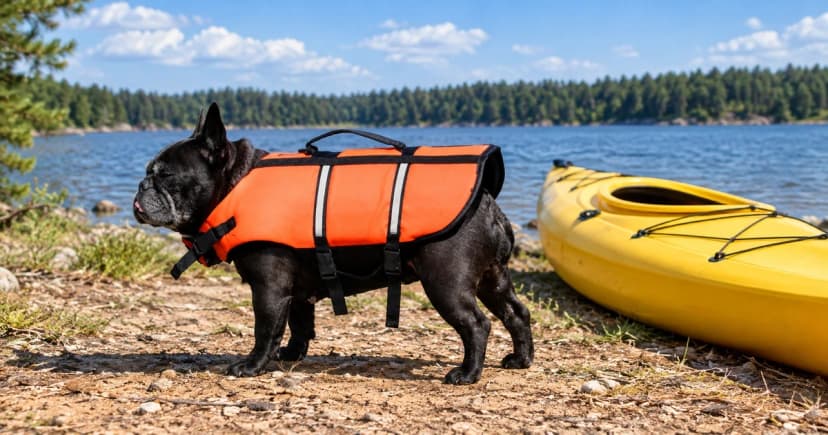
Clean a dog life jacket while it is off your dog by following the exact washing instructions on its care label, air-drying both the inner lining and overlapping strap folds completely, and inspecting every buckle, seam, and flotation panel before the next swim. Washing dirt or salt off the outer shell is separate from checking hardware integrity: a clean dog life jacket still requires intact webbing, secure clasps, and undamaged closed-cell flotation foam.
Inspect the Whole Vest Before Washing
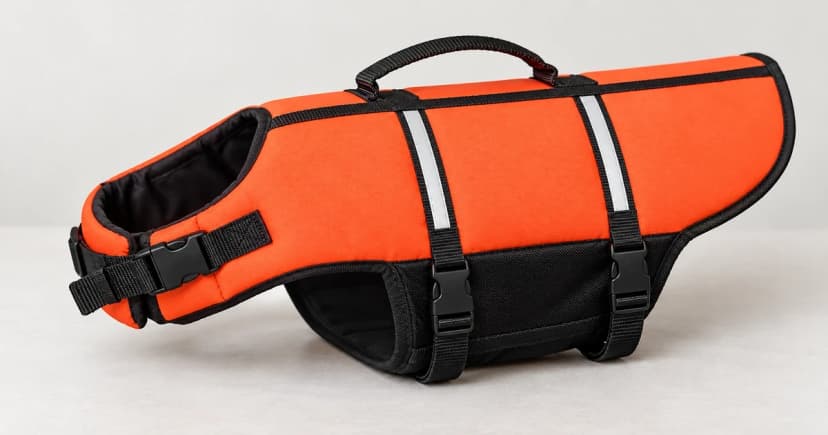
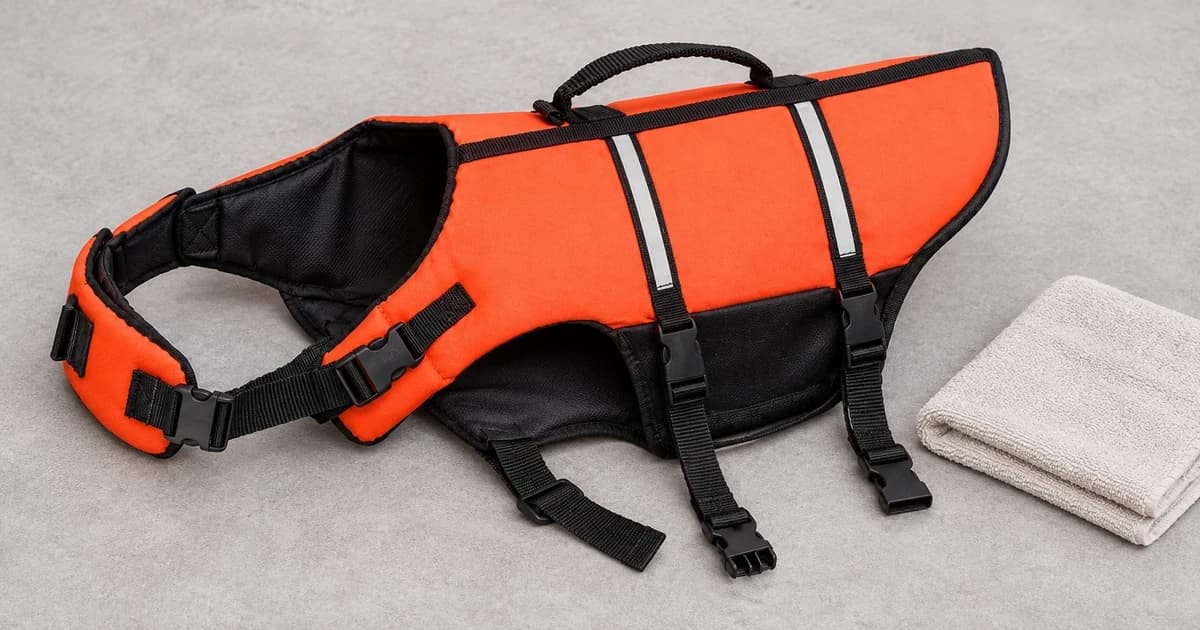
Examine the outer shell, accessible inner belly and chest lining, webbing straps, quick-release buckles, D-ring, and stitching before wetting the vest. Set any torn or damaged vest aside immediately. Never cut stitching, pry open a sealed panel, or remove internal flotation foam to make washing or drying easier.
Use the Labeled Hand-Washing Method for Your Exact Model
Keep each manufacturer's hand-washing rule attached to its specific dog life jacket model rather than assuming every vest tolerates the same soap or cycle:
- Ruffwear Float Coat Dog Life Jacket: Ruffwear's care instructions specify securing the fasteners first, hand washing the Ruffwear Float Coat with mild detergent, and air drying it; do not bleach, iron, or dry clean the Ruffwear Float Coat.
- Outward Hound Granby Splash Dog Life Jacket: Outward Hound's care instructions specify hand washing the Outward Hound Granby Splash with warm water and mild soap followed by air drying, and explicitly state to remove and replace the Outward Hound Granby Splash if damaged.
Never assume a removable inner flotation layer on another vest design (such as certain multi-layer jackets) means you can detach the lining on a Ruffwear Float Coat or Outward Hound Granby Splash. Always follow the sewn care tag on the specific jacket you own.
Air-Dry the Accessible Lining and Strap Overlaps
Check the accessible interior lining and the doubled-over webbing at buckles and hook-and-loop tabs separately from the outer fabric (`Figure 1` below). Keep the vest out of storage and off your dog while any accessible lining panel or strap fold remains damp—a fast-drying nylon or polyester outer shell never proves that the belly lining or webbing overlaps underneath have finished drying:
Keep the life jacket off your dog throughout washing and air-drying. Never use the top rescue handle to suspend a waterlogged vest from a sharp hook or to improvise a weight-hanging strength test.
Inspect Closures and Seams Again Before Reuse
Once every accessible surface is dry, re-inspect the buckles, hook-and-loop closures, stitching, and strap routing. Hand washing never repairs cracked buckles or compressed flotation foam—retire and replace a damaged vest per its safety instructions.
Before heading back to the water, review how to fit a dog life jacket and planning life-jacket use, or compare documented designs in Pawlivy dog life jackets.