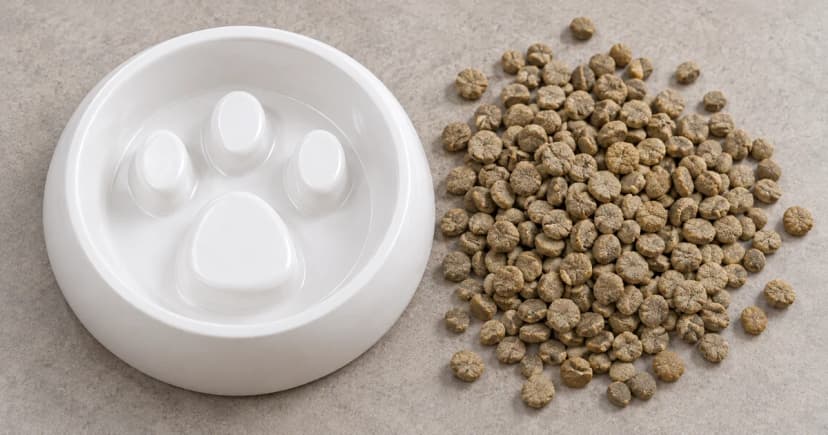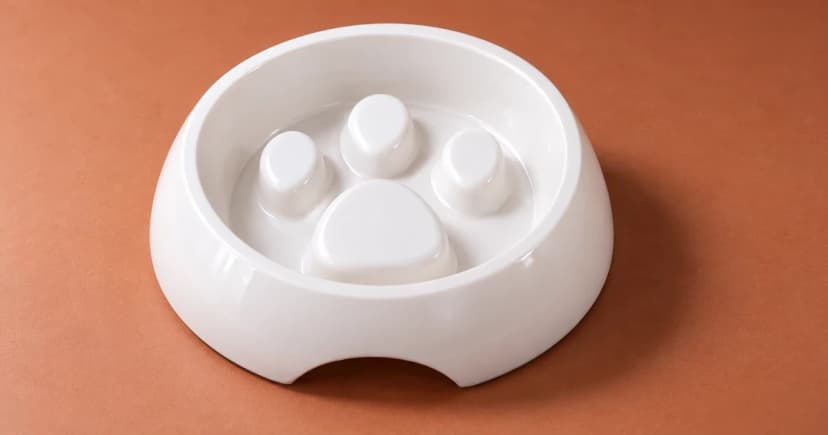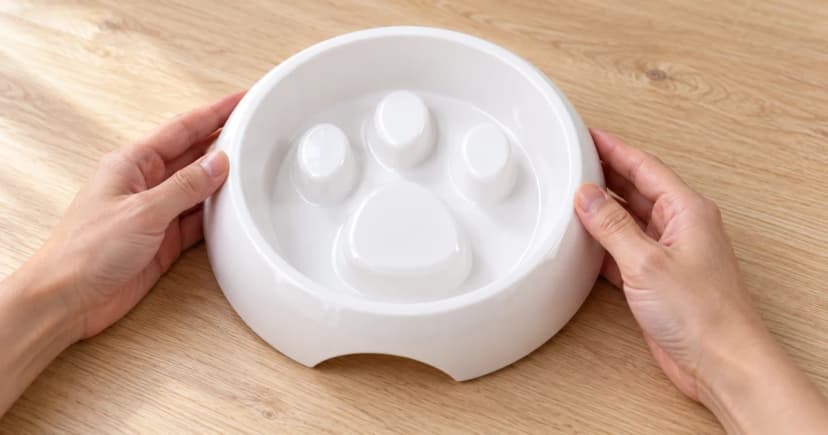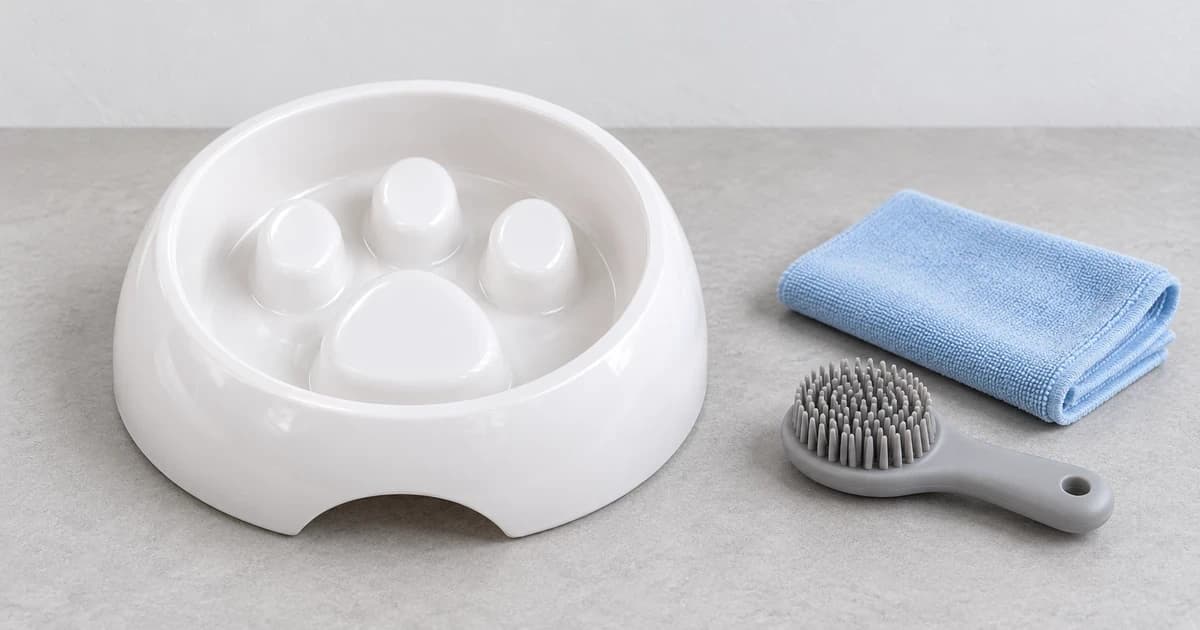
Clean a slow feeder bowl using the exact washing method permitted for your model, work the approved sponge or brush into the narrow recesses around every raised ridge, and complete the full drying stage before stacking or storing the bowl. Wiping only the outer rim leaves food residue in the interior channels, and a visible seam or suction base is never automatic permission to pry the bowl apart.
No single dishwasher rack, heat setting, or disassembly rule applies to every slow feeder. Each named example below reflects that specific model's published care instructions rather than a universal procedure for unidentified bowls.
Identify Which Parts the Washing Instructions Cover
Check the exact model name and construction before washing. Note whether the raised maze ridges are molded as one piece with the bowl, whether a removable insert sits inside a separate outer frame, and whether the brand's care sheet identifies any detachable base. A rubberized ring, visible seam line, or suction foot is not permission to pull the base off by force.
When a slow feeder uses a removable insert inside another host bowl, check the care rules for both pieces separately—permission to dishwasher-wash a silicone insert does not establish how to wash the outer vessel. Our slow feeder selection and setup guide covers bowl geometry, portion capacity, and feeding access; here the focus is strictly post-meal cleaning, inspection, and drying.
A Documented Example: Clean the Recesses and Finish Drying
Super Feedy's cleaning article outlines a five-step routine for its Small 4-in-1 system:
- Rinse the bowl with warm water right after a meal to loosen remaining food.
- Apply the brand's specified mild washing product with a soft sponge or silicone brush along the internal ridges and maze patterns.
- Inspect the tight corners, base, and suction edges for trapped residue. This step is a visual check of reachable surfaces—not an instruction to dismantle the suction base.
- When using a dishwasher for this system, place the named bowl and reversible lick mat on the top rack.
- Allow the washed pieces to air-dry completely with open airflow before stacking or storing them, with the lick-mat side facing outward during storage.
Keep those steps attached to the Super Feedy Small 4-in-1 system; they do not establish a brush type, detergent, or dishwasher rule for an unrelated slow feeder.
Whenever your bowl's care sheet permits hand washing, guide the approved soft sponge or brush directly into the channels and intersections between the raised obstacles rather than scrubbing only the outer wall. Never use a knife, metal scraper, or prying tool to dig into a tight recess or seam.
Keep Dishwasher Placement and Inversion Specific to the Model
The Outward Hound medium Fun Feeder Notch care instructions permit top-rack dishwasher cleaning on a low-heat setting, state not to microwave the feeder, and instruct owners to remove and replace the bowl if damaged. Read “dishwasher safe” together with its exact rack and heat restrictions rather than using a high-heat bottom-rack cycle.
The LickiMat Australia Wobble product page supplies a construction-specific instruction for its flexible reversible bowl: it is dishwasher safe and should be inverted when washing. That inversion step belongs only to the LickiMat Wobble's flexible design—never try to invert a rigid plastic bowl, bend a stiff maze insert, or pry off a fixed base.
Store each bowl's care sheet reference with its model name. If your dishwasher lacks the specified low-heat top-rack setting, use the bowl's documented hand-washing routine instead. Neither Outward Hound's low-heat rule nor LickiMat's inversion rule establishes a universal drying temperature, cycle duration, or disassembly method.
Inspect the Recesses and Resolve Anomalies Before Storage
After completing the permitted wash and rinse, inspect every narrow valley, corner join, and base edge under good light. Use the four-row decision table below whenever you encounter leftover residue, an unreachable seam, surface damage, or missing drying rules:
| What You Find During Post-Wash Inspection | Next Decision (Model-Dependent Action & Stop Boundary) |
|---|---|
| Visible food remains in a recess | Return to the exact item's permitted cleaning method and work the approved soft brush or sponge into the recess; do not cover old residue with the next meal. |
| A seam or base cannot be reached | Stop any further disassembly immediately: do not pry or force the seam apart. Record the exact model and seam location, and check the brand's official care sheet or product support channel to confirm whether that base is fixed or detachable and which cleaning step is permitted. |
| Damage or a loose component | Follow the exact model's retirement or replacement rule (such as Outward Hound's remove-and-replace instruction if damaged) rather than gluing, trimming, or improvising a repair. |
| Drying instructions are missing | Pause before stacking, enclosing, or applying heat: verify the exact component's required drying orientation and completion criteria on the brand's official care sheet, and rely on open air-drying until every recess is visibly dry rather than guessing a number of minutes or adding extra heat. |
Absence of visible food residue confirms only what you can see—it does not establish microbiological sterility, and a dry-looking outer rim does not prove that deep inner channels or underside cavities are dry. Always complete the drying stage before stacking or enclosing the feeder, and never invent a fixed drying time in minutes or apply unapproved heat.
When comparing options in slow feeder bowls or the broader feeding equipment collection, verify that the product documentation specifies which parts detach, which brushes or detergents are allowed, and how the bowl should be washed and dried.