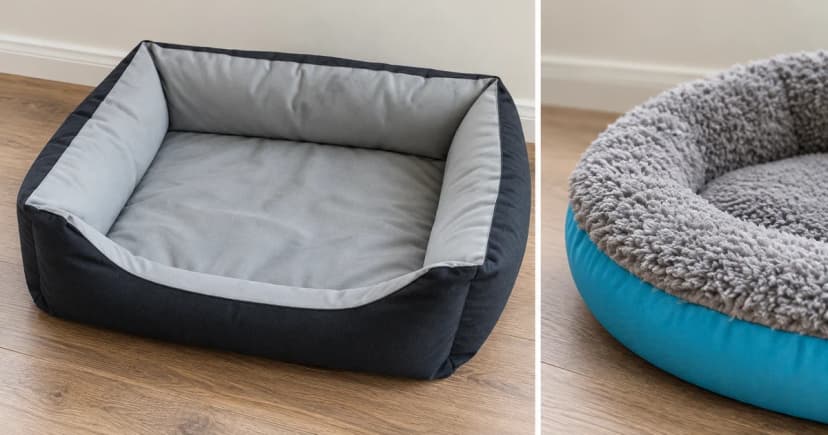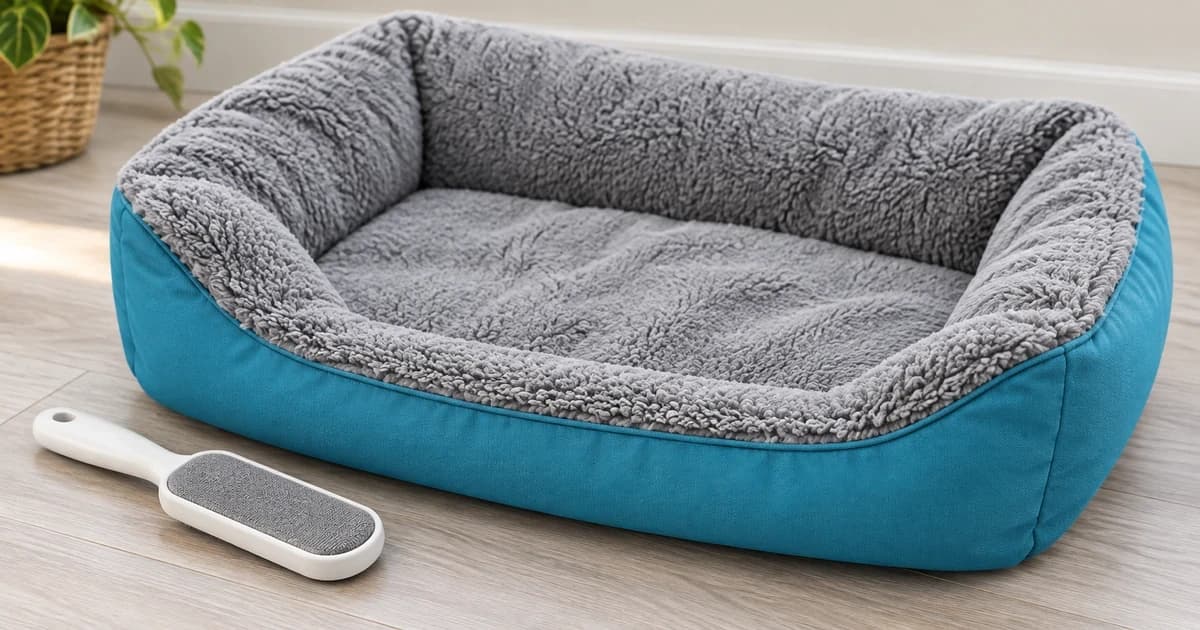
To clean a dog bed without a removable cover, first find out whether the maker permits washing the complete bed. A sewn cover can belong to a machine-washable filled bed, a surface-clean-only design or a bed whose care method is still unresolved. The missing zipper does not settle that question.
Keep the bed out of use while you check its exact instructions. Remove loose debris using a method suitable for the fabric, then follow the permitted cleaning and drying route. Do not turn an unknown filled bed into a washable one by cutting a seam or assuming that hand washing is harmless.
Identify the bed before choosing a wash method
Find the label beneath the bed or on an accessible seam. Record the brand, model, size and material information actually supplied. Check that the care instructions describe that version: one product family can include both whole-wash beds and larger designs with removable covers.
Look for an intended opening without forcing fabric apart. A zipper used to access an internal component does not necessarily mean that the outer cover can be removed for washing. Keep the filling, outer fabric, lining and any powered part separate in your notes, even when they normally form one item.
The examples below are manufacturer instructions for named designs. None establishes the care method of another product in Pawlivy's dog-bed category.
| Named design or guide | Boundary to preserve | |
|---|---|---|
| Best Friends by Sheri Cuddle Cup, Deep Dish Cuddler and Pet Throne | The washing guide says these styles have no removable covers and permits a cool, gentle machine wash followed by tumble drying. | That instruction belongs to these named styles. It is not permission to wash every fixed-cover foam or bolster bed. |
| MidWest QuietTime Deluxe Ombré Swirl Pet Bed | The product page describes this polyfiber bed as machine washable and machine dryable. | The page does not specify a wash temperature or cycle. Obtain the item's complete care directions instead of borrowing another maker's settings. |
| K&H heated-bed FAQ | Some indoor styles require removal of the internal warmer before washing; the outdoor example permits washing the removable fleece cover only. | A washable textile part does not authorize washing an electrical warmer or the remaining outdoor bed. |
Read the complete Sheri washing guide, MidWest product instructions and K&H heated-bed FAQ. The Sheri article is dated December 2021 and the K&H FAQ February 2015. Use them to understand the distinction, then confirm the current directions for your actual item.
Choose one of three cleaning routes
Write down the permission before preparing water or detergent:
- Complete-bed washing is explicitly allowed. Follow that bed's temperature, cycle, detergent and drying instructions together. Confirm that the complete item fits the permitted washing equipment and its load instructions.
- Only a stated surface or component may be cleaned. Stay within that procedure. Permission to wipe the exterior or wash one intended removable piece does not extend to immersing the filling.
- Keep unconfirmed parts out of a wash while you resolve those questions.
A bathtub is not an automatic fourth route for a bed that does not fit the washer. Hand washing can wet the same filling as a machine wash. Likewise, a product title saying “washable” leaves unanswered whether that means the cover, cushion or assembled bed.
If there is an internal heater, follow its exact manual for disconnecting and removing the permitted component. Do not pull a cord out through a sewn seam or wet a powered assembly to make cleaning easier. The older K&H examples above do not authorize dismantling another heated design.
Prepare the intact bed without opening its seams
Wait until your dog is elsewhere and provide another resting place. Check the empty surface, underside and seams for loose filling, tears, frayed threads or a fastening that no longer closes. Set aside a damaged bed rather than washing it and assuming the damage has been resolved.
Remove loose hair and debris with a tool the fabric and care directions permit. Use a gentle pass and stop if it snags or pulls the cover. Do not scrape a coated base or work a brush into a weak seam. Loose surface debris and a stain inside the filling are different problems.
For a stain, use only a treatment allowed for that bed and follow the cleaner's directions for the actual material. This guide supplies no vinegar, bleach, baking-soda or soaking mixture. A clean-looking surface does not establish disinfection or show that liquid inside the cushion has been removed.
Keep the drying instruction attached to the wash instruction
Do not assume that air drying is always the gentler choice. Sheri's guide specifically tells owners not to air-dry its shag bed or cover; its named fixed-cover styles have tumble-drying directions. K&H's heated-bed textile examples instead call for line drying. Those instructions apply to different products.
Follow the exact item's drying method without improvising heat or cycle length. Before returning a permitted washed bed, check the thicker sections and seams as well as the exposed cover. A dry surface alone does not confirm that a filled item is ready.
Record the job and recheck before reuse
A short note can contain the actual date, model, cleaning permission, parts kept dry, wash method, drying method and any damage found. Write “surface cleaned; filling not washed” when that is what you did. Do not record the entire bed as laundered after cleaning only one area.
There is no universal wash interval in these three sources. Revisit the bed's condition and the maker's care directions rather than adopting a calendar rule from another model. If replacing the bed, compare explicit care permissions alongside usable sleeping dimensions. A flat or pillow-bed label describes a category, not a washing guarantee.
The Pawlivy editorial policy explains how we use sources.