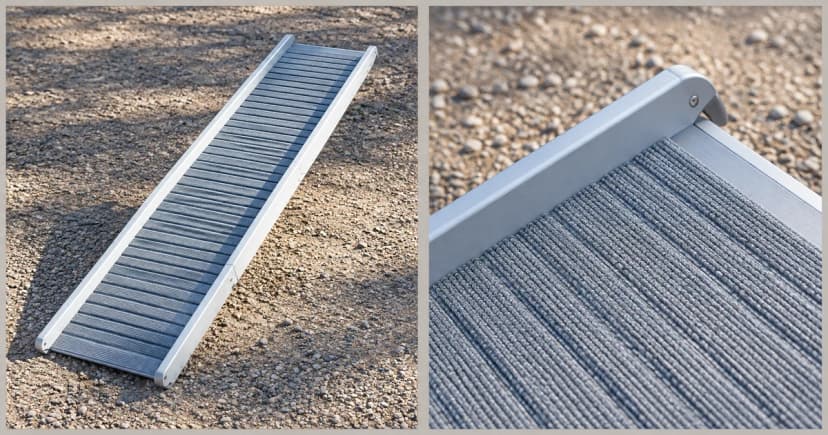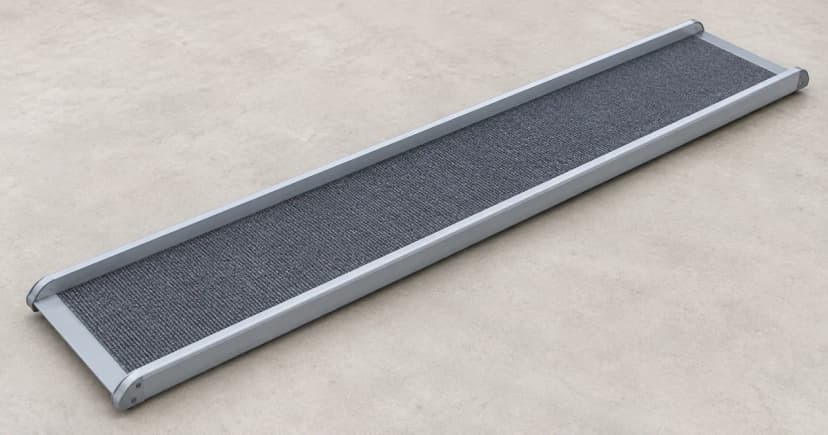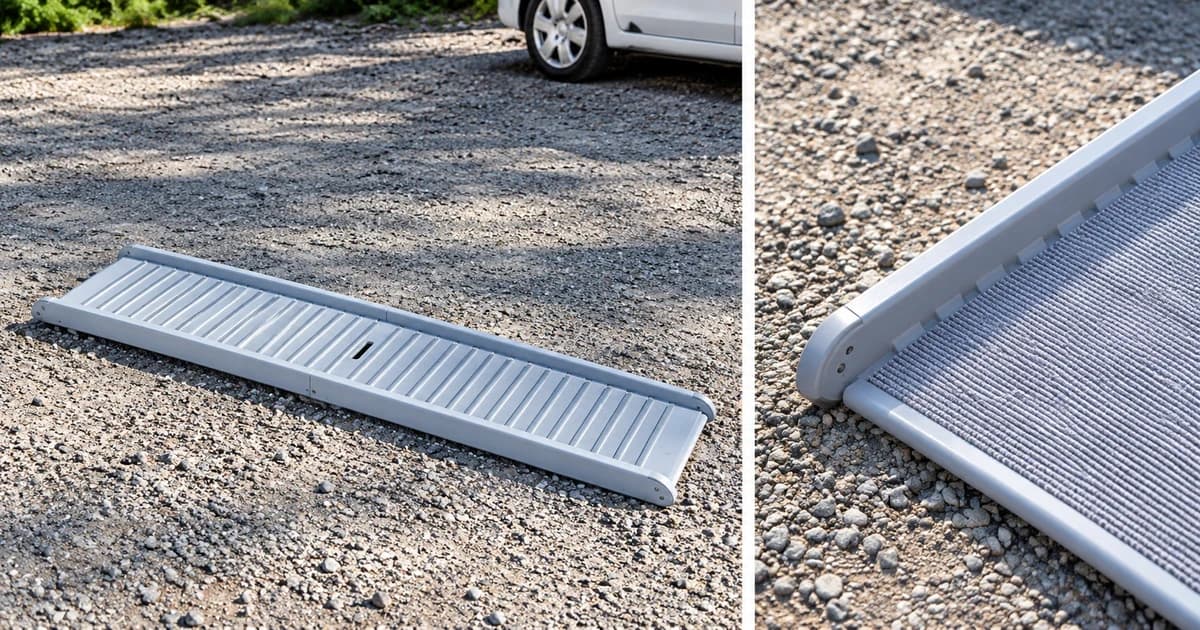
Checking dog car ramp vehicle compatibility takes more than knowing you drive an SUV, truck, or hatchback. To confirm whether a dog ramp for car use actually fits your setup, you have to measure the exact vehicle opening your dog will use—rear cargo bumper versus a side passenger door—and check five physical points together: vertical entry height, upper resting surface, clear ground run-out space, lower foot contact, and whether side-door entry requires a dedicated adaptor.
Universal 5-point vehicle & ground measurement checklist
Before looking at any specific brand, park on level ground and record these five measurements for the exact opening your dog will enter:
| Compatibility field | How to measure or inspect it | Why it changes ramp selection |
|---|---|---|
| 1. Intended vehicle entry point | Choose either the rear cargo opening (top of rear bumper/sill) or a side passenger door (seat cushion edge or floor sill). | A ramp sized for a rear tailgate rarely fits a narrower side-door opening without checking door swing and seat contact. |
| 2. Vertical entry height from ground | Measure straight down from the exact spot where the top lip of the ramp will rest to the pavement (in inches or cm). | Determines both whether the ramp reaches the sill within its rated height range and how steep the walking incline will be. |
| 3. Upper contact & resting lip | Check the depth, angle, and strength of the bumper top, cargo sill, or passenger seat where the upper ramp end sits. | Plastic trim covers, recessed hatches, or soft seat edges may not support a standard rear-bumper lip without a dedicated bracket or strap. |
| 4. Clear ground run-out & foot landing | Measure the flat pavement distance straight out from the bumper or open side door along the ramp's path. | Parking spaces, garage walls, or curbs can block a long ramp from extending or prevent all four rubber feet from sitting flat on stable ground. |
| 5. Side-door adaptor & opening width | Measure the narrowest gap between the open side door and the door pillar, and check if the ramp requires a side-door adaptor kit. | Many rear-cargo ramps cannot rest securely on a side passenger seat unless fitted with a manufacturer-specified clamp, strap, and door hanger. |
Note that while a longer ramp lowers the geometric incline angle at a given bumper height, a trigonometric angle calculation alone does not certify that the upper lip fits your bumper contour or that your dog is comfortable walking the slope.
How one manufacturer's rules work in practice: PetSafe Happy Ride examples
Published support articles from PetSafe illustrate how entry-height ranges, support feet, and side-door adaptors work together within one specific product line (do not extrapolate these numbers or parts to other ramp brands):
| Named PetSafe telescoping model | Published entry-height range (PetSafe selection guide) | Rear-access support & ground rules (setup guide) | Side-door access & adaptor requirement (side-door guide) |
|---|---|---|---|
| Happy Ride Telescoping Ramp | 19–30 inches | Requires room behind the vehicle to extend; angled upper end rests on the rear of the vehicle with all 4 rubber feet on stable surfaces (need not be fully extended in vehicle setup). | Requires the separately sold PetSafe Side Door Adaptor (clamp, strap, and door hanger, with the inside upper corner resting on the vehicle seat). |
| Happy Ride Compact Telescoping Ramp | 19–30 inches | Same rear-entry support and four-foot stability rules within its telescoping length. | Follows the separate PetSafe Side Door Adaptor setup rather than resting bare on a side door sill. |
| Happy Ride Extra Long Telescoping Ramp | 25–38 inches | Built for taller 25–38 in entry points; requires correspondingly longer clear ground space behind the bumper. | Check side-door opening clearance and adaptor compatibility before attempting a side-seat setup. |
Notice two distinct instructions across PetSafe's own pages: the vehicle setup article notes that the telescoping ramp does not have to be fully extended during vehicle placement as long as the angled end and all four rubber feet sit on stable surfaces, whereas the acclimation and training guide instructs extending the ramp fully flat on the ground for initial practice. Keep those two stages separate rather than improvising mid-air adjustments.
Complete your vehicle fit record before training
Before ordering from our pet ramps category or asking your dog to step onto a slope, confirm that your vehicle opening, measured height, ground run-out, and any required side-door adaptor match the manual for that exact **dog ramp**. Once the hardware fit is verified on your parked vehicle, use our dog ramp training guide to introduce the surface flat on the ground first, and pair it with our car travel planning guide for in-cabin restraint and rest stops. See our editorial policy for how we cite published technical articles.