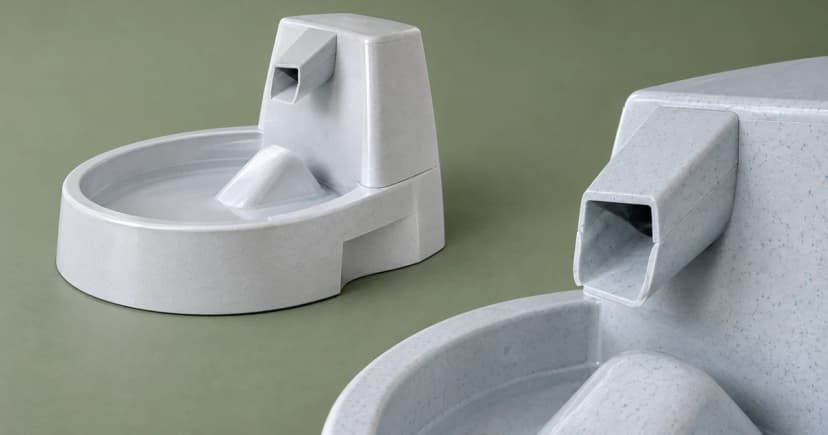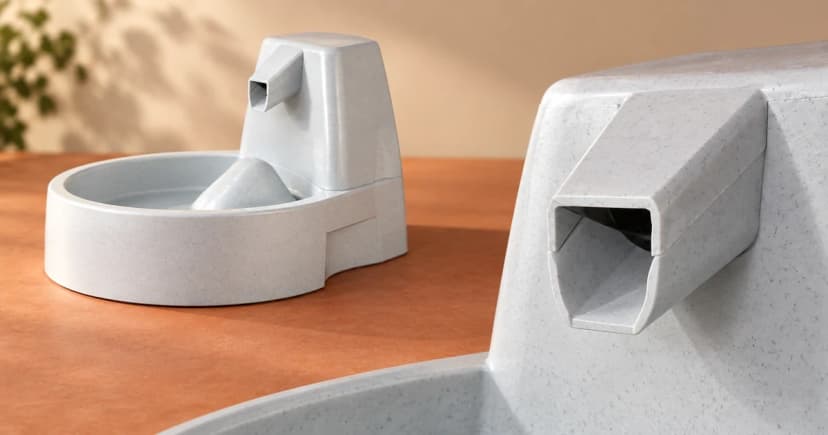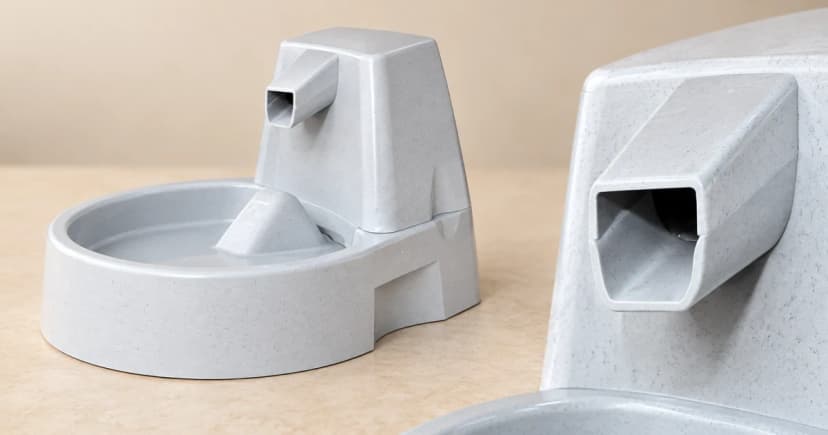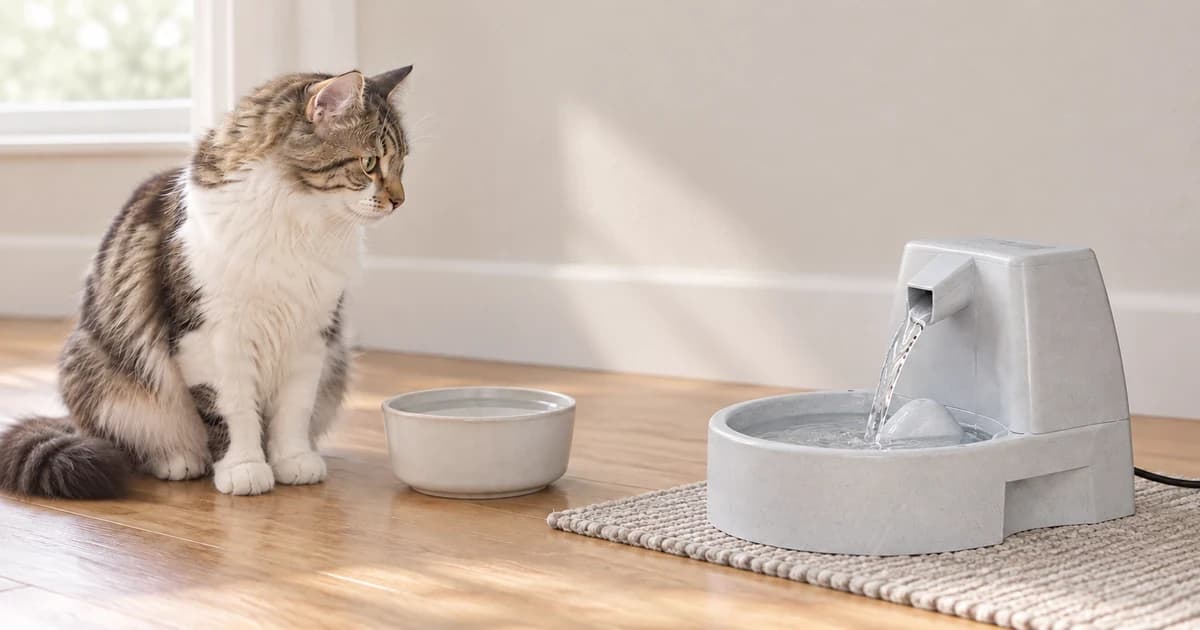
Understanding how to get a cat to use a water fountain starts with offering the unit as an additional drinking choice while keeping a familiar fresh water bowl available. Put the fountain where your cat can approach and leave comfortably, follow the device's setup manual, and let your cat investigate at their own pace. If the running motor or moving stream is the sticking point, check the manual for whether that specific model can be introduced filled and switched off before trying running water again.
Some cats prefer moving water; that does not mean every cat will choose a cat water fountain. The useful goal is to offer an accessible water source and notice how this cat responds, rather than try to force acceptance by removing other drinking options.
Keep the familiar water choice available
Cats Protection's drinking guidance says cats need access to clean, fresh water and suggests multiple water sources in different places. Keep that access during the introduction. An untouched fountain does not tell you whether a cat has drunk from another source.
Place the familiar bowl somewhere your cat already uses comfortably. Add the new device as an option rather than making a sudden replacement. Continue checking both sources for fresh water; buying a fountain does not remove the need to follow its cleaning and maintenance schedule.
Keep observations modest. Seeing your cat investigate or drink once tells you what happened at that moment. It does not establish a sustained increase in water intake, a health benefit or a preference for every fountain design.
Check access and location first
A fountain can be unfamiliar because of its location as well as its appearance, sound and moving water. Cats Protection recommends separating water from food and the litter tray. The Feline Veterinary Medical Association's environment advice describes separated resources with free access, including low-traffic locations without excessive noise.
Look at the route to the device. Can this cat enter and leave without passing another cat that makes access difficult? Is the space used by noisy appliances or frequent foot traffic? In a household with several cats, watch each cat's access instead of assuming one shared fountain serves everyone equally.
Choose a suitable location that also meets the device's electrical and setup requirements. Place and route the unit as its manual directs. A quiet location is useful only when the actual equipment can be set up safely there.
Separate the new object from the running water
PetSafe's Pagoda fountain introduction advice offers a specific example: allow the pet to adjust at their own pace, and if caution continues, leave that fountain unplugged until the pet is comfortable drinking from it. Then plug it in and allow time to adjust to it running.
That sequence is advice for the Pagoda. Before copying it to another model, consult the manual for that device. Its water level, assembly, power supply and operating requirements may differ. Do not run an empty pump or improvise a flow adjustment to make a stage quieter.
| What you observe | What to check next |
|---|---|
| The cat avoids the area even before the fountain runs. | Check route access, placement away from food and litter trays, and the presence of the unfamiliar object itself. |
| The cat approaches or drinks from this exact fountain while it is unplugged (where the manual permits a still-water introduction), but withdraws when the fountain runs. | Note the change in operating sound or water movement on that same device; return to the permitted still-water stage while keeping the familiar water bowl available. |
| The cat drinks from the familiar still water bowl and leaves the fountain alone. | Treat this as a choice between two different water sources rather than proof about the motor alone; keep both clean sources accessible without removing the bowl to force use. |
| Another cat controls the route or nearby space. | Provide separate water access in distinct locations for each cat, rather than judging the fountain alone. |
These observations help you change one part of the setup at a time. They do not identify a medical cause or diagnose noise fear. If a change makes the cat less comfortable, return to an arrangement they can use and reassess.
Let the cat set the pace
PetSafe notes that some pets take several days or longer to begin using its Pagoda fountain. That is a description of variation, not a deadline or a guarantee. Your cat may investigate quickly, gradually accept the device or continue to prefer another source.
Allow voluntary approaches. There is no need to hold the cat at the spout or interrupt a drink from the familiar bowl to move them to the new device. Observe from enough distance that your attention does not become another pressure point during the introduction.
If you are still choosing equipment, compare our water fountain category—whether you are looking at a stainless steel unit, a ceramic cat water fountain, or a wireless cat water fountain—alongside the setup, still-water permissions and maintenance rules of each specific product. A catalog photo or generic label cannot tell you whether your cat will accept its basin shape or pump sound. For ongoing upkeep during and after introduction, use our separate pet water fountain cleaning guide and the manufacturer's instructions.
Keep a drinking change separate from a device preference
Cats Protection advises a veterinary check when a cat suddenly drinks more or less than usual. Do not assume a change is explained by the new fountain, or try to correct it by taking away other water sources.
Keep fresh water accessible, introduce the device within its manual's operating rules and use the cat's actual response to guide the next step. Choosing a familiar bowl remains useful information. The introduction can give your cat another option without requiring a particular outcome.