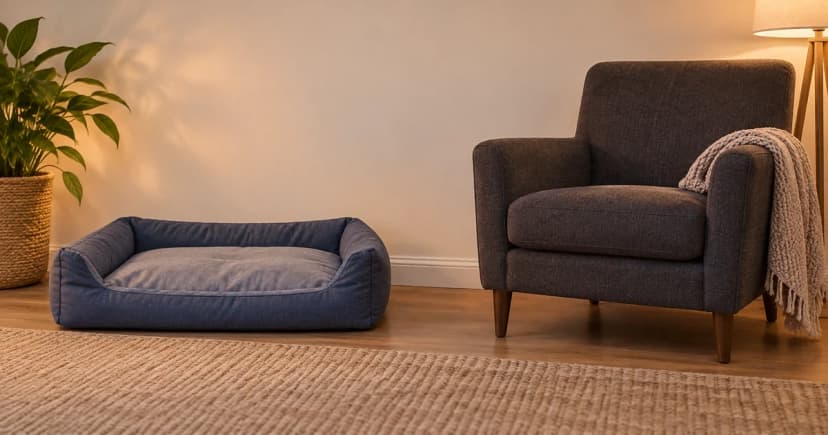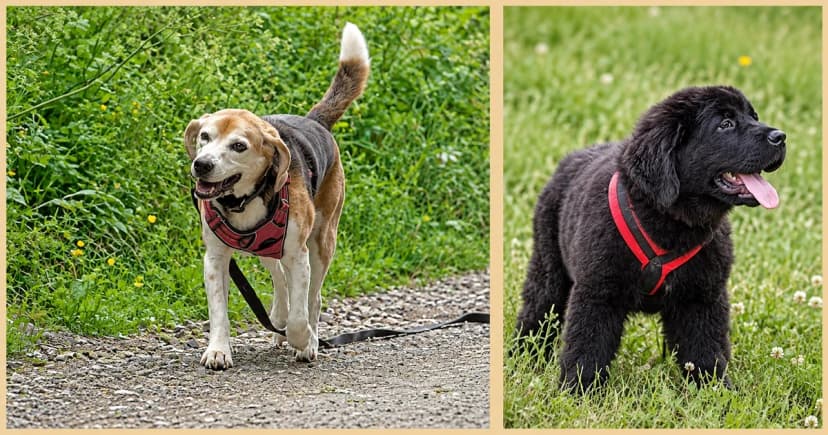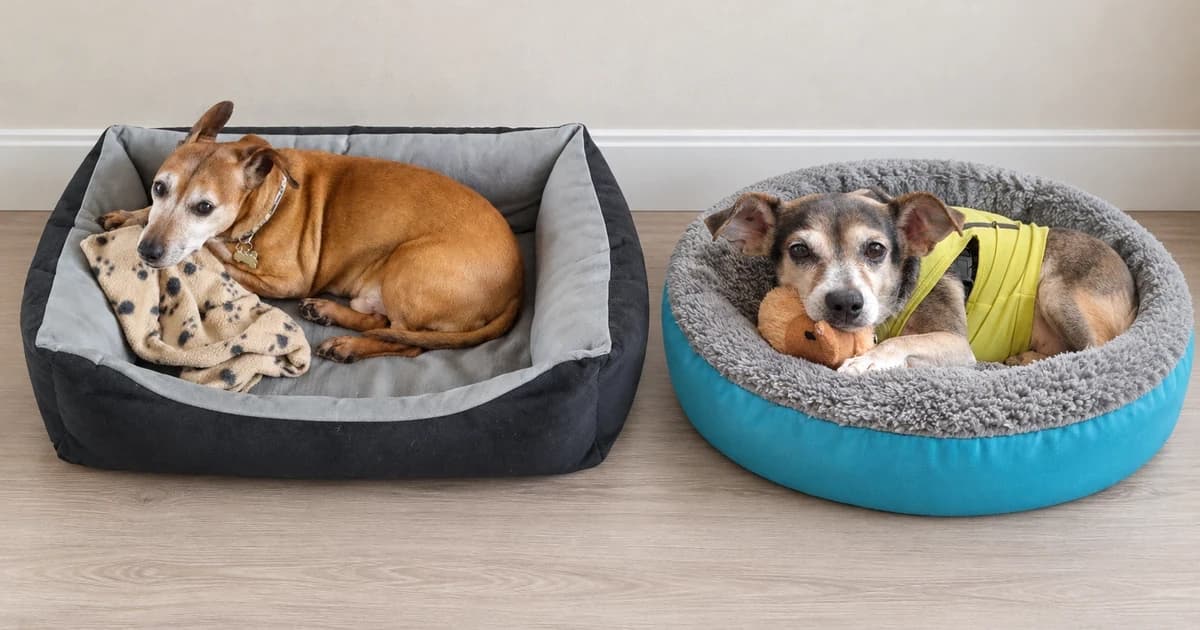
To help your dog use a dog bed, put it in an accessible, quiet place and reward small choices to investigate or step onto it. Build from there at your dog's pace. A dog standing on the bed, lying down on cue and resting with its head down are different observations, so decide which one you are working on before making the exercise harder.
You do not need to place your dog in the bed or hold it there. Keep the route away from it open, give breaks and use the response you actually see to choose the next step.
Check the rest area first
Look at the bed from your dog's approach. Can the dog reach it without squeezing past furniture, crossing a busy doorway or negotiating a raised edge it keeps avoiding? Is the resting surface ready to use according to that bed's instructions? Finish any required setup before inviting the dog over.
Start with a quiet location where you can sit nearby. Dogs Trust's guidance for settling an adult rescue dog recommends a rest area away from busy thoroughfares, an accessible bed location and a daytime introduction. Those are useful location checks; its wider rescue advice does not set a deadline for every dog to accept a new bed.
Watch what happens when your dog approaches. If the bed shifts, an edge gets in the way or a loose layer bunches underfoot, address that particular setup issue using the bed's instructions. Do not keep repeating a cue while the same obstacle remains.
Check what you bought, too. A replacement cover or inner liner may need its matching cushion and outer components. Items in the bed covers and liners category should be checked for their intended role before you treat them as a finished bed.
Notice which step your dog is already taking
Use a simple description of the behavior rather than deciding immediately that your dog likes or dislikes the bed.
| What you observe | A useful next step |
|---|---|
| The dog stays away or walks around it. | Check the approach and location. Allow investigation without putting the dog on the bed. |
| The dog sniffs it or places one or two paws on it. | Reward that small choice. Repeat an easy opportunity before asking for all four paws. |
| The dog stands on the bed comfortably. | Practice easy attendance, or use an already learned down cue if you want to teach lying there. |
| The dog lies down but watches your hand closely. | Record this as lying down. Look separately for less attentive resting behavior. |
| The dog shifts its weight or rests its head. | Reward the quieter behavior during practice, then allow undisturbed resting time. |
Dogs Trust's settle guide describes rewarding progressively relaxed behaviors, including quiet investigation, weight shifting and head resting. Its starting exercise uses a lead and later moves to off-lead practice. Here, the bed introduction remains an open choice; the guide is not a reason to restrain a dog on the bed.
Reward the approach before asking for more
Stand or sit near the bed in a quiet moment. Let your dog look at it and investigate. Battersea's step-by-step settle exercise starts by rewarding investigation or approaches to a mat, then progresses from two paws to all four.
If you use a small training reward, place it on the resting surface so the dog can choose to approach. Reward the step your dog is currently comfortable taking. A sniff or two paws may be today's useful starting point; asking for a down before the dog willingly steps on can skip that stage.
Let the dog move away. If it does, check whether you increased the request, moved closer or introduced a new distraction. Offer an easier opportunity next time rather than lifting the dog into position or repeatedly pulling it back.
Keep household instructions consistent. Dogs Trust's puppy good-habits guidance emphasizes consistent rules, messages and rewards, and offering a bed or relaxation space in a room with you. Agree on your cue and release word so one person is not asking the dog to stay while another calls it away.
Add a bed cue when the routine is familiar
It does not mean the dog has to sleep there or that every visit must become a training session.
Battersea's bed-command guide recommends that the dog already know a down cue. It first builds comfortable attendance, uses the learned down signal and rewards between the front paws. It also teaches a release, such as “OK,” with a reward away from the bed so the dog can get up.
The guide then waits for the dog to go to the bed without being tempted over before adding the word “bed” as the dog moves toward it. Follow that progression at the level your dog can manage. If you still need to encourage every approach, keep practicing that earlier step.
The guide includes example repetitions and short durations. Use them as illustrations of gradual practice, not a pass requirement. Your observation matters more than reaching a particular number: did the dog approach readily, lie down comfortably and respond to the release?
Change one challenge at a time
Once the basic routine is familiar, choose one change for the next session:
- Duration: remain close and leave a little more time between rewards.
- Your distance: keep the duration easy while taking a small step away.
- Distraction: keep your position and the duration familiar while adding a mild, manageable activity nearby.
Battersea's bed and settle guides build these factors gradually. If the dog gets up when you step back, return to a smaller distance. If it leaves when you wait longer, shorten the wait. Dogs Trust advises making a distraction less interesting or moving farther from it when a dog cannot settle.
Changing several things together makes the result harder to interpret. If you walk across the room just as another person enters, you cannot tell which change prompted the dog to follow. Return to the last manageable arrangement and try one change.
Use release breaks. If the dog becomes frustrated or stops engaging, end the session; Battersea advises working at the dog's pace and stopping when it has had enough. There is no universal number of days for accepting a bed.
Leave resting time undisturbed
Practice and rest serve different purposes. During practice you may reward a chosen action. During an ordinary rest period, avoid repeatedly calling the dog out, moving the bed or asking it to perform the sequence again. Dogs Trust's rescue guidance specifically recommends undisturbed time in the rest area.
Notice whether your dog returns without a prompt and what it does there. Looking away from you, changing position or resting its head gives you more information than a single rewarded down. These observations do not prove sleep, anxiety relief, a preferred bed or a product's comfort claims.
Keep a short observation record
Fill in a few details after practice. Use the record to choose one small adjustment for your next session.
| Record | Your notes |
|---|---|
| Date, bed and location | ____________________ |
| Approach and surface setup | ____________________ |
| Step offered: investigate, stand, down or rest | ____________________ |
| Actual response and when the dog left | ____________________ |
| One factor changed | ____________________ |
| Last manageable step and next easier option | ____________________ |
Decide what to change before buying another bed
If progress stalls, review the record first. Does your dog approach in one location but avoid the same bed in another? Does it stand on the surface but leave when you move away? Does a particular edge interrupt entry? These observations point to different next steps.
When comparing dog beds and bedding, inspect the actual structure and instructions. A bolster bed and a flat or pillow bed can present different edges and resting surfaces. Check the particular bed rather than assuming a category guarantees easy entry or acceptance.
Give the setup and the introduction process separate consideration. A new purchase does not replace gradual practice, and repeated practice does not verify that a specific bed fits your dog. Keep the dog free to leave, change one factor and use the next observation to guide your decision.