
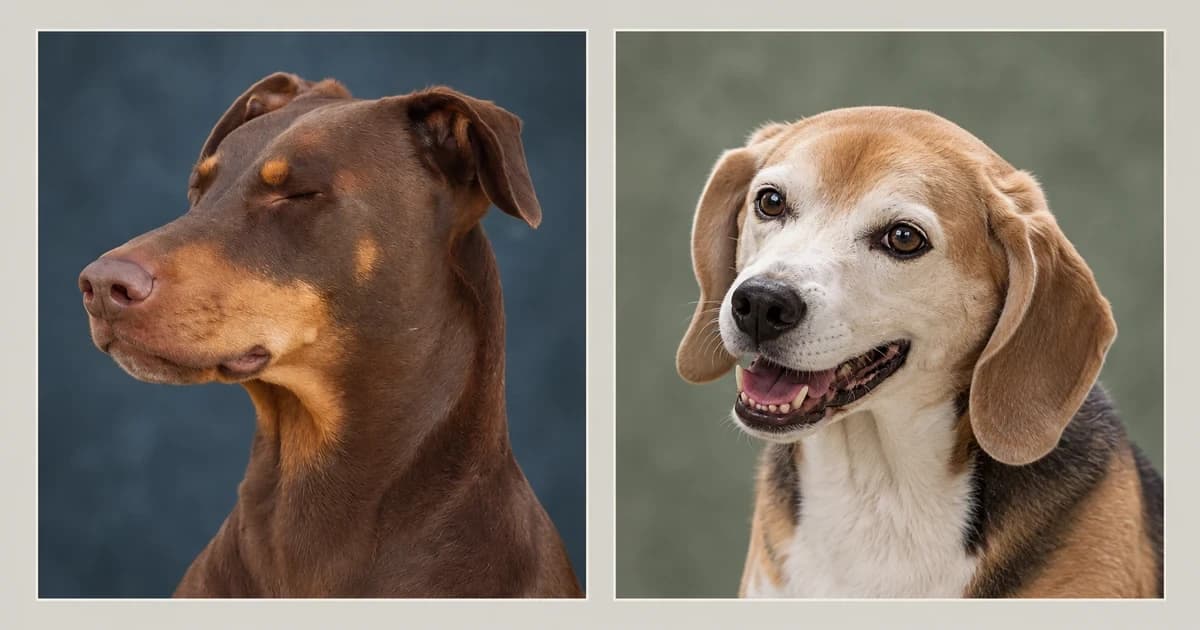
Plan the session around a willing dog, a familiar camera and one clear picture idea.
Introduce the equipment before photographing
Battersea's photography guide starts with equipment at a distance, rewarding voluntary investigation. Slowly lift and point the camera, rewarding calm responses. If your dog avoids it, put it farther away again. Avoid flash when it causes fear or avoidance; do not keep repeating it to get the shot.
Choose light and framing
Photographer Laurie Clouthier's advice in the AKC's photography guide includes shade or golden-hour light, working at the dog's level and focusing on an eye. Choose a place where your dog feels comfortable.
Choose a close detail or an environmental portrait. Concentrate on the nose or paws for detail; include more surroundings for the wider view. Neither requires an unfamiliar trick.
Work with movement
Battersea suggests burst mode for fidgeting subjects. If your device provides it, take a short sequence and choose a frame afterwards.
A familiar stay cue is an optional skill to teach separately. Shorten the session instead of demanding stillness the dog has not learned.
End the invitation
If a toy helps engagement, apply Blue Cross's play rules: never force play and finish while the dog is interested.
Stop if your dog becomes uncomfortable or tired, and allow them to move away. Review the pictures during the break; another attempt can wait.