
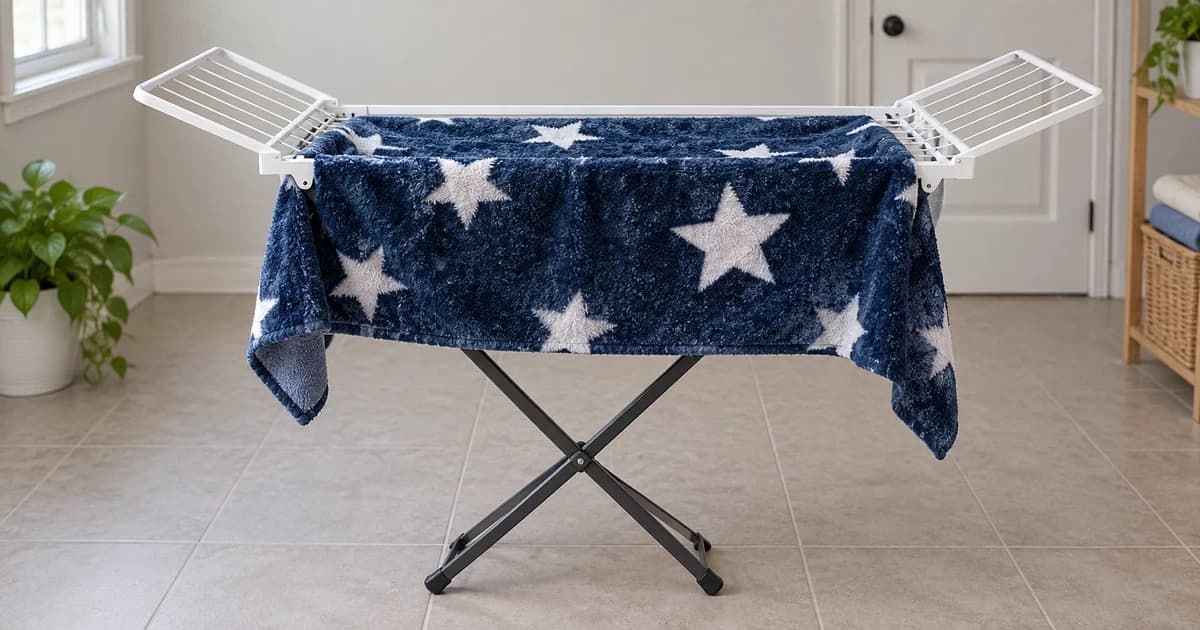
Prepare and wash a guinea pig fleece liner using the instructions for its complete construction, including any absorbent core, backing and pockets. Remove hay, droppings and hair before laundry, use the permitted wash settings and let every part finish drying before putting it back. A soft fleece surface alone does not tell you whether the item can go in a tumble dryer.
Start with the product name and care label. Some items sold as fleece bedding are multi-layer liners; others are thin covers that need a separate absorbent layer underneath. This guide helps you identify that difference and build a repeatable care routine. It does not establish a disinfection method or a fixed number of days that bedding will remain dry.
Identify what you are actually washing
Check the original description for the top fabric, inner layers and bottom. Look for an absorbent core, a waterproof or water-resistant backing, reflective material, quilting, edging and attached pockets. Record which side faces the guinea pig and whether any additional bedding is required.
| Construction | What to establish |
|---|---|
| Thin fleece or flannel cover | Does it need an absorbent layer beneath it? What are the care instructions for the cover and that separate layer? |
| Layered liner with a backing | What are the wash and drying permissions for the complete liner, rather than only the fleece face? |
| Liner with a pocket or attached section | How should that section be opened, cleared and positioned for washing? |
| Item with an unusual inner layer | Does the manufacturer give specific temperature or drying limits for that construction? |
Do not infer absorbency from thickness or borrow a plain blanket's drying instruction for a layered pad. Pawlivy's category includes records described as layered pads and records described as thin covers. Their descriptions are a starting point for questions, rather than proof that every item shares one wash cycle.
Prepare a new liner before the first use
Read the first-use instructions as well as the routine laundry instructions. GuineaDad recommends washing its liners before use. Its directions include turning the pocket inside out and folding with the blue waterproof side inside. Those details belong to that liner's design; a liner without a pocket or blue backing does not gain those features because it also has a fleece surface.
For your own item, note any required initial washing or preparation, follow it, and finish drying before installation. Do not replace missing instructions with a promise that every fleece must undergo a particular number of washes.
Keep the care record with the liner: product name, construction, first-use preparation, permitted wash cycle and drying method. After preparation, check that the liner still lies as intended across the base and that its backing, edges and pockets remain intact. A wash does not verify absorbency, repair a torn backing or establish that a cover can replace its underlying bedding.
Clear the surface and pockets before laundry
Remove the liner from use before washing it. Make arrangements for the guinea pig and its bedding while the laundry is being done; do not put the animal among laundry equipment or cleaning supplies.
Lift out accessories so hidden debris is accessible. Remove droppings, loose hay and hair with the method suitable for the surface. In its complete spot-cleaning and laundry guide, GuineaDad describes brushing debris off and clearing its burrowing pocket. Kavee also directs owners to remove droppings and hay before washing its Dalmatian liner.
Check folded edges and pockets before transferring the item to the washer. If an attached pocket has a specific inside-out instruction, follow it rather than leaving debris trapped in the fold. A gentle surface clear is preparation for the permitted wash; it is not the same as laundering the inner layers.
Choose the cycle for the named liner
The examples below show why the product's own directions matter. They are separate instructions, not settings to combine into a single recipe.
| Named example | Washing directions | Drying distinction |
|---|---|---|
| GuineaDad liner | Its guide specifies cold or warm water, medium spin and the stated soil setting; it also describes extra rinse and spin options where available. | Its guidance allows the lowest dryer settings, followed by finishing with air drying. Medium and high heat are excluded. |
| Guineapet 2X5 fleece liner | Cold or low-temperature washing up to 30°C on a delicate or woolens cycle, with neutral mild detergent and no fabric softener. | Spin-dry only; never tumble dry. Hang away from direct sunlight and heat sources. |
| Kavee Dreamy Dalmatian liner | Its care section specifies 30°C and 1200 rpm, after clearing debris; it suggests a laundry bag. | Dry on a rack. Avoid tumble drying and hanging over a heater. |
Check the full Guineapet product care section or Kavee Dalmatian care instructions if you own that product. The settings do not identify a similar-looking catalog item as one of those models.
Use the detergent type and amount specified for your item and laundry load. GuineaDad's laundry article says to follow the detergent container's dosing directions rather than filling the compartment to its maximum. Avoid turning that into a fixed dose for every washer. Guineapet expressly excludes fabric softener for its named liner.
If your model permits or recommends a laundry bag, use an appropriate one after clearing the debris. A bag does not add machine-wash permission to an item that lacks it. Likewise, a gentle cycle does not automatically resolve an unidentified backing or inner layer.
Finish drying the backing, folds and attached sections
Record drying separately from washing. The comparison includes both a maker that permits limited low-temperature dryer use and makers that prohibit tumble drying. Do not substitute one for another because the top fabrics feel alike.
For rack or line drying, arrange the item according to its instructions so you can check its folded areas and backing. Follow any direction to keep it out of direct sunlight or away from heaters. Do not pack or reinstall a liner while damp areas remain.
GuineaDad's guide describes a timed dryer stage followed by air drying for the rest of the way. The timed stage is not a guarantee that the liner is ready to return to the cage. Finish drying, then check the corners, pocket seams and backed areas before use. If the backing is damaged or the liner no longer fits as intended, resolve that with the maker rather than hiding the problem under accessories.
Keep a clean replacement ready
Routine care includes removing surface debris and checking the bedding's condition between full washes. Guineapet advises changing its liner when saturated and keeping another liner available during laundry. Treat the condition of your actual bedding and the maker's directions as the decision points, rather than waiting for a universal calendar interval.
When comparing fleece cage liners, look for a clear description of the complete layers, first-use preparation and separate wash and drying permissions. For a thin cover, also establish the care of the required bedding beneath it. The wider bedding and toileting category helps identify those separate components.