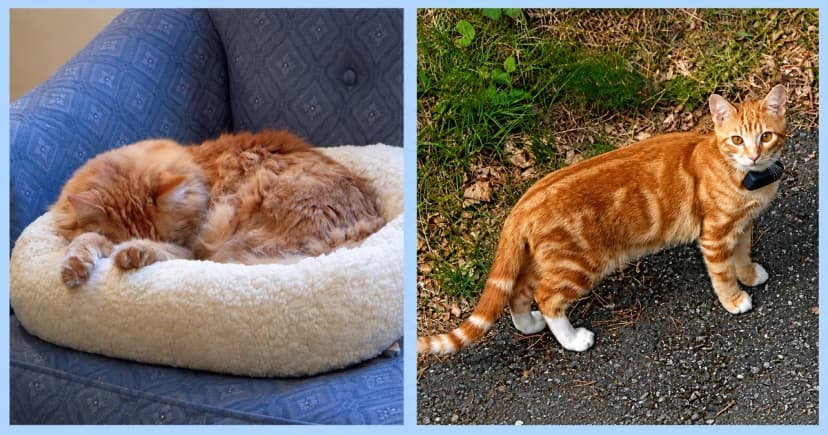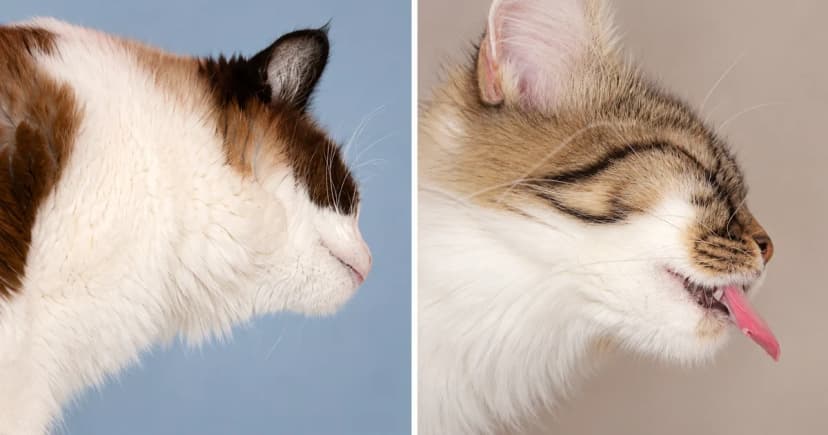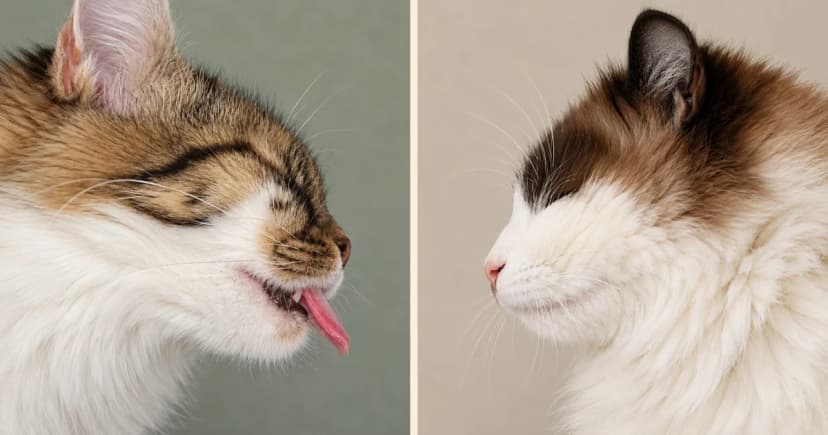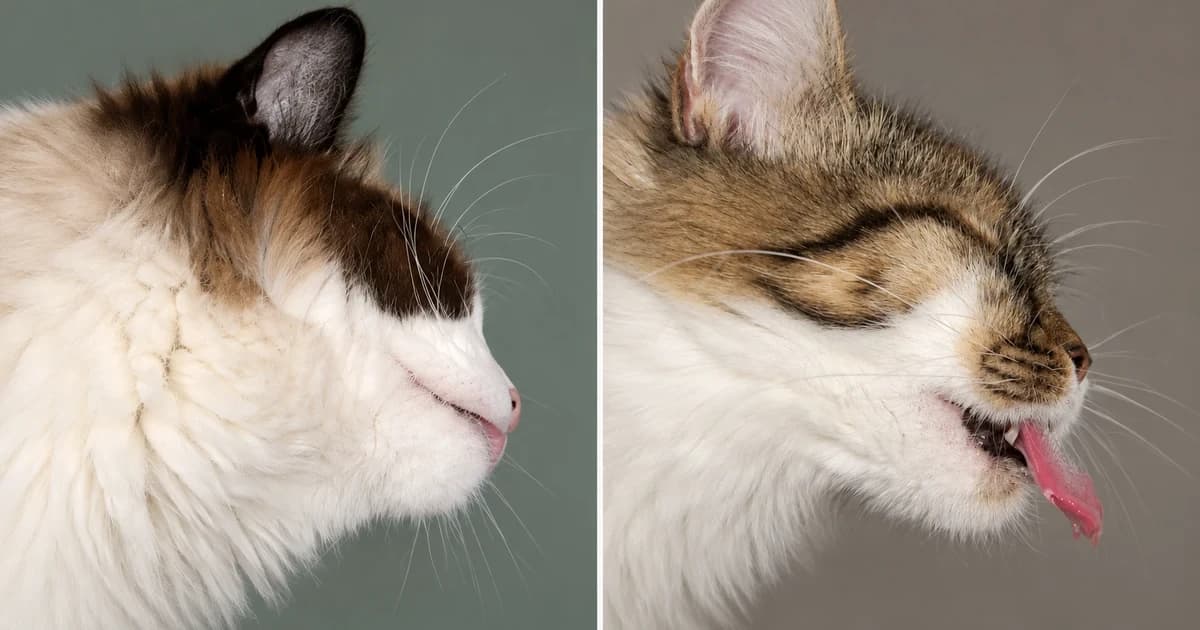
Build a willing sideways roll before asking for a complete rollover.
Start from down
The FVMA toolkit calls for individual, willing participation. Postpone training when a cat is ill, painful or showing protective behaviour.
Use an already learned lie-down cue. Do not roll the animal by hand.
Reward stages
The Cats Protection rollover guide arcs a food lure from near the nose towards an ear, then diagonally towards the middle of the back. Reward the voluntary roll onto one side.
Work with the easier direction. If the cat keeps standing up, try a smaller lure movement.
Once reliable, smaller hand movements close to the head lead into moving the lure farther to the side: reward a roll onto the back, then later onto the other side.
Replace the lure
Guide with an empty hand, initially pretending to collect a treat, later without that pretence. Still reward. Add a chosen word one second before the familiar hand signal.
The food leaves the guiding hand before it leaves the reward routine. Change those roles separately.
Pause or stop
Follow Battersea's individual pace: return to an easier familiar response or finish when interest fades. Avoid punishment and forced movement.