
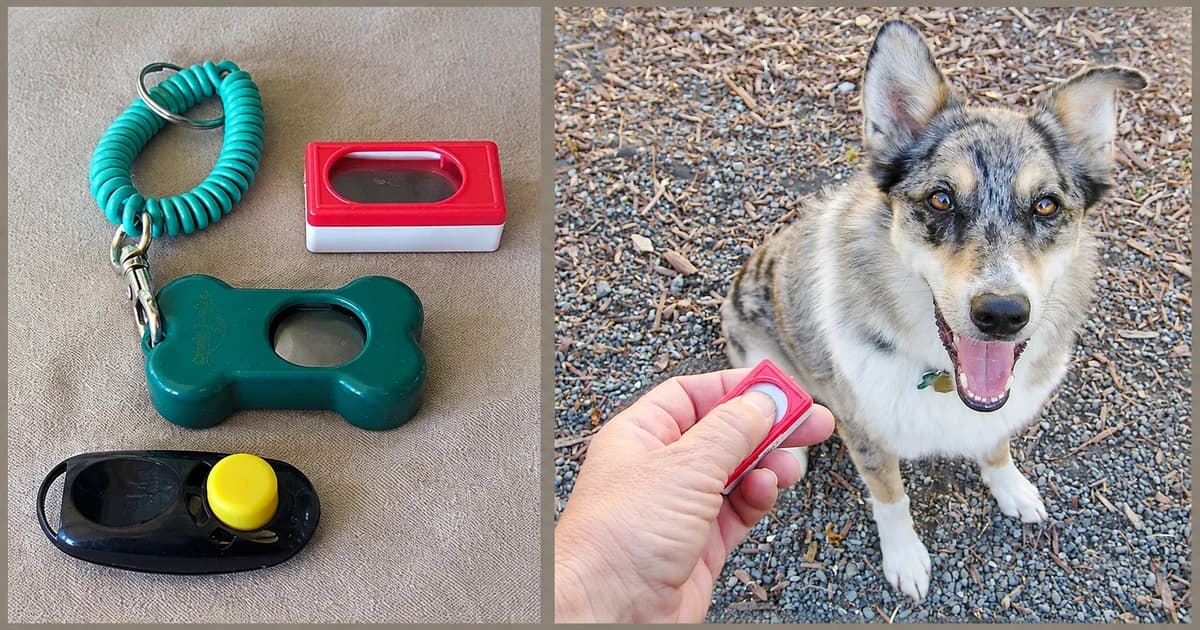
Learn how to use a dog clicker by connecting sound and reward. A click marks behavior; it does not request it.
Prepare
Work somewhere quiet, with the clicker away from ears. Stop if its sound frightens your dog.
Keep accepted rewards ready. A distinct marker word can replace a worrying click.
Check the controls of your own device before the session; our dog clickers category is a starting point for equipment. Choose who will handle the clicker and who will provide rewards.
Connect sound and reward
Look for reward expectation after the sound, rather than relying on a fixed repetition count.
Mark the moment
Click at the chosen behavior's exact moment, then reward. Do not use clicks as commands or attention calls. Reward every click, including mistakes.
For the movement and cue itself, follow the separate sit lesson or hand-target lesson. Decide what moment you intend to mark before starting.
After a mistimed click, reward and reset. Blue Cross ends the current exercise at the click, before restarting.
Pause or progress
No reward expectation? Return to simple pairing. If your dog declines rewards or looks worried, pause and reconsider the reward, setting and sound.
For an established behavior, gradually reduce marker use. Whenever you do click, still reward.
Keep the next session's handover practical: the chosen behavior, intended marking moment, what actually happened and where the next caregiver should resume. Leave anything you could not observe as unknown.