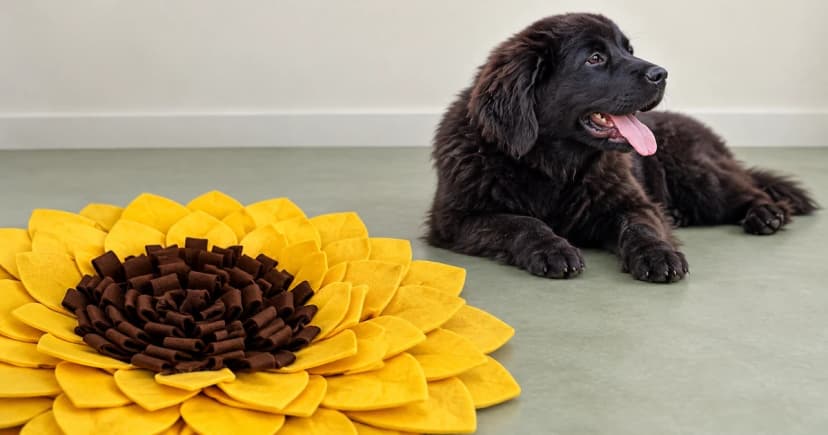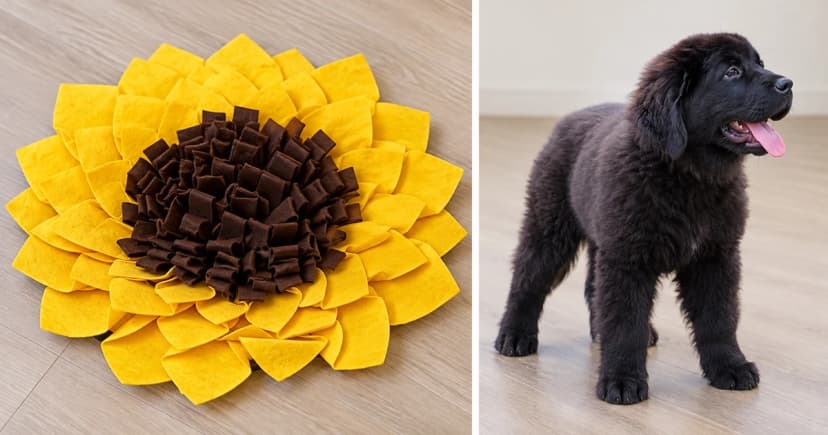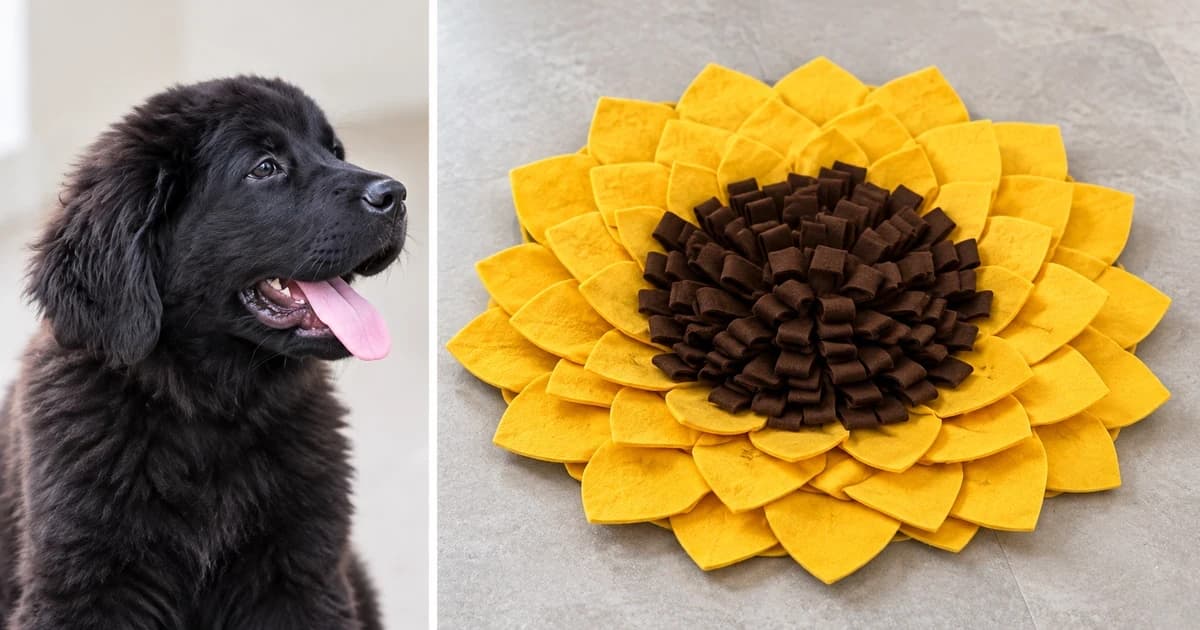
Use a snuffle mat by following the finished mat's own directions for placing food, then watching what your dog actually does with its layers. Food resting on top and food tucked among fabric strands present different access. They are not universal difficulty levels or a reason to make an unfamiliar mat harder immediately.
Keep the first interaction simple enough to describe: which mat you offered, where its permitted contents were placed, and whether your dog investigated and retrieved them. This guide concerns using an identified item, rather than making a mat, planning a diet or promising a particular behavioral result.
Identify the mat before loading its layers
Read the exact product's instructions while the mat is away from your dog. Check its intended use, the permitted contents and any preparation the maker requires. A photograph of a similar fabric surface does not establish those permissions.
Look at how the food-holding parts are attached. A loose strip or an opening you cannot account for needs attention before use. Do not cut strands, undo knots or pull apart a fixed section to imitate a different mat's construction.
Keep any food used within your dog's existing feeding arrangements. The equipment examples below do not supply a new food allowance or a reason to withhold an ordinary meal. If the product instructions or an existing dietary requirement leave a question unresolved, settle that question before loading the mat.
Distinguish food on top from food among the strands
PAW5's Snuffle Mat page describes pouring food on top of its named mat. That is the maker's stated placement for that product. It does not establish a timed introduction, a required depth or an automatic progression for every mat with a similar appearance.
The Forager Mat product page describes food or treats hidden within its fabric for a sniff-and-search activity. Keep that description tied to the named product. It is not evidence that an unidentified mat permits the same contents, that every dog will engage, or that an activity will produce a particular health or calming result.
Dogs Trust's snuffle-mat guide gives a different context: after its DIY mat is completed, food is placed among the fronds and the owner watches the dog search it out. That completed-DIY example explains the hidden-food task; its construction materials, knots and washing statements are not instructions for a commercial mat.
Use these examples to recognize the access your actual item is designed to offer. Do not combine them into a mandatory sequence of visible food, deeper food and a longer session. If your mat's instructions are unclear, ask its maker which placement is intended.
Observe an interaction without moving the dog's nose or paws
Place the prepared item as its instructions direct, where you can remain present and see the interaction. Give your dog room to approach, investigate or leave. Moving a nose into the fabric or placing a paw on it would tell you what your assistance produced, rather than what the dog chose to do.
Describe the actions separately. Approaching the mat, sniffing its surface and retrieving something are different observations. A dog looking at the mat has not necessarily found its contents, and a dog leaving it does not establish a medical or behavioral explanation.
If access seems unsuccessful, pause and check the actual setup with the mat away from the dog. Confirm that the intended placement is accessible and belongs to this product's instructions. Do not respond by packing more into a hidden area or modifying the equipment.
Pulling off fabric or chewing an attachment changes the decision. Pause the activity and check the item's condition instead of treating that interaction as a need for a tougher puzzle. Leave uncertain or damaged equipment out of use while you resolve the issue.
Keep a useful note instead of an invented level score
A short record can help you repeat a documented setup without turning the activity into a test:
- Item: the product identity and the instruction you followed.
- Placement: where the permitted contents were actually accessible.
- Observation: approach, investigation, retrieval, disengagement or an interaction needing a pause.
- Next decision: repeat the same permitted setup, resolve a product question or choose another activity.
This is an organizational aid, not a measure of intelligence, an exercise allowance or a fixed training program. You do not need to reach a particular depth, duration or printed level to finish an interaction.
Finish with the equipment accounted for
Collect the mat after the interaction and account for its contents and attached pieces. Keep an unresolved fold or loose attachment visible in your note. Our snuffle-mat cleaning guide handles the separate wash-and-dry decision; a first-use guide does not add cleaning permission.
The snuffle-mat category identifies an equipment type, rather than confirming a specific item's suitability, condition or current stock. Our editorial policy explains that distinction.