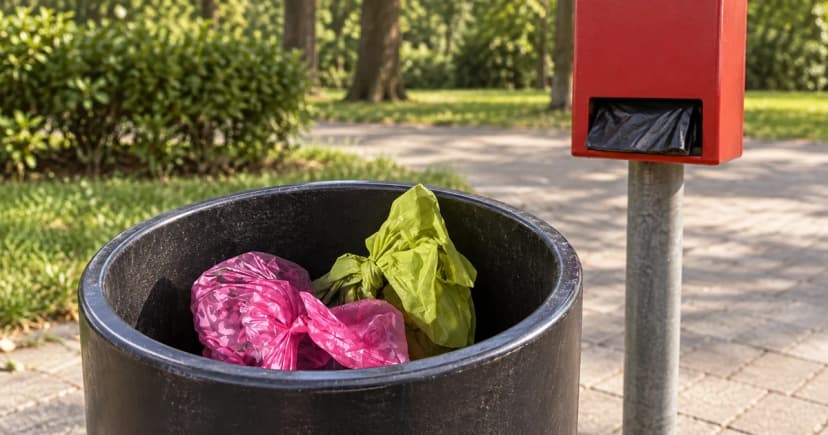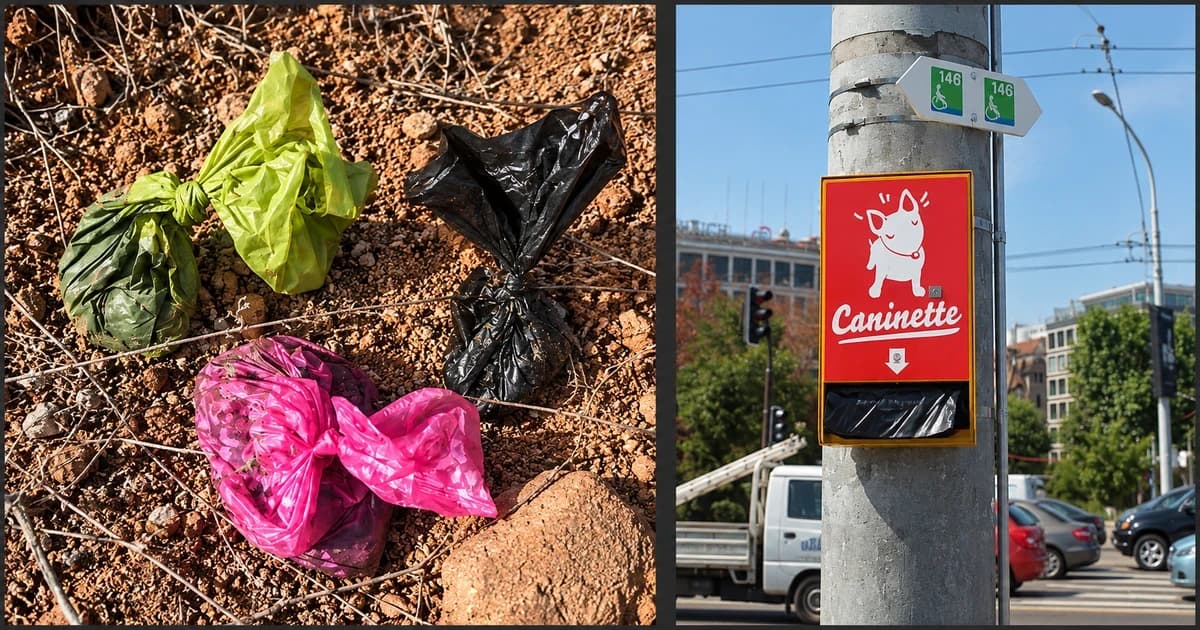
Learning how to use dog poop bags means finishing the cleanup: collect the waste, close the bag, take it to an accepted destination and clean your hands. A bag left beside the path is unfinished work.
Have an intact bag ready
Carry bags before you need them. Open one and check for holes before the walk; replace damaged plastic. Leave enough empty material above the waste to close the bag.
If your dog cannot be managed while you collect, get practical help rather than improvising a restraint technique.
A roll still inside its holder is a separate equipment task. Refill it using the poop-bag dispenser loading guide, and keep a spare available instead of relying on a public station having stock.
Collect, invert and close
Put your hand inside the open bag like a glove. Gather the waste through the plastic, then pull the bag opening back over it as you withdraw your hand. The waste should end up inside. Close the opening securely, using the bag's tie handles or a knot in the empty top. If it tears, stop using that barrier and contain the waste with an intact bag; clean any exposed hands.
Do not lick your fingers or put the bag in your mouth to open it. If the bag cannot enclose the waste and close, use a suitable replacement rather than leaving it open. A thicker-looking bag or an extra layer does not establish a leakproof result.
Carry it to an accepted bin
Check the site's signs or your local waste service's instructions. For example, Seattle Public Utilities directs bagged pet waste to trash regardless of the bag's compostable claim, and says to use your own or a public trash can; a neighbor's needs permission. These are Seattle instructions, not a worldwide collection rule. If no accepted bin is available, carry the sealed bag onward rather than leaving it for the return journey.
Keep both loose waste and filled bags out of storm drains. Do not hose waste toward them.
Use dog poop bags as collection supplies. For the separate question of environmental labels and disposal acceptance, read the dog-waste bag claims guide.
Finish with handwashing
The CDC's dog-care guidance calls for washing with soap and running water after contact with poop, even when you used a bag, and before eating or drinking. If soap and water are unavailable, it allows hand sanitizer containing at least 60% alcohol. That temporary option does not make the bag a substitute for handwashing. Include waste in your own yard in the cleanup routine, too.
The useful endpoint is simple: the collected waste has reached an accepted destination, your hands are cleaned, and the next bag is ready. Dover's collection instructions describe the bag-as-glove and inversion method; follow the actual disposal rules where you are.