

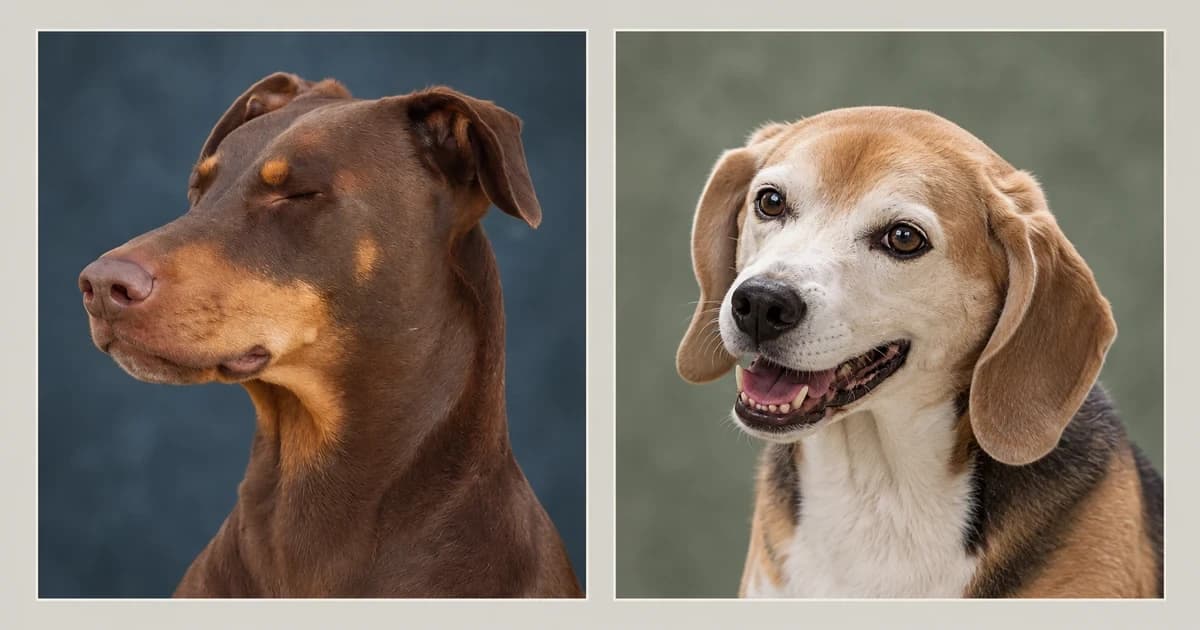
Learning how to photograph your dog without forcing a pose comes down to four dog-led steps: introduce the camera at a comfortable distance without startling flash, choose soft shade or golden-hour light at the dog's eye level with either a close detail or environmental frame, use burst mode to capture natural movement rather than demanding stillness, and end the session whenever your dog loses interest or moves away.
Introduce the equipment before photographing
Battersea's photography guide starts with equipment at a distance, rewarding voluntary investigation. Slowly lift and point the camera, rewarding calm responses. If your dog avoids it, put it farther away again. Avoid flash when it causes fear or avoidance; do not keep repeating it to get the shot.
Choose light and framing
Photographer Laurie Clouthier's advice in the AKC's photography guide includes shade or golden-hour light, working at the dog's level and focusing on an eye. Choose a place where your dog feels comfortable.
When planning how to photograph your dog, choose between a close detail frame and an environmental portrait—as illustrated by the contrasting head-and-shoulders versus wider-context framing in the reference panel at the top of this guide—and compare what each framing choice includes:
| Framing choice (AKC / Laurie Clouthier) | What the camera frame includes | Focus and light setup | Why it works without a forced pose |
|---|---|---|---|
| Close detail frame | Tight crop on expressive features such as the eyes, nose texture, ears, or resting paws while the dog settles naturally. | Get down to the dog's level in open shade or golden-hour light; lock focus on the nearest eye or the specific feature (nose/paws). | Captures natural expression or resting detail during a calm moment without asking the dog to sit up on cue. |
| Environmental portrait | Wider view showing the dog's whole body or natural posture alongside their familiar garden, room, or walking surroundings. | Work at eye level in soft, even light, keeping focus on the dog's eyes while leaving breathing room around their movement path. | Allows the dog to sniff, explore, or relax in a comfortable setting rather than holding a rigid spot. |
Work with movement
Battersea suggests burst mode for fidgeting subjects. If your device provides it, take a short sequence and choose a frame afterwards.
A familiar stay cue is an optional skill to teach separately. Shorten the session instead of demanding stillness the dog has not learned.
End the invitation
If a toy helps engagement, apply Blue Cross's play rules: never force play and finish while the dog is interested.
Stop if your dog becomes uncomfortable or tired, and allow them to move away. Review the pictures during the break; another attempt can wait.