

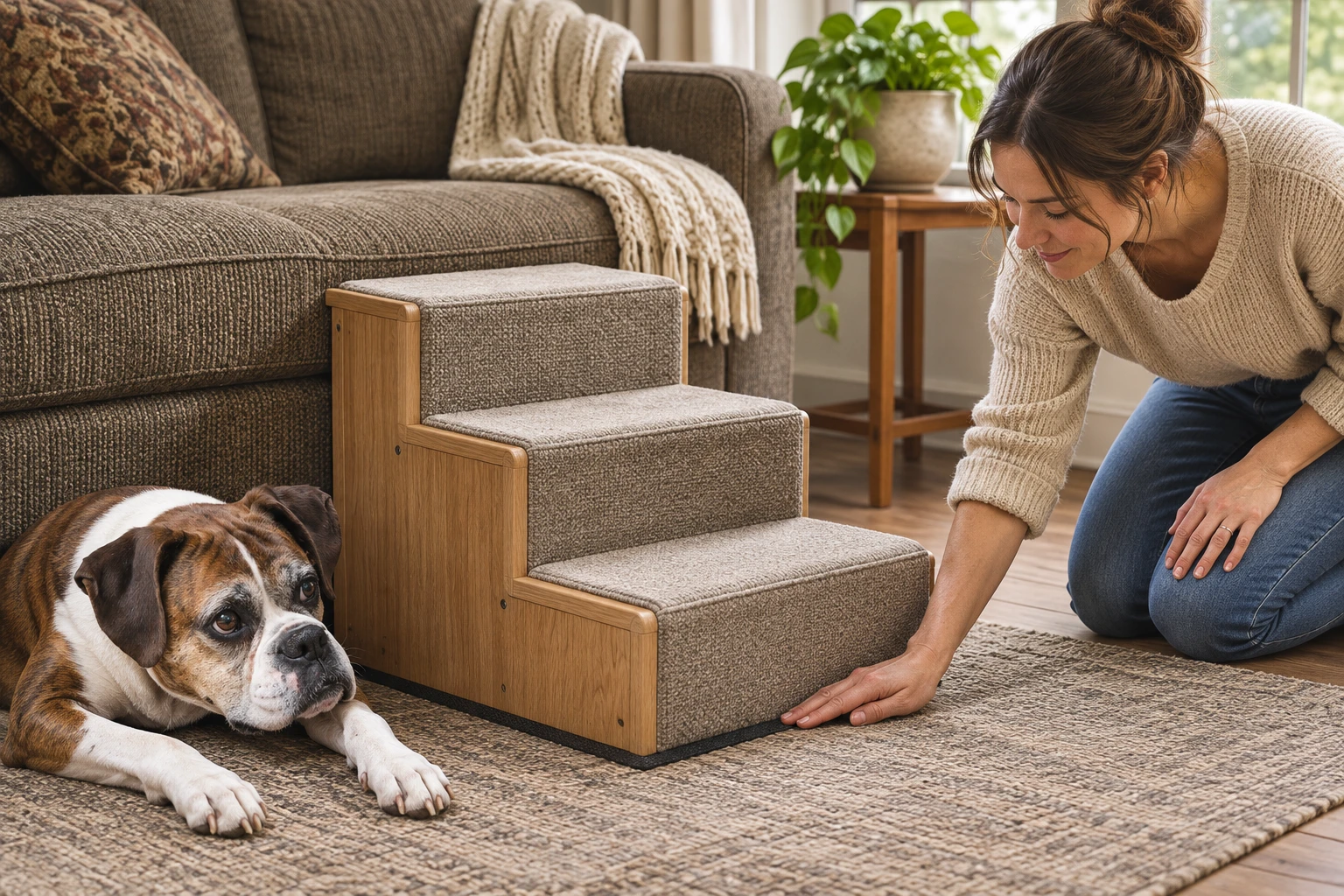
Push down hard on the top tread of your pet stairs and shove it sideways. If the base skates an inch across floorboards or twists under your wrist, your dog will feel that shift on step one—and either freeze at the bottom or launch straight over the steps.
Knowing how to set up pet steps comes down to three physical checks: preparing the exact build you bought (uncompressing foam, unfolding and locking a brace, or curing flat-pack joints), aligning the top tread flush with the compressed furniture edge, and checking stability under angled pressure before daily use.
Foam, Folding Frames, and Flat-Pack Kits: Setup by Build
Most early refusals start right out of the box when owners treat vacuum-packed foam, hinged folding frames, and flat-pack kits the same way. Skipping foam decompression, half-seating storage boards, or loading uncured glue turns sturdy stairs into a wobbly hazard on day one.
Vacuum-Packed High-Density Foam: Let the Core Expand
High-density polyurethane foam stairs ship compressed flat and often look lopsided when unboxed. Peel the outer plastic wrap by hand or snip gently along a corner seam—never run a utility knife down the center, where one slip scores the fabric or gouges the foam core.
Give the core 24 to 72 hours in a warm room (68–75°F) to recover; chilly basements often need the full 72 hours. Knead stubborn creases or sweep a hair dryer on low heat six to eight inches away. Zip the cover only after corners square out, then press hard into the top tread: if your fingers hit the floor, the foam is still expanding or too soft to support heavier or arthritic dogs without rolling sideways.
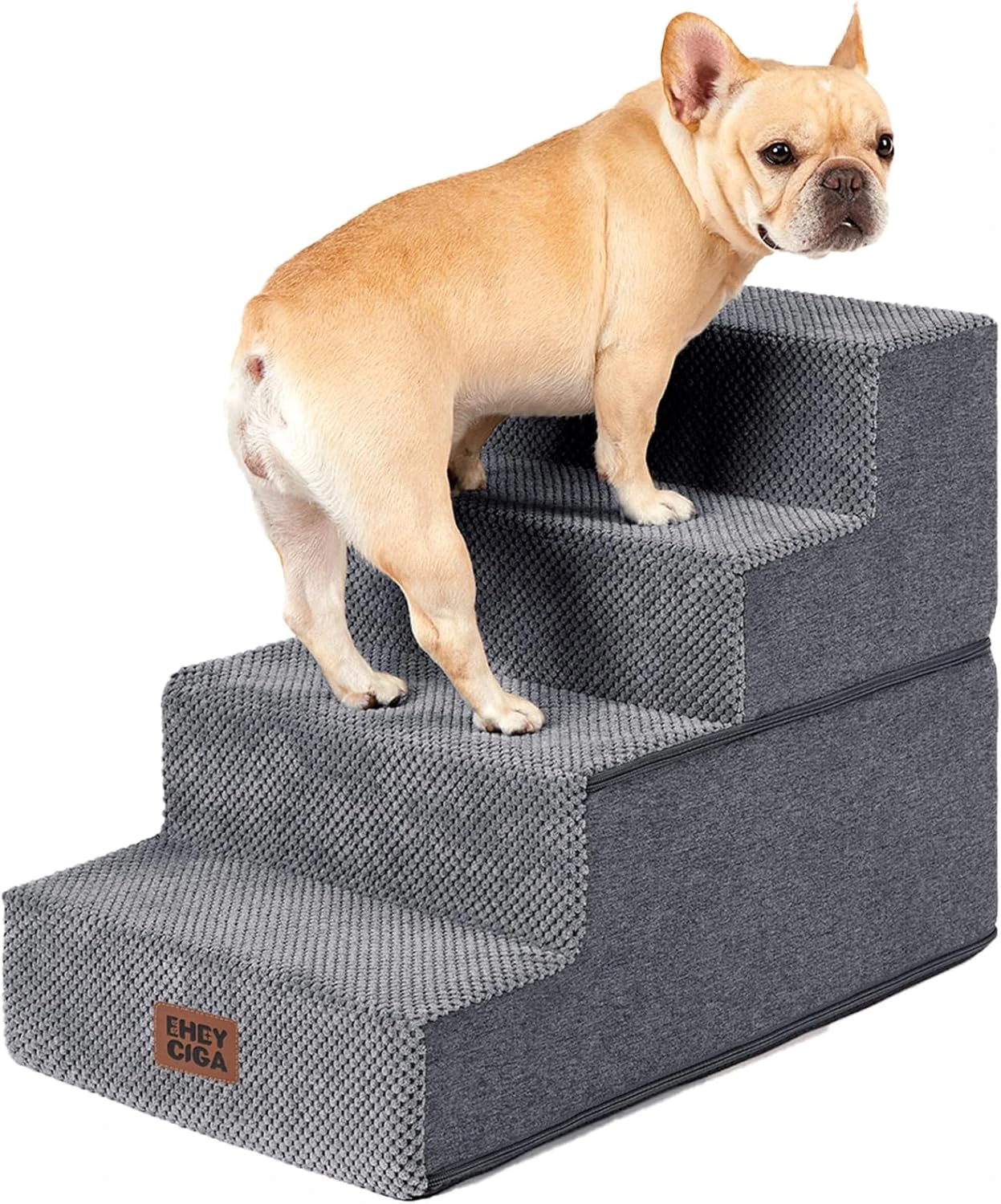
A four-step, 18-inch foam build with a gentler ~4.5-inch step rise—well suited to small and medium dogs reaching sofas or lower beds once the foam finishes expanding.
Folding Frames and Collapsible Storage Steps: Lock Every Brace
Open hinged plastic or wood stairs on a flat floor and pull the rear support legs fully back until every locking tab clicks visibly into its slot. A half-latched brace may hold under light touch, then fold flat when a dog shifts weight toward the mattress. On collapsible storage-box stairs, seat each rigid fiberboard bottom insert completely flat inside its compartment before closing the lids so sidewalls cannot bow outward.
If your folding frame includes peel-and-stick carpet treads or rubber feet, wipe each plastic seat with rubbing alcohol and dry for two minutes first. Invisible mold-release oils cling to fresh plastic—sticking adhesive pads over that film makes tread corners lift within two weeks and snag claws mid-climb.
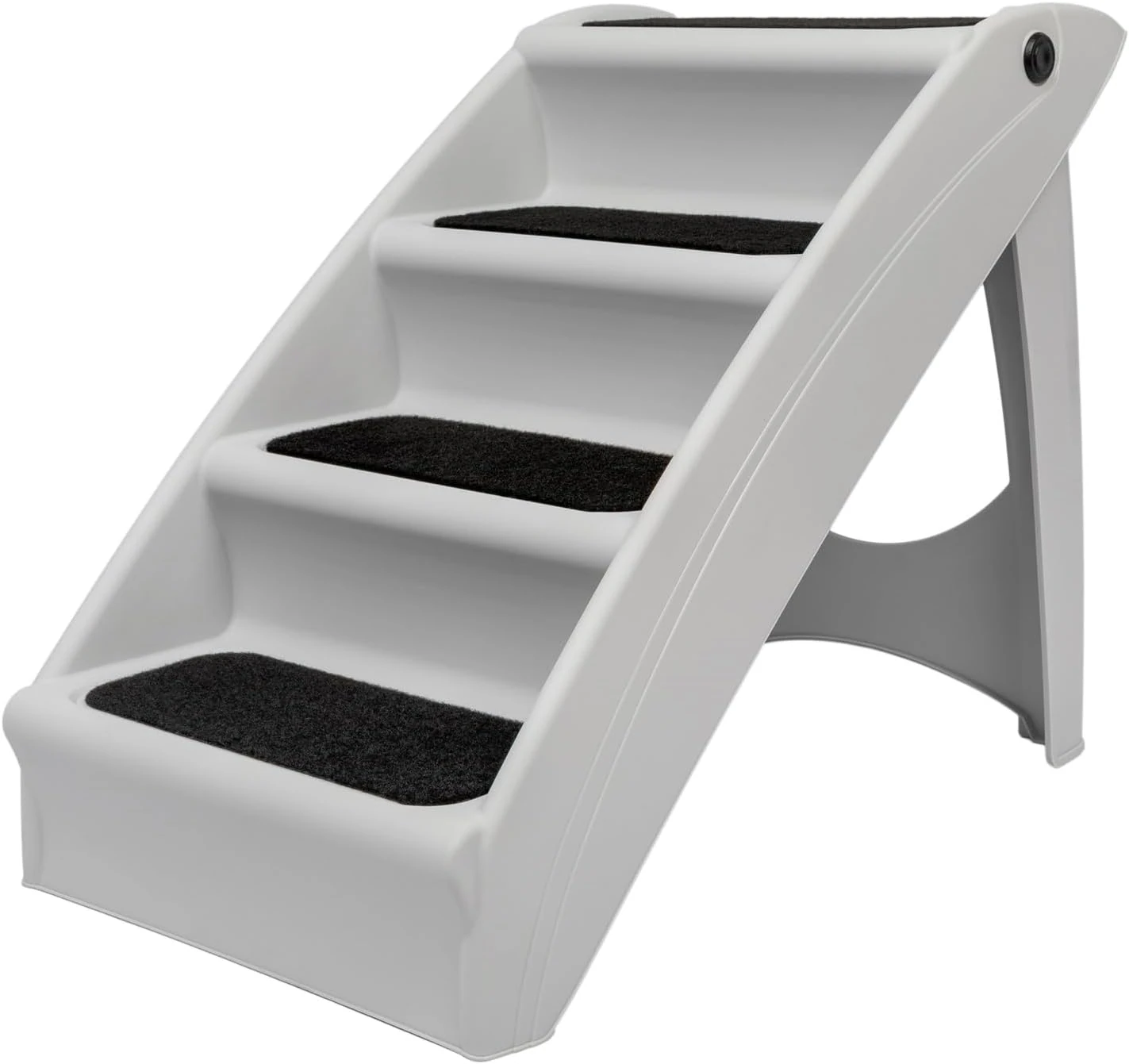
A rigid 20-inch hinged frame that locks open beside taller beds or couches and folds flat against a closet wall when you need extra floor room.
Flat-Pack Wood Panels and Snap-Together Molded Steps
Dry-fit side panels, risers, dowels, and cam locks on a rug before tightening hardware. Aim each cam-lock arrow straight at its metal pin and stop once snug—over-torquing engineered wood strips the core and causes lasting sway. On snap-together plastic stairs, align labeled pegs by hand; hammering a crooked peg cracks the socket and creates permanent squeak.
For wood kits using biscuit joints or glued tread slots, give PVA wood glue 12 to 24 hours undisturbed at room temperature to reach full shear strength, even if squeeze-out feels tacky after an hour. Keep freshly glued stairs behind a closed door overnight.
Flush Alignment, Step Rise, and the Hidden Bed-Frame Gap
Measure from the bare floor to the compressed top of your mattress or couch cushion—press lightly where your dog lands, including any mattress topper. Set the stairs tightly against the edge so the top tread meets that height level or sits 1 to 2 inches below with zero horizontal gap.
| Dog Build & Mobility Profile | Target Step Rise | Min. Width & Tread Depth | Practical Fit Rule |
|---|---|---|---|
| Toy & long-backed dogs (Dachshunds, Corgis) | 4.5–5.5 in | 15–16 in wide; 7–9 in deep | Choose 4–5 low steps or gentle sloped foam; 7-inch risers over-flex the mid-back. |
| Small-to-medium agile dogs (15–40 lbs) | 5.5–6.5 in | 16–18 in wide; 7–8 in deep | 3–4 steps fit most 18–22 in couches and beds cleanly. |
| Large or stiff senior dogs (45+ lbs) | 5.5–7.0 in | 18–22 in wide; 9–12 in deep | Use rigid wood or heavy storage frames rated well above body weight. |
| Tall platform beds (26–32 in high) | 5.0–6.0 in | 17–20 in wide; 8–10 in deep | Use 4–5 steps (22–28 in tall); short 3-step units force a risky top leap. |
Check for the hidden gap trap created by wide platform bed rails or overhanging pillow-top mattresses. Those frames often block the stair base two to four inches back from the sleeping edge, leaving a paw-trapping trench at the top. Rotating the stairs parallel along the bed side—so your dog steps cleanly sideways onto the mattress—removes that gap instantly, or you can tuck a firm foam wedge snugly against the rail.
Be realistic about steepness, too. Vertical steps save bedroom space, yet dogs with active intervertebral disc disease (IVDD), advanced hip arthritis, or shaky rear balance often struggle with vertical risers and downward impact. When even four low steps look stiff for your pet, a continuous incline makes better sense; our walkthrough on teaching a dog to use a ramp from the ground up covers calm transitions, while our indoor pet steps collection lets you compare step heights and tread widths.
The 60-Second Stability Check and Hardwood Floor Anchoring
Empty pet stairs look solid standing still; failure happens under angled horizontal push when a dog trots up or brakes coming down. Run four quick hands-on checks before inviting your pet onto the bottom tread.
- Press 25 to 40 pounds of palm weight onto the center and front lip of the top step—dense foam should flex lightly without tipping forward, and hinged legs should stay silent with zero inward bow.
- Shove the top tread firmly away from the bed and sideways from both flanks; if the base slides more than half an inch on hardwood, tile, or laminate, anchor the underside first.
- Drag your bare palm downward along every tread—slick varnished wood, smooth plastic ridges, or loose fabric lets trimmed paws skate off the nose during descent.
- Run fingers along zipper pulls, hinge joints, and adhesive tread edges so no sharp seam or lifting corner sits where a dewclaw can snag.
Hardwood sliding is the fastest way to make a cautious dog swear off stairs for good. Even foam bases dotted with factory silicone nubs skate after a week once household dust and pet hair coat the dots. Lay a thin natural-rubber rug pad underneath—trimmed one inch smaller than the base so bare toes never trip on the rim—or press rubber furniture pads under hard feet. Wedging one flank flush against a heavy nightstand also stops sideways twist.
Skip draping a folded towel or throw blanket over slick stairs for grip. Loose cloth bunches under braking paws on descent and causes sudden slide-outs. Use fitted low-pile carpet treads, textured rubber strips, or snug zippered upholstery covers that move as one solid surface.
Stopping Side-Leaps and the Downward Launch Over the Steps
Plenty of dogs climb up new stairs on day one, then launch straight off the open couch side—or clear the entire staircase in one mid-air leap—heading down. Walking up keeps every tread visible ahead of their nose, while heading down hides the floor drop under their chest and loads braking force onto front wrists and spines. One doorbell ring sends most dogs straight for the fastest shortcut off the cushion.
Placement fixes most bypasses faster than nagging. Dogs stick to the path they already used to hop onto furniture, so tucking stairs behind a nightstand leaves the open center wide open as a launchpad:
- Set the stairs directly on your dog's favorite jump-off spot and keep 24 to 36 inches of clear floor runway at the base so they enter straight instead of twisting around a coffee table.
- Block open jump lanes for the first 7 to 10 days with firm sofa bolsters, pillows, or a bedside ottoman, and lay a cushioned landing mat beside tall beds while habits settle.
- Trim long fur between paw pads and keep nails clipped—overgrown pad hair acts like wool socks on fabric treads and triggers nervous mid-stair leaps.
- Keep early treat luring to 3 to 5 minutes with tiny soft rewards, marking single paws on step one first and practicing downward steps from tread two before asking for a full mattress descent.
Never drag a hesitant dog by the collar or strand it on the top step hoping it walks down. If an older dog spooks after an early wobble, fix the floor traction or tighten the frame first, then reset to rewarding calm sniffs beside step one. For very high 30-inch beds where a senior dog still leaps at night, moving sleep onto a supportive low cot—detailed in our guide on when an elevated dog bed fits best—removes fall height completely.
Folding Down, Cover Care, and Monthly Hardware Checks
Daily climbs gradually back out wooden cam locks, lift adhesive tread noses, and stretch fabric covers. Two minutes of routine upkeep prevents a rock-solid setup from turning wobbly six weeks later.
When folding a hinged frame for storage, press both locking tabs smoothly together rather than forcing the brace past resistance, and store wood or fabric frames dry. Wash zippered foam covers in cold water and air-dry flat—high dryer heat shrinks upholstery just enough to pull bottom corners inward and bow a flat foam base into a subtle rocker. Wipe silicone floor dots weekly with a damp cloth; for grimy carpet or rubber treads, see our guide to cleaning pet walking surfaces and traction frames without leaving slippery soap film.
Once a month, re-snug wooden fasteners, press down lifting tread edges, and repeat the sideways palm shove. Watch your dog's movement closely, too: if a pet that used familiar steps easily suddenly balks at the bottom tread, knuckles or drags a hind paw, hesitates going down, or yelps mid-climb, pause stair access and schedule a veterinary orthopedic or neurologic check rather than coaxing more climbs.