

Most owners looking up how to teach a dog to close a door start by luring a front paw onto the wood—and regret it two weeks later when claw marks streak the paint and their dog scratches shut doors for attention. A controlled nose push prevents both problems. Dogs protect their muzzles instinctively, producing a measured nudge that closes light cupboards and hollow-core interior doors cleanly without damaging trim.
The behavior builds on one foundation: moving a voluntary nose touch from your palm onto a door cracked 5–10 cm (2–4 inches) open. Keep sessions to 2–5 minutes (8–12 reps), soften early closing noise, and keep heavy exterior or self-closing doors off the practice list.
Pick a Safe Starter Door Before You Grab Treats
Start with a lower kitchen cupboard or a hollow-core interior door that swings easily under one fingertip. Heavy solid-core doors, tight magnetic catches, and spring-loaded fire doors demand excessive muzzle force and can rebound into a dog's face, paws, or tail.
Check hinge drag and latch tension by hand first. Doors fitted with automatic pneumatic closers, weighted spring hinges, or warped jambs stay permanently off-limits—pushing against mechanical resistance bruises noses and teaches reckless lunging. Skip glass-inset French doors and bifold closet panels too, since folding joints pinch toes and thin glass can crack.
Nose pushing fits most medium and large dogs on both lower cupboards and bedroom doors. Small breeds and short-nosed (brachycephalic) dogs such as Pugs, French Bulldogs, or Shih Tzus have lower leverage and shallower muzzles, so stick to feather-light lower cabinets or smooth drawers at shoulder height to keep necks neutral and eyes clear of knobs.
- Test swing weight with one fingertip; if the door drags on carpet or rubs the jamb, pick a freer hinge.
- Set your target at least 10 cm (4 inches) from protruding metal handles or sharp trim.
- Clip a foam pinch-guard high on an interior door—or drape a folded dish towel over a cabinet frame—to muffle early bangs and shield tails.
- Practice on a rug or grippy floor, because slick tile forces dogs to dig their claws in for traction even while leading with their nose.
Target Props Your Dog Won't Peel Off or Chew
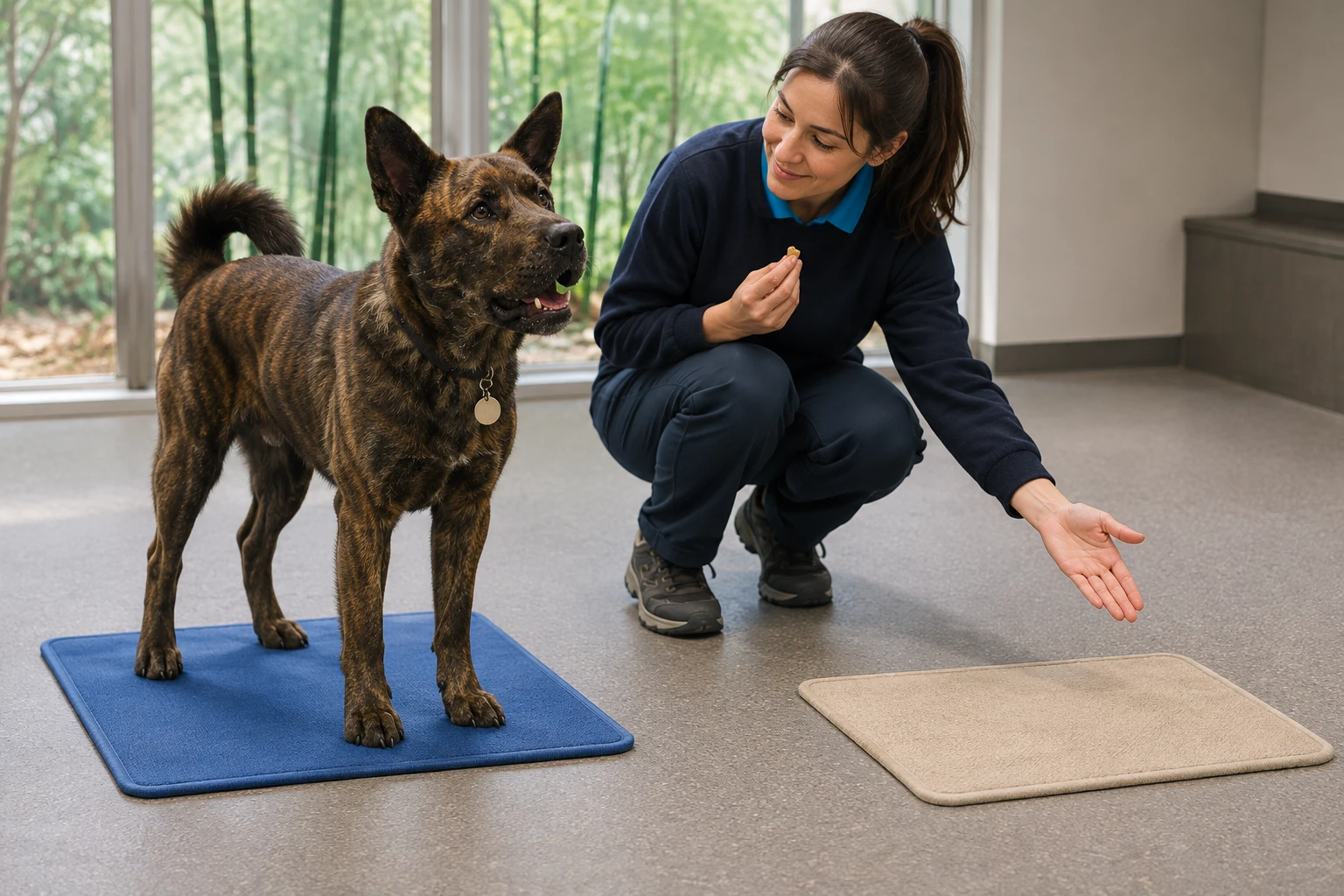
Confirm an eager palm boop before involving furniture—if that cue feels rusty, run two short warm-ups on voluntary hand targeting first. Once your dog hits an open hand cleanly, shift that nose touch to a movable prop placed near the door's outer edge.
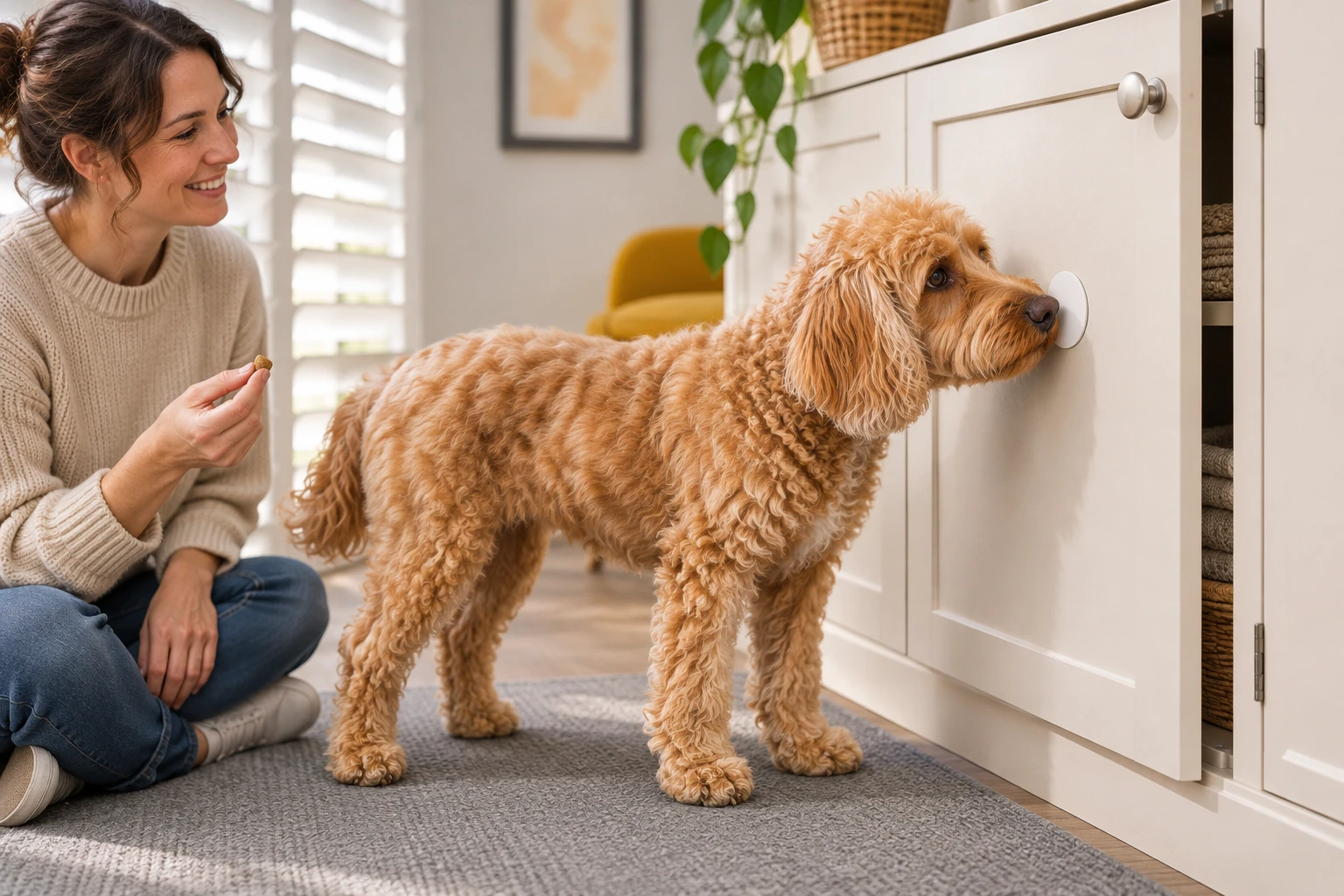
Sticky notes dominate quick tutorials, yet wet dog noses curl their corners off glossy cabinets in three reps—and curious puppies happily peel and swallow loose paper. Position matters just as much as prop choice: placing the target 5–8 cm (2–3 inches) inside the outer handle edge maximizes leverage, whereas aiming near the hinges multiplies resistance and stalls early reps.
| Target Prop | Best Fit | Common Catch | How to Fade It |
|---|---|---|---|
| Low-tack painter's tape | Paper-chewers and satin or glossy cabinets | Pale blue blends into gray wood unless doubled | Halve the square every 1–2 sessions, then peel off |
| Retractable target stick | Cautious dogs and paint finishes kept adhesive-free | Needs steady wand placement while marking contact | Pull the ball 2 cm back as your dog leans in, then point |
| Flat plastic lid (removable putty) | Dogs needing a bold, chew-proof bullseye | Can pop off and clatter if nudged off-center | Swap to a 4 cm tape square once movement is steady |
| Standard sticky note | Non-mouthy adult dogs on matte painted doors | Peels easily and invites chewing; never leave unattended | Tear down to a 2 cm tab, then remove completely |
For paper-shredders—or woodwork you prefer to keep tape-free—a handheld target ball held flush against the panel avoids stuck-on props completely. Purpose-built dog training targets streamline that handoff, and a retractable wand with an integrated clicker leaves your other hand free for fast treat delivery.
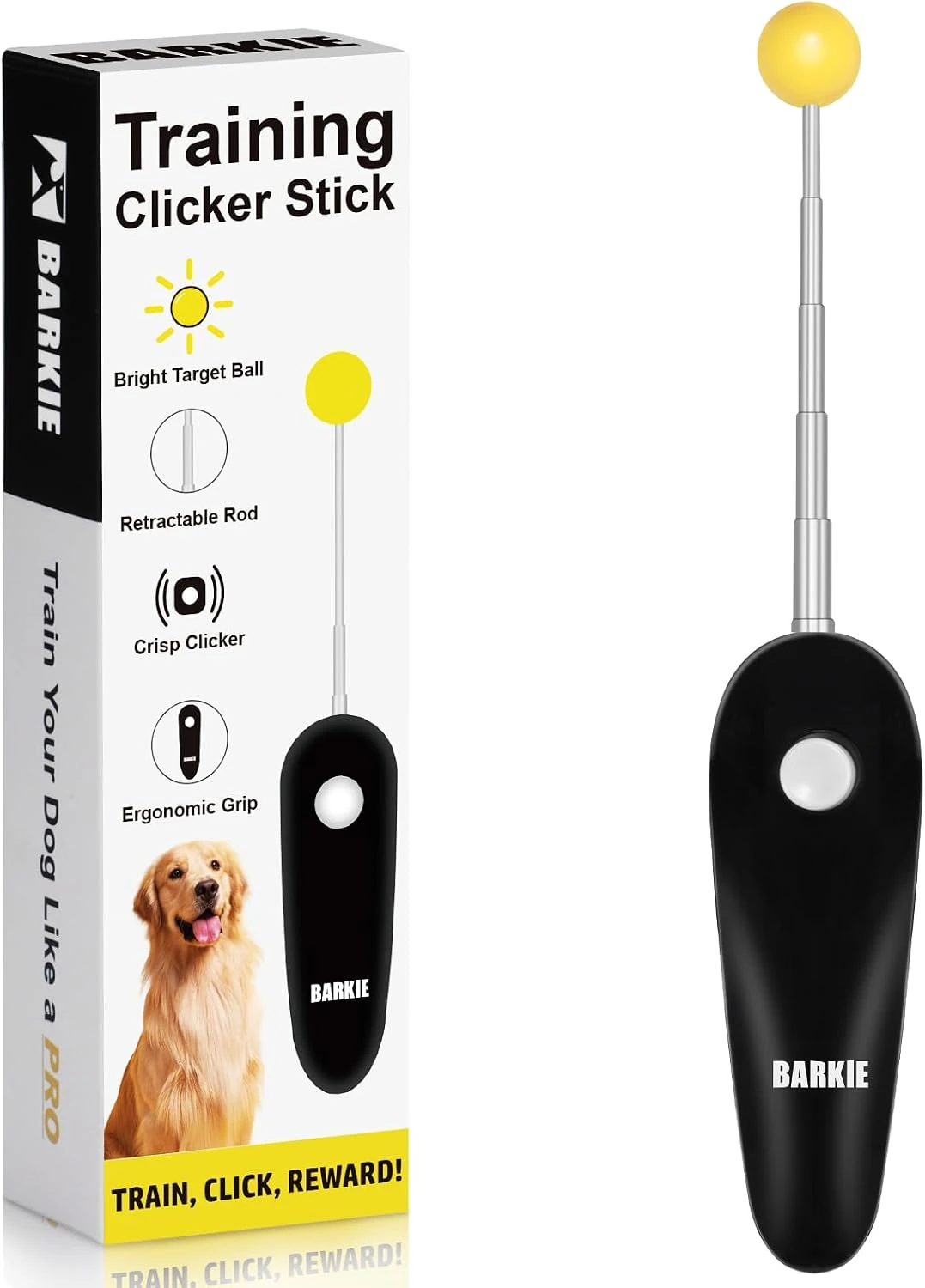
Combines a bright retractable target ball with a built-in clicker so you can cue nose contact against a cupboard door without taping chewable paper to painted wood.
Shaping the Push From First Touch to Full Close
Reward contact, panel movement, and full closure in separate steps instead of waiting for a complete close on day one. Run 2–5 minute sets of 8–12 reps, moving up only after your dog nails 8 of 10 tries smoothly without pawing or hesitating.
- Warm up off the door: Hold your tape square, lid, or target ball 15 cm (6 inches) from your dog's nose and pay 3–4 fast touches so the prop clearly predicts treats before furniture joins in.
- Open 5–10 cm (2–4 inches) with a buffer: Stand on the closing side so the panel swings away from your dog. Mount the target at nose height near the outer edge, pad the frame with a towel or foam guard, and pay even feather-light contact for 5 reps.
- Pay movement, not polite sniffs: Once your dog touches eagerly, stay silent for 2–3 seconds if the door sits still. Most dogs naturally lean in harder on the next poke; mark the split-second the panel shifts even 2 cm (under an inch) and reward promptly. After 8 solid pushes, widen the gap to 15–25 cm (6–10 inches).
- Build to a quiet full close: Raise criteria over two or three sessions—half shut, three-quarters, then flush against your buffer. Remove the buffer only after several relaxed closures, and pay a calm 3-treat jackpot a step back from the frame on the first bare latch click.
- Add one cue and fade the prop: Once the push is predictable, say one word—such as “Close” or “Shut”—a beat before your dog leans in, and keep every family member using that same word. Halve your painter's tape over 3–5 sessions until a verbal cue and brief hand point work on bare wood.
Sharp timing matters most in step three, when you want to catch the exact instant the hinges turn. Clickers mark movement faster than speech, yet loud metal boxes can spook cautious dogs in echoey kitchens—especially beside a closing cupboard. If standard clicks make your dog blink or back off, adjustable dog training clickers let you drop to a muted indoor setting without losing crisp timing.
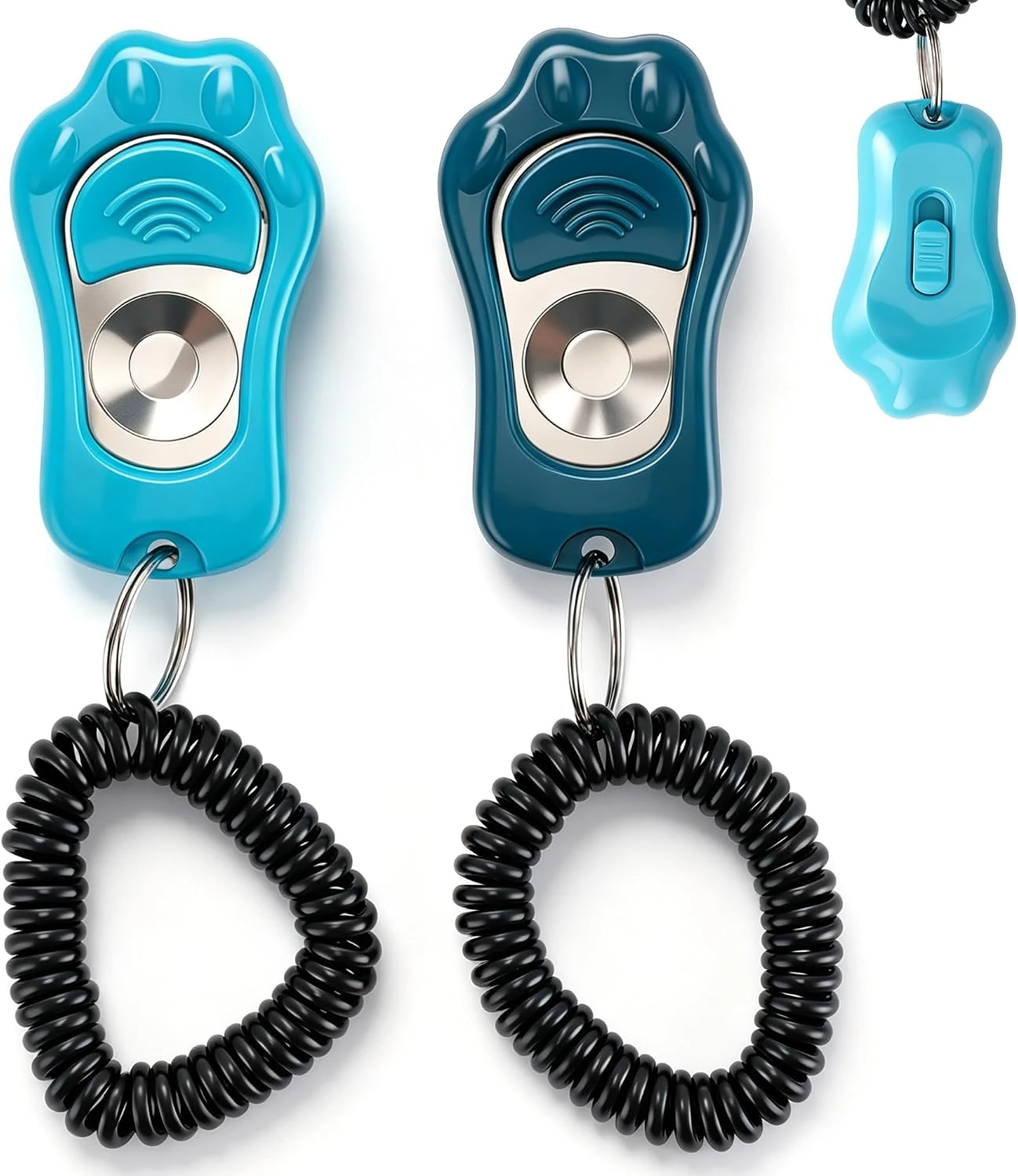
Three selectable volume settings let you dial down to a muted indoor click for sound-sensitive dogs while shaping precise cabinet and door pushes.
Fixing Four Stalls That Happen in Week One
Most regressions hit between day two and day seven, right as doors start swinging or targets shrink. Nearly every snag comes down to leverage, sudden noise, handler angles, or accidental payouts rather than stubbornness—stepping back one notch for five reps usually clears it.
The polite tap that never moves the door
Dogs sharp at palm targeting often graze cabinets lightly because gentle touches always paid before. Double-check leverage first: move the prop to the outer edge and verify the hinge swings freely. Then stay silent for 2–3 seconds after a whisper touch so your dog experiments with firmer pressure voluntarily. Never shove your dog's head toward the panel, which builds fast hand-shyness.
Flinching when the panel clicks or bangs shut
A sharp wooden slap inches from a dog's whiskers feels like an ambush and can erase three days of confidence. Put the towel or foam guard right back on, narrow the gap to 5 cm (2 inches), and toss each treat 1–2 meters (3–6 feet) back into the room. Tossing rewards lets your dog step away, shake off tension, and choose to re-approach cleanly.
Pushing from the wrong side and swinging it wider
Standing inside the open doorway or beside the hinges invites your dog to loop around you and nose the inner face open. Position yourself behind the outer closing face and toss reset treats straight toward the center of the room so every return approach squares your dog up with the correct side.
Unsolicited cabinet slamming while you cook
Keen retrievers, herding breeds, and task-trained dogs often start darting up to slam cupboards the instant you open one for dishes. Put the trick under firm stimulus control: give zero treats, laughter, or attention for unrequested slams, and keep snacks zipped away outside practice. Cue a brief sit or kitchen mat settle while unpacking groceries, rewarding closes strictly after your verbal cue.
Generalizing to Other Doors and Setting Realistic Limits
Dogs treat each new doorway as an unfamiliar puzzle because height, swing weight, texture, and room layout shift together. Plan two brief transition sets on every new light door, narrowing the opening back to 10 cm (4 inches) until the push turns smooth again.
Once your dog closes one starter cabinet reliably from 1 meter (3 feet) away without tape, introduce a second lightweight hollow-core bedroom or laundry door with painter's tape restored for 3–5 warm-up pushes before fading it again. After three distinct doors click, most dogs grasp the broader concept and respond to a point across the room.
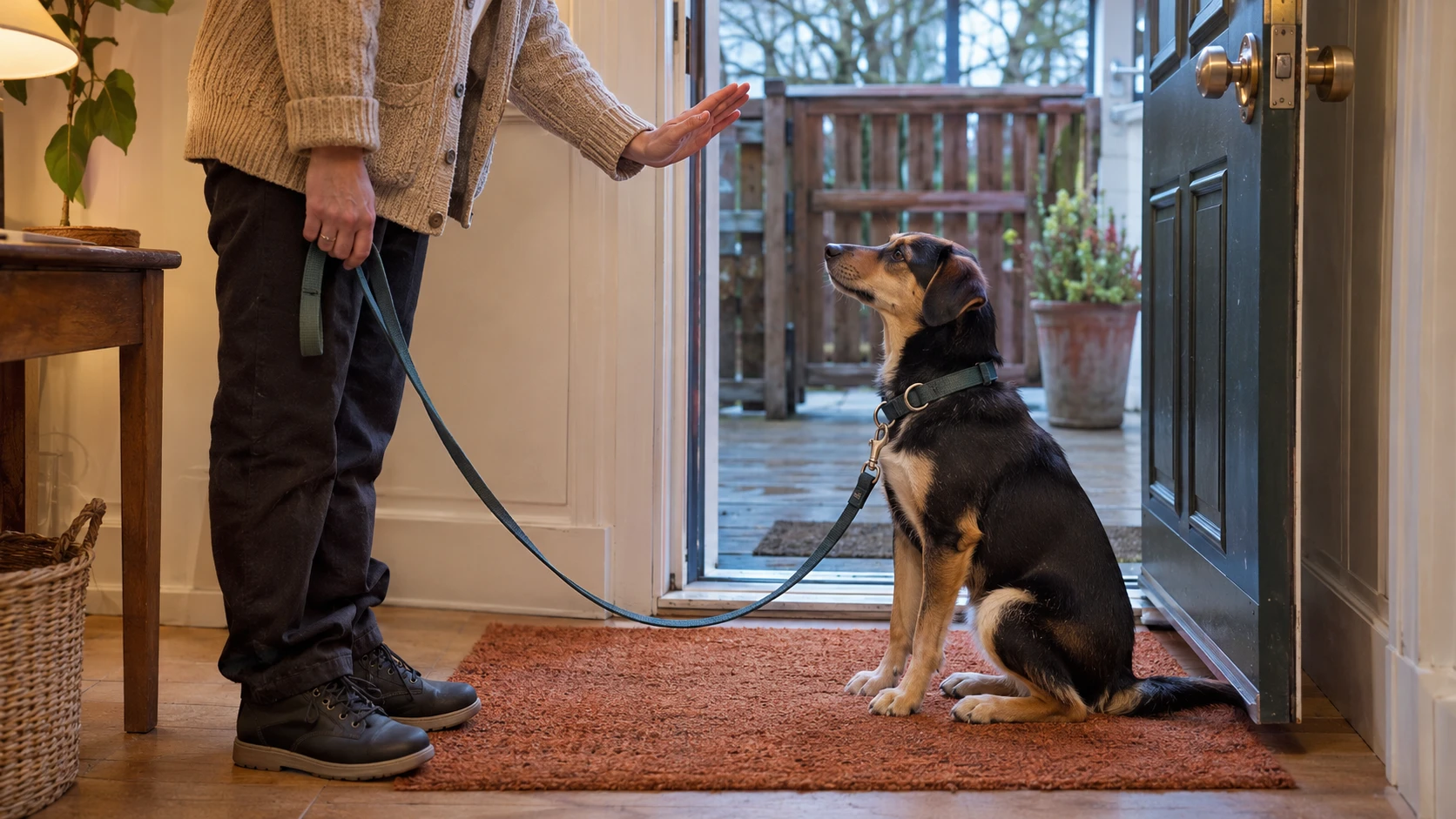
Owners often ask whether a dog will shut a bedroom door automatically behind themselves without being asked. You can eventually chain walking through one inward-swinging doorway to turning and pushing the panel, though it takes weeks of strict routine and risks locking a dog away from water on latching rooms. Treat closing doors as a cued indoor trick distinct from exterior doorway safety; if preventing dashes outside is your goal, train impulse control separately by teaching your dog to wait at an open door.
End every session while your dog still looks eager for another rep. Pause immediately if you spot repeated lip-licking, stiff hesitation, yawning, or a sudden switch to pawing after a loud bang—those cues mean the panel moved too fast or sounded too sharp. Stepping back to a cushioned frame for five easy wins protects your paint, keeps your dog's nose comfortable, and leaves them ready to try again tomorrow.