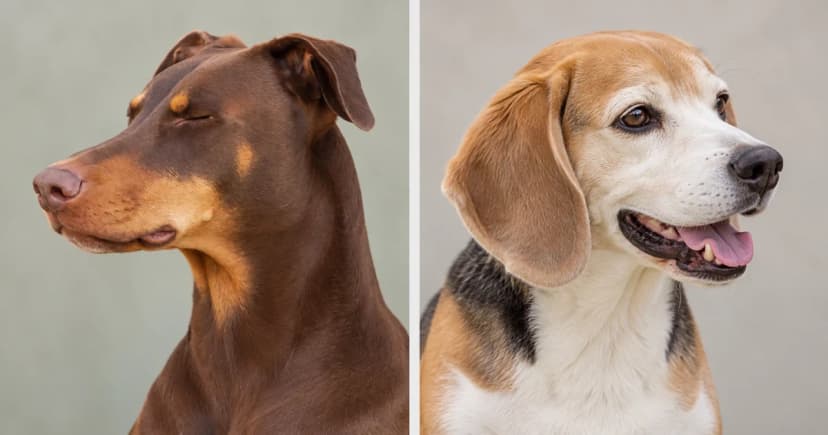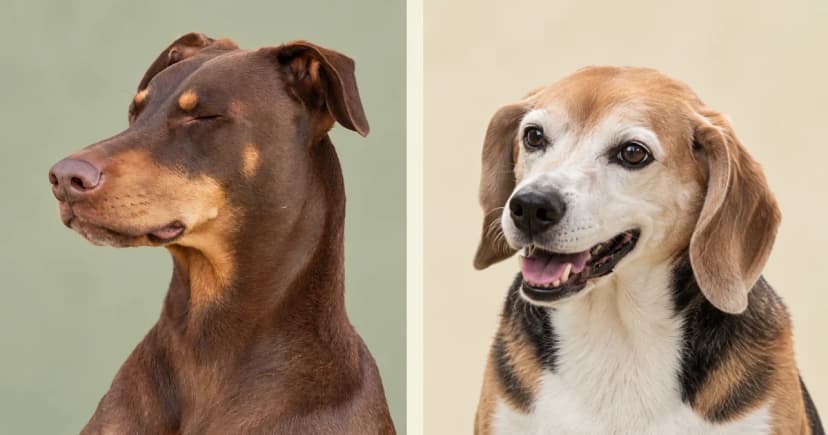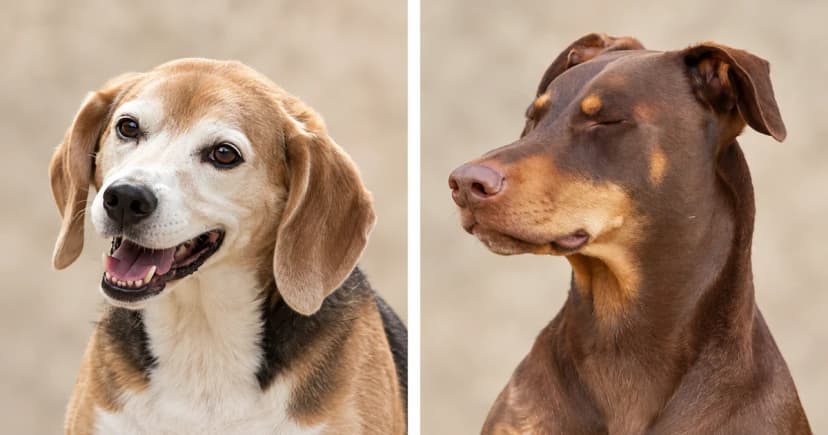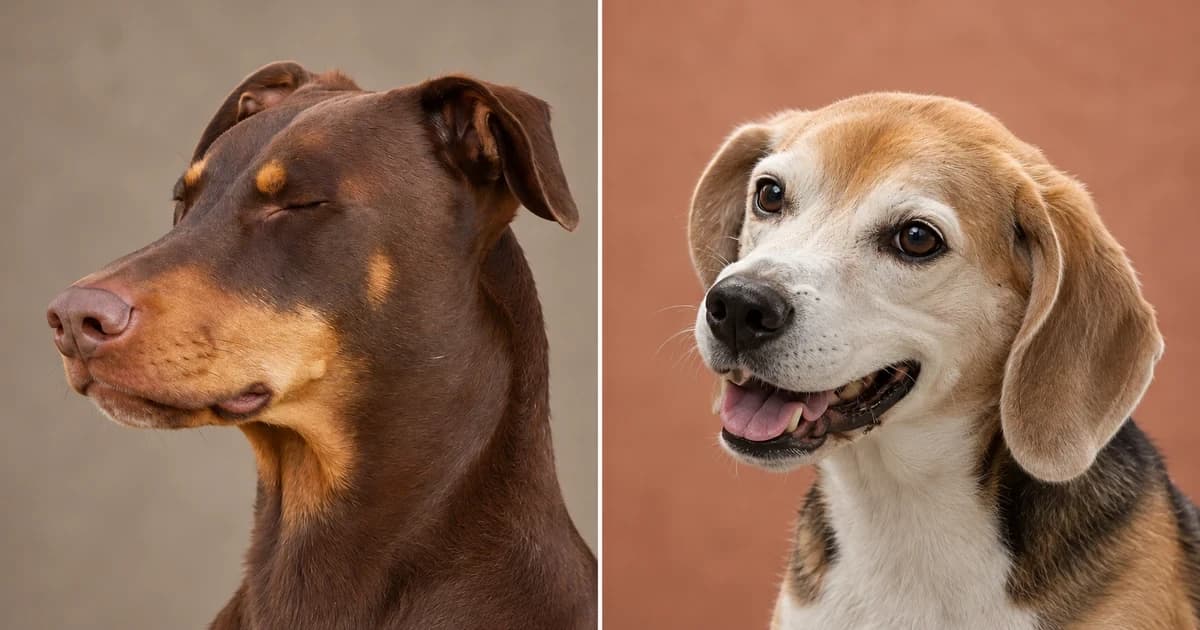
Learning how to teach a dog to nod and shake its head means training two separate head-tracking movements with visibly different hand signals—an up-and-down closed fist for nodding and a side-to-side raised index finger for shaking. These two movements are learned responses to visual cues; they do not show that a dog understands yes-or-no questions, gives consent, or is free of ear or neurological discomfort.
Choose an easy start
Blue Cross recommends practising with minimal distractions initially and pausing whenever learning becomes difficult. Keep every repetition voluntary and reward-based.
| Target Trick | Starting Hand Shape | Lure Movement Direction | Fading Food & Final Hand Signal (AKC) |
|---|---|---|---|
| Vertical head nod | Closed fist holding a treat in front of the dog's nose. | Move the closed fist slowly straight up and down so the nose tracks vertically. | Switch to an empty closed fist (rewarding from your other hand), then shrink the up-and-down motion until presenting the closed fist cues the nod. |
| Sideways head shake | Closed fist with the index finger raised vertically, held at nose level. | Move the raised-index-finger hand slowly left and right so the head turns side to side. | Switch to the empty raised-index-finger hand (rewarding from your other hand), then reduce the horizontal sweep toward that distinct finger signal. |
Build the vertical nod
Following the AKC's paired head-movement exercise, hold a treat inside a closed fist at nose level and move your fist slowly up and down. Praise and reward your dog as their head follows the vertical path in a nod. Once that movement is consistent, present an empty closed fist along the same vertical path and deliver the reward from your other hand. Gradually reduce the up-and-down motion, working toward the closed fist itself as the visual signal.
Give the sideways movement another signal
Use a clearly different hand shape for the second trick, such as a fist with your index finger raised. Hold a treat with that hand presentation and move it slowly from side to side in front of your dog's nose; praise and reward when their head follows horizontally. Once your dog tracks the side-to-side motion reliably, use the same raised-index-finger hand without food—rewarding promptly from your opposite hand—and gradually reduce the horizontal sweep toward that distinct raised-finger hand signal.
Reward the response you observed
Battersea emphasises prompt reward timing. Identify which head movement actually happened before delivering the treat, rather than rewarding an unrelated movement or pawing response later.
Never interpret either trained head gesture as conversational agreement, permission for handling, or a substitute for a veterinary health check. Our nose-target lesson teaches a separate skill where your dog presses their nose directly against your palm rather than following a moving signal at a distance.