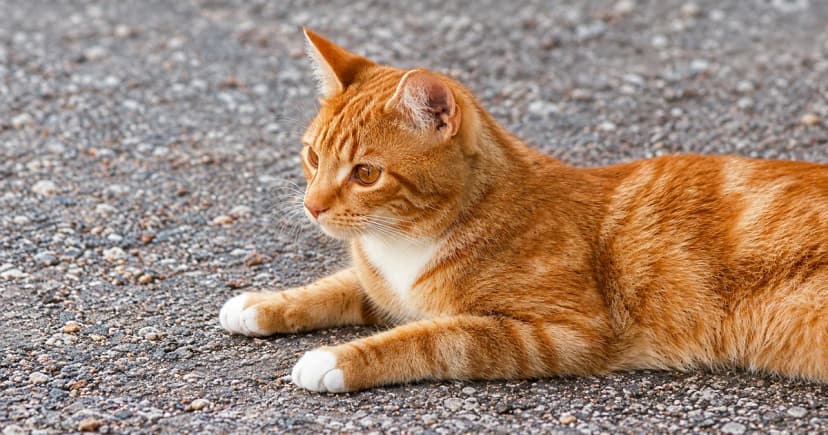
Cats knead blankets by repeatedly pressing their front paws into a soft surface. The movement begins in kittenhood, when nursing kittens knead around their mother's teat to help stimulate milk flow. Some cats continue the behavior as adults, but a blanket does not reveal one definite reason for every cat's kneading.
Cats Protection explains that the adult behavior remains uncertain. Comfort and a response to familiar textures are possible explanations. That uncertainty matters: you can observe what your cat does without treating each paw movement as proof of a specific emotion.
What kneading looks like
You may see alternating front-paw presses before the cat settles down or while they remain on a blanket. The claws may extend, and some cats purr or drool. Those accompanying actions vary between individuals; a cat does not have to perform the entire combination to be kneading.
Blue Cross describes both the variation and the connection with nursing. It also suggests that kneading on a lap can indicate a sense of security. This is a possible interpretation in context, rather than a way to measure affection or compare how much two cats trust their people.
Why a blanket may be the chosen surface
A soft blanket offers a texture the cat can press into. Cats Protection discusses an automatic response to certain textures as one theory for adult kneading. A cat returning to the same blanket is useful information about the surface they choose, but it does not establish the reason for that choice.
Another familiar explanation is that cats are preparing a sleeping place. Blue Cross presents nesting as a possible origin; Cats Protection notes that the wildcat grass-flattening explanation is less well supported. Treat it as a theory, not a proven account of what your cat is thinking.
Observe the whole situation
For a familiar kneading routine, notice the setting instead of counting paw presses. A few practical observations can help you describe the behavior clearly:
- The surface: which blanket or resting place the cat chose.
- The sequence: whether paw pressing came before settling, during a lap visit or alongside mouthing the fabric.
- Your interaction: whether the cat approached you and could leave freely.
- A change: what is different from this cat's usual pattern, including any newly damaged fabric.
Kneading is not an invitation to restrain the cat or keep petting after they move away. Battersea's interaction guidance recommends respecting each cat's preferences, allowing an easy exit and paying attention to tension or attempts to leave. Quiet company may suit a cat who does not want more touch.
If claws make lap visits uncomfortable
Blue Cross suggests putting a thick blanket on your lap to provide a barrier. You can also offer the resting surface beside you and let the cat choose where to settle. This does not require punishing a familiar kneading routine or forcing the cat into another position.
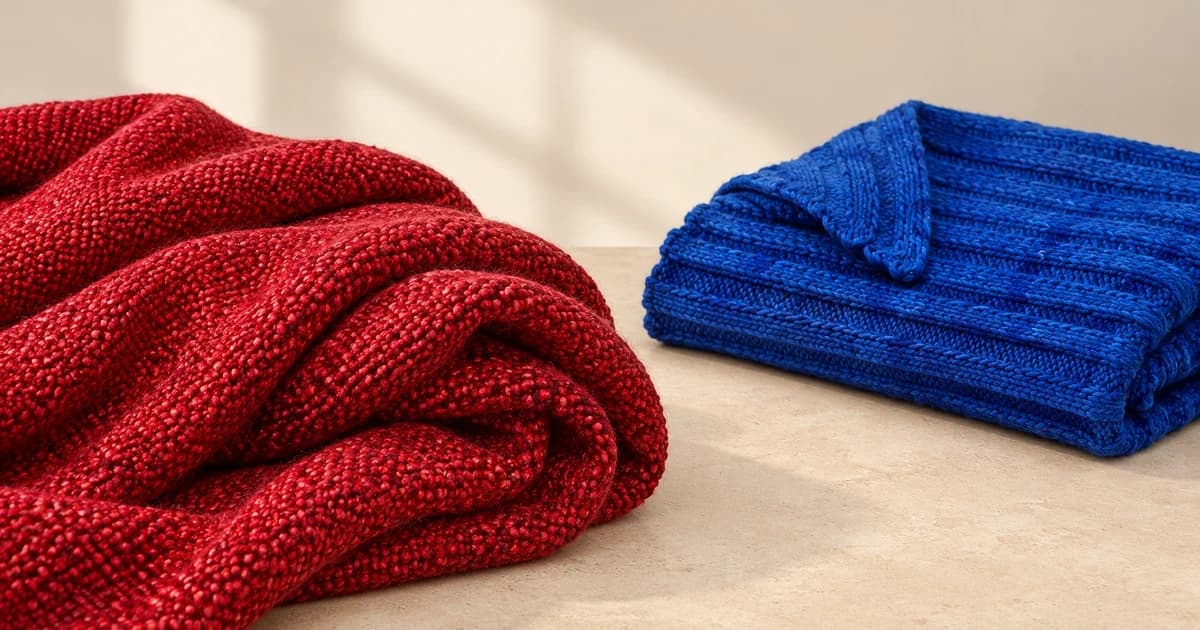
If you are considering a different pet blanket, check its individual construction and care instructions. No material or product can guarantee that a cat will knead it, and a knitted texture in an illustration is not evidence that it is suitable for a cat who mouths or damages fabric.
Separate paw pressing from swallowing material
Observe the paws and mouth separately. Kneading, sucking at a blanket, chewing holes and swallowing loose material describe different actions; do not assume that every cat pressing a blanket is also eating it. If fabric is being damaged, remove access to loose pieces while you seek advice about the behavior.
If you suspect your cat has swallowed fabric, thread or another item they should not eat, contact your veterinarian promptly. PDSA advises against waiting for symptoms or trying to induce vomiting without a vet's specific instruction. A description of the observed action and any missing material is more useful than assuming that blanket chewing has a particular diagnosis.