Even when owners search how cold is too cold to walk a dog, a thermometer number alone cannot tell you whether your planned walk is safe today. Practical winter dog walk ice visibility route checks come down to four direct conditions before you step past the driveway: you can walk steadily without slipping on ice, your route stays clear of frozen ponds or snow-concealed hazards, you can see the ground surface clearly, and you have an immediate turn-back point or indoor fallback ready. If any of those four checks fails, shorten the route, postpone the walk, or play indoors.
The three UK veterinary and welfare guides cited below—Blue Cross, Dogs Trust, and PDSA—emphasize evaluating both the individual dog and the physical hazards on the ground rather than relying on a single universal temperature cutoff or walk duration.
Pre-departure winter route and fallback checklist
Use this five-point route check before clipping on the leash so a sunny forecast number or a dog coat does not mask an unsafe sidewalk or waterside trail:
| Check Point | What to Verify for Outbound & Return Legs | When to Reroute, Turn Back, or Stay Indoors |
|---|---|---|
| 1. Handler & dog footing (outbound and return) | Check doorstep steps, curb ramps, shaded slopes, and the return path for black ice or packed slick snow. | Do not set out if slippery ground puts you at risk of falling or forces you across an icy slope to reach clear pavement. |
| 2. Snow-concealed ground hazards | Verify that fresh or drifted snow has not hidden potholes, ditches, sharp debris, or drop-offs along the path. | Switch to a cleared, familiar surface and keep your dog on a leash when snow obscures ground edges. |
| 3. Frozen ponds, lakes & canals | Confirm the route bypasses frozen water features or allows continuous leash control well back from the bank. | Never let a dog walk onto ice over water, and reroute away from unfenced frozen banks. |
| 4. Surface lighting & mutual visibility | Ensure you can actually see the ground footing ahead of you—not just wear reflective gear for passing traffic. | Change walk time or choose a well-lit street if darkness hides icy patches or uneven ground. |
| 5. Turn-back loop & indoor backup | Pick cutoff points that return home without descending an icy hill, and keep a familiar indoor scent or hide-and-seek game ready. | Turn back immediately if footing worsens, visibility drops, or your dog lifts paws, shivers, slows down, or stops. |
Check your own footing before committing to the route
Look past the front porch to the street crossings, shaded corners, and slopes you will need to use on the way back. Standing upright on a salted doormat does not prove you can safely hold a leash down an untreated hill.
Blue Cross's winter dog advice (reviewed 20 January 2023, with a listed next-review date of 20 January 2026) explicitly advises owners not to go out when slippery conditions put the person walking the dog at risk. It also highlights differences among individual dogs, warns to keep dogs away from frozen ponds and lakes, and recommends indoor games when winter conditions make going out unsafe.
Watch for what snow and winter darkness conceal
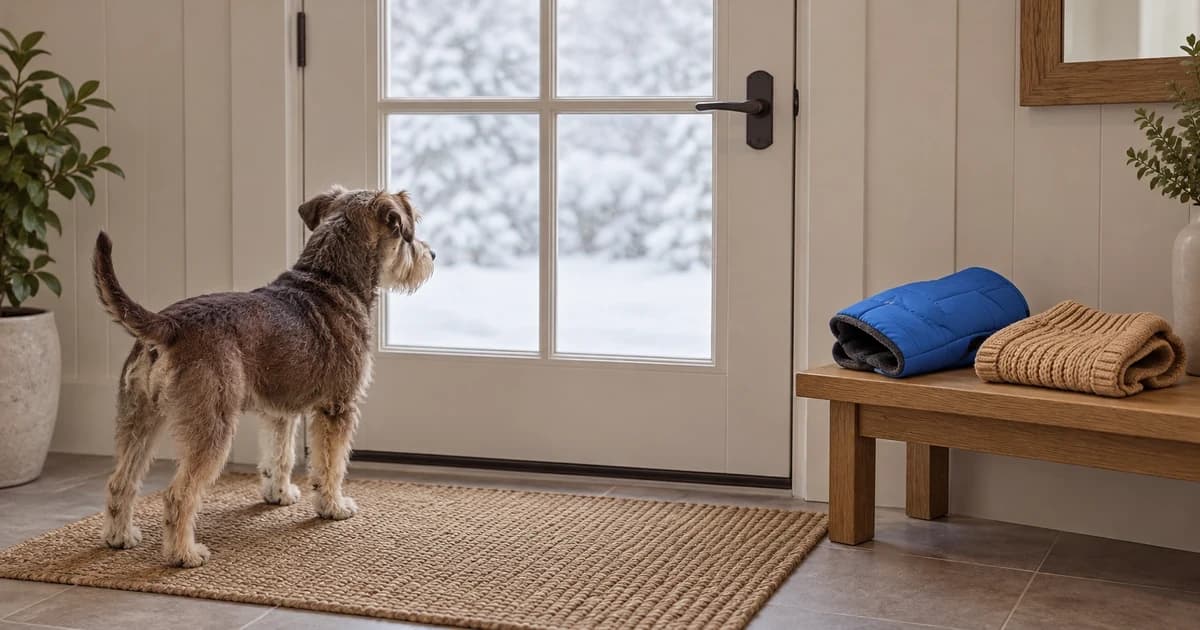
Dogs Trust's cold-weather advice warns that snow can hide holes and surface hazards, recommends keeping dogs on a lead in snowy conditions, and instructs owners never to let dogs walk on frozen ponds. Dogs Trust also recommends grippy handler footwear, high-visibility gear, fastening leash clips indoors before fingers get cold, and swapping outdoor walks for indoor games like hiding a favorite toy when weather is severe.
Remember that reflective collars and LED tags help drivers spot you, but they do not illuminate black ice under your feet. If you cannot clearly read the ground surface on an early-morning or evening walk, shift the walk to daylight or stay on lit, cleared pavement.
Compare actual routes rather than forecast numbers alone
Even under the exact same air temperature, two local loops can pose completely different winter route decisions:
| Route feature | What still needs checking | Reason to change the plan |
|---|---|---|
| Lit path near home | Actual footing on the approach and return, current visibility and the dog's response | Lighting or proximity does not approve icy ground or an unsuitable outing for this dog. |
| Icy slope and frozen-water edge | Whether a different route avoids those features completely | Do not make reaching the usual destination depend on crossing ice or guessing where a covered edge lies. |
Notice that the lit residential path above is still a candidate to evaluate on the day, not an automatically approved winter route: if its approach sidewalk is sheeted in ice or your dog is struggling with the cold, postpone the walk or stay indoors.
Evaluate your individual dog and keep turn-back options open
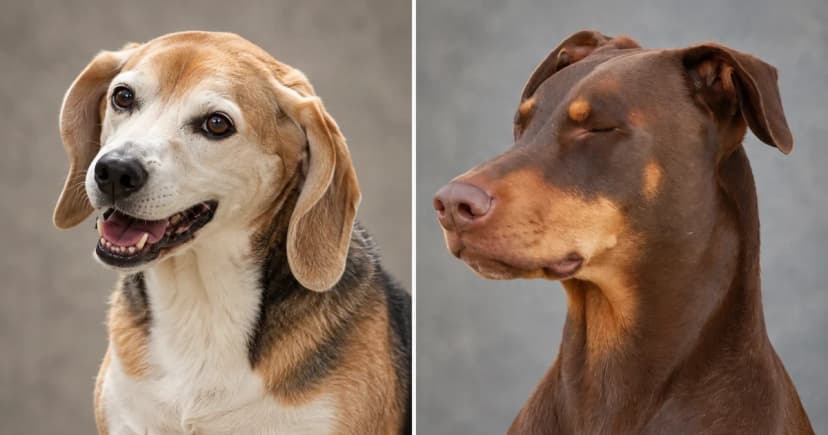
In its winter pet safety advice (published 13 December 2022), PDSA notes that icy surfaces are slippery for pets as well as people, advises keeping dogs on a lead near frozen water, and explains that thin-coated, young, senior, or unwell dogs may need extra help staying warm. For the separate decision of choosing and fitting cold-weather apparel, see our winter-coat guide—keeping in mind that a warm coat never makes an icy slope or frozen pond safe.
If your dog starts lifting paws, shivering, whining, or slowing down during an outing, stop and head straight into warmth, and consult your veterinarian about any concerning sensitivity or health change. See our editorial policy on how we use veterinary and animal-welfare publications.