
1 of 2 · Click image to view larger
UVB Fixtures & KitsPawlivy product details
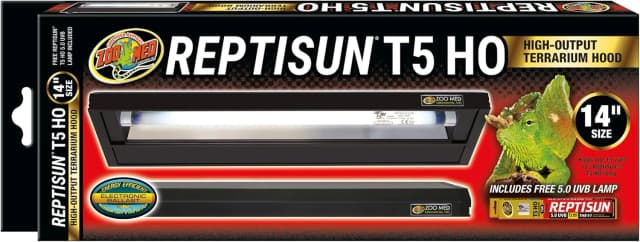
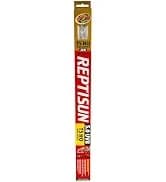
5.0 T5-HO 14" Terrarium Hood with ReptiSun T5 HO 5.0 UVB Lamp
Complete Package: Includes FREE ReptiSun T5 HO 5.0 UVB Lamp with your purchase
$58.98
100 available
Option PLY-013603
SKU: PLY-013603
Buy this selection now. Review delivery and payment details at checkout.
About this item
- Complete Package: Includes FREE ReptiSun T5 HO 5.0 UVB Lamp with your purchase
- Space-Saving Design: New low profile design fits seamlessly on top of your terrarium without taking up excessive space
- High Performance Ballast: Energy efficient T5 HO electronic ballast for rapid start and maximum lamp performance
- Enhanced Light Distribution: Highly polished curved reflector for increased lamp efficiency and better light coverage
- Full Spectrum Lighting: Use with a ReptiSun T5 HO lamp to provide UVB, UVA and Visible light for your reptile
- Extended UVB Penetration: High Output T5 design provides effective UVB penetration at greater distances for larger and taller enclosures
Additional information
| Material | Plastic |
|---|---|
| Tank Volume | 10 gallons |
| Special Feature | Energy Efficient |
| Product Dimensions | 3"L x 3"W x 14"H |
| Item Weight | 0.65 kg |
| Shape | Tubular |
| Specific Uses For Product | Indoor |
| Style | Minimalist |
| Color | Black |
| Product Dimensions | 16.3 x 5.9 x 1.1 inches; 1.43 pounds |
| Department | Unisex-Adult |
| Included Components | Instruction Manual |
| UPC | 097612320701 |
| Number of Items | 1 |
| Number of Packs | 1 |
| Global Trade Identification Number | 00097612320701 |
| Set Name | ReptiSun T5-HO Terrarium Hood Kit (14" with 5.0 UVB Lamp) |
| Item Highlight | ReptiSun T5 HO 5.0 UVB Lamp |
| Unit Count | 1 Count |
| Item Type Name | Reptisun T5-Ho Terrarium Hood - 14", Black |
| Additional Features | Energy Efficient |
| Vivarium Type | Terrarium |
| Pet Type | Reptile |
| Item Dimensions L x W x H | 3"L x 3"W x 14"H |
| Item Shape | Tubular |
| Product Style | Minimalist |
| Material Type | Plastic |
Pawlivy details
More about this product
Laboratories has been on the cutting edge of reptile husbandry and innovation for nearly 50 years. In 1993 developed the 1st UVB lamp for reptiles, which changed the way all Zoos, herpetologist, and hobbyists keep reptiles in captivity.
Available in — 5 Sizes
Choosing a UVB Source
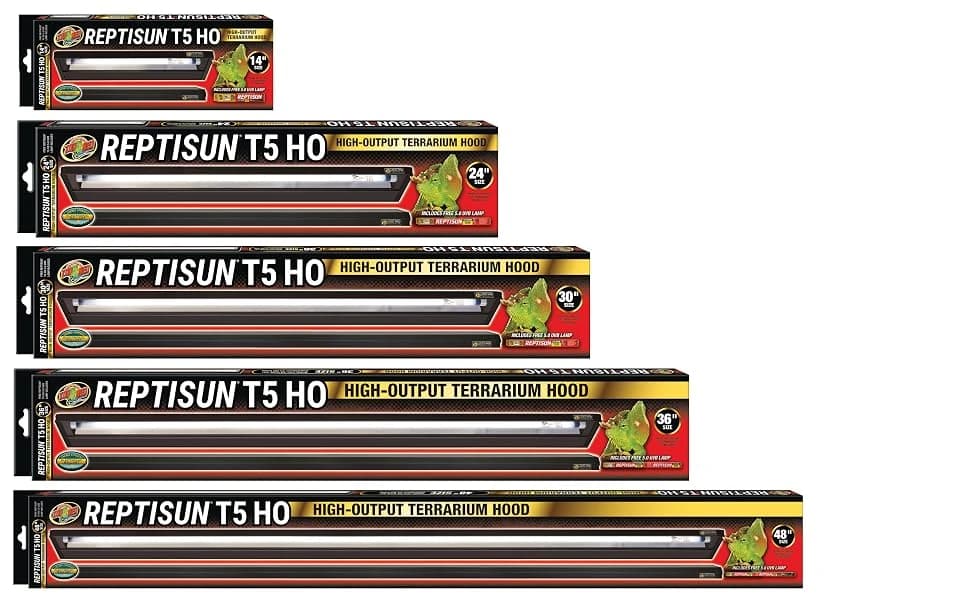
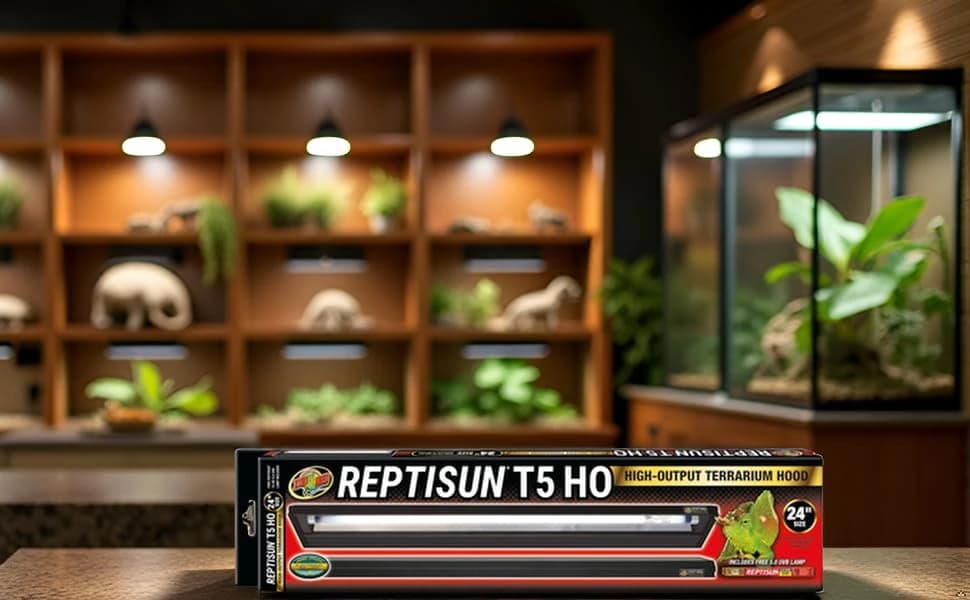
Includes FREE ReptiSun T5 HO 5.0 UVB Lamp. New low profile design. Energy efficient T5 HO electronic ballast for rapid start and maximum lamp performance. Highly polished curved reflector for increase lamp efficiency. Use with a ReptiSun T5 HO lamp to provide UVB, UVA & Visible light for your reptile.
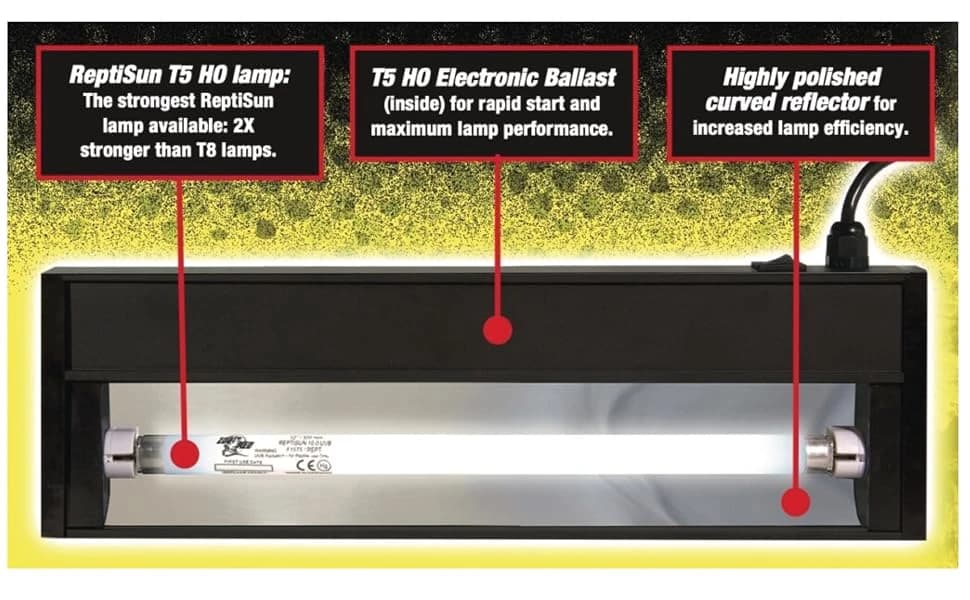
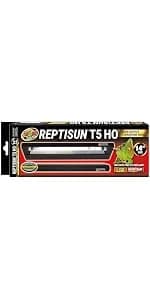

The Reptisun T5-Ho Terrarium Hood is designed for reptile enclosures. It features a low-profile design, energy-efficient T5 HO electronic ballast, and a polished, curved reflector for optimal lamp performance.
Animals and UVB
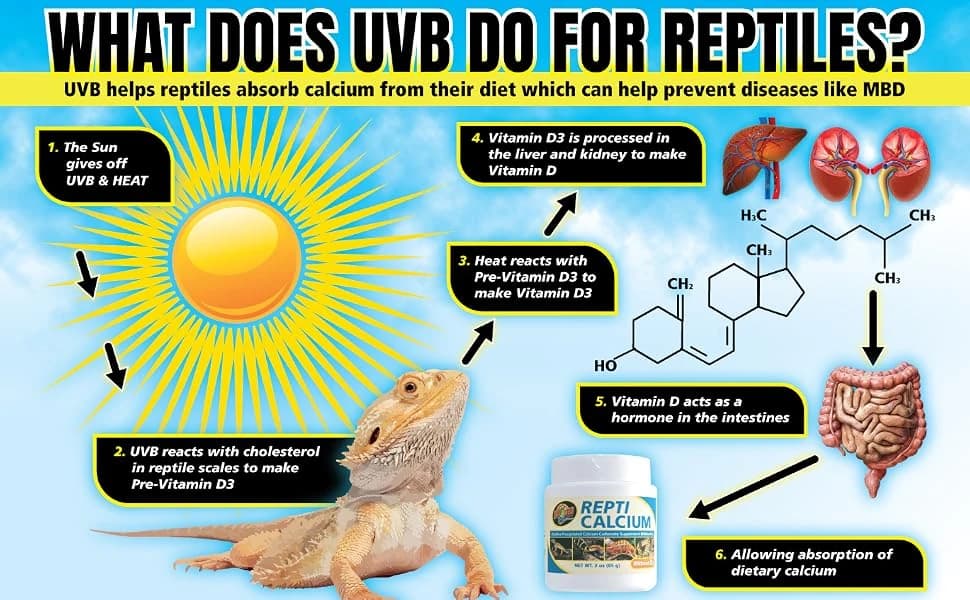
Many animals (most reptiles and birds) are able to utilize UVB to synthesize their own Vitamin D3. While some species are able to get Vitamin D3 from their diet (like snakes that eat whole prey items such as mice), most insectivores and herbivores must make D3 of their own. Vitamin D3 is responsible for calcium metabolism, and if there is not enough circulating vitamin D3 in the blood, animals are not able to use the calcium in their gut that comes from their food. Dietary calcium would then pass through the gut unused, and animals would be forced to take it from their bones, ultimately leading to a form of Metabolic Bone Disease (MBD). MBD causes reptiles’ bones to become soft, resulting in severe deformities of the spine, broken legs and soft jaws. In severe cases, the internal organs can calcify and become hard—which can ultimately result in death. In addition to being a major component of bones and eggshells, calcium is involved in countless biological processes at the cellular level, including cell communication, muscle contractions and other functions that are essential to life. In the early days of keeping reptiles, little was known about the specialized lighting requirements of the majority of reptile species. During this time, reptiles housed indoors were not exposed to UVB, and as a result, would often develop Metabolic Bone Disease (MBD).

More to explore
Related products
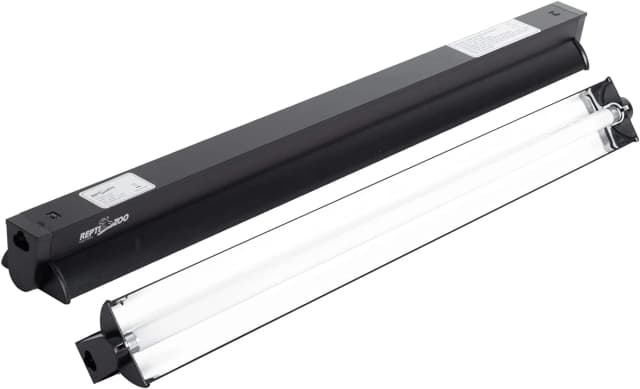
UVB Fixtures & Kits
16-Inch LED UVB Reptile Light with Auto On/Off and Preset Day-Night Cycle Dimming
From $58.99