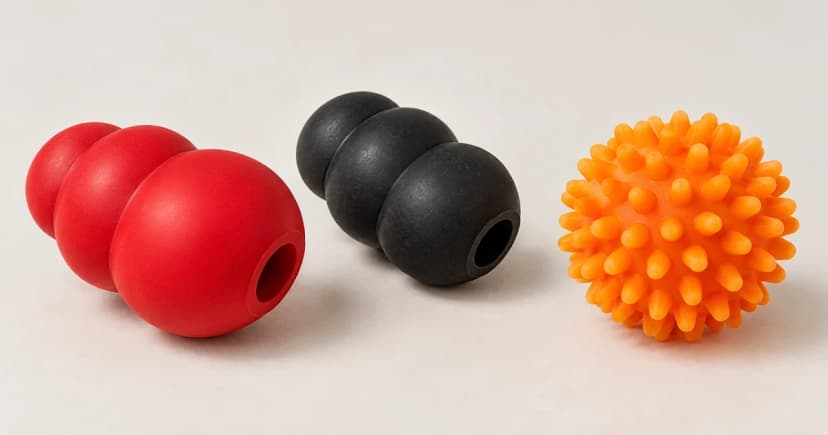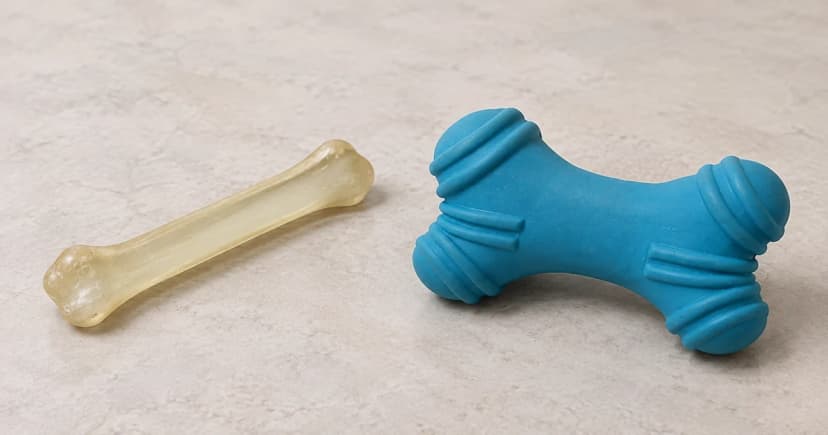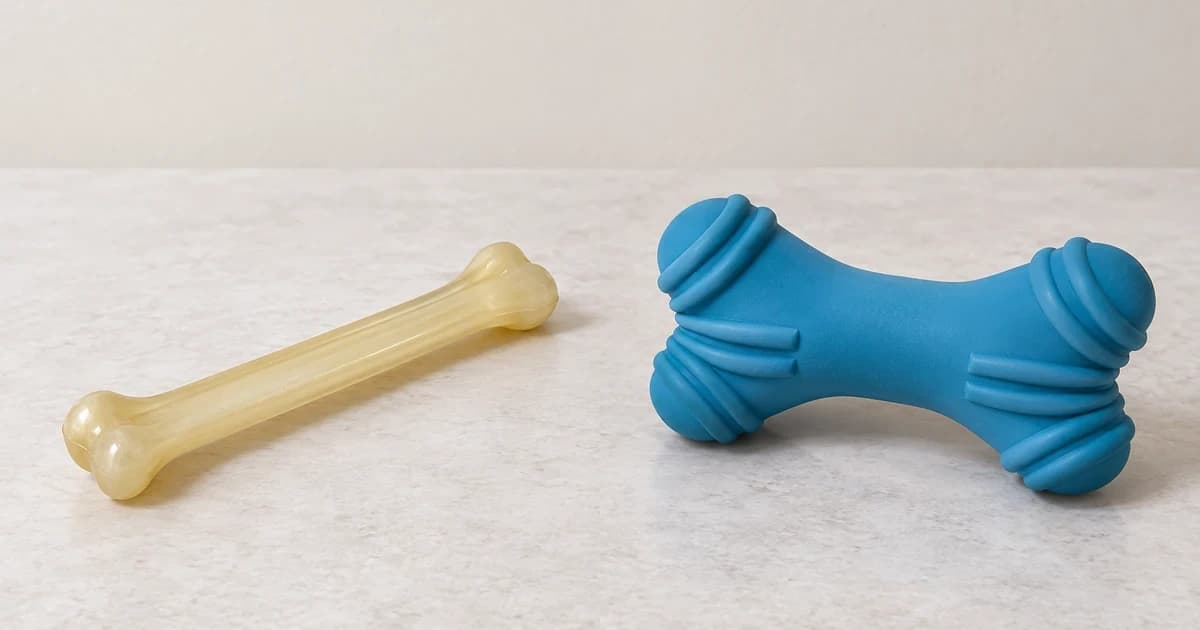
Asking are nylon chew toys safe for dogs involves two separate questions that a package label cannot combine: first, how a non-edible chew must be sized, supervised, and retired before fragments break off; and second, whether a rigid nylon surface is appropriate for your individual dog's teeth. A flavored non-edible toy is not food, and high chew resistance does not mean a hard nylon bone is safe for every dog's enamel or bite force.
Compare manufacturer usage rules and veterinary dental guidance side by side
When evaluating nylon dog chew toys, keep the manufacturer's product-handling rules in one column and veterinary dental and ingestion guidance in a separate column:
| Check dimension | Manufacturer product & replacement rules (Nylabone FAQ) | Veterinary dental & ingestion guidance (PetMD, Dec 2018 & PDSA, June 2019) |
|---|---|---|
| Edibility vs. flavor | Nylabone distinguishes non-edible chew toys from edible treats and states that added flavor does not make a non-edible chew toy intended for consumption. | PDSA (June 2019) warns that swallowed non-food toy fragments can cause gastrointestinal blockages requiring urgent veterinary care. |
| Material & hardness scope | Identifies nylon as the core material in its Power Chew line while offering softer or different formulations in puppy and moderate-chew lines; requires matching size and chew style to the label. | In PetMD's December 2018 veterinary interview (checked October 2026), Dr. Rory Lubold warns that overly rigid chew toys can wear down teeth or fracture a tooth, requiring individual evaluation for the specific dog. |
| Retirement & replacement trigger | Gives condition-based replacement rules rather than a fixed calendar: retire the chew when knuckles/ends wear down, if cracks appear, or when it becomes small enough to pose a choking or swallowing hazard. | Never rely on homemade thumbnail tests or another dog's experience to clear dental risk; if a dog chews aggressively on rigid surfaces, ask your veterinarian to assess tooth wear and suitable chew textures. |
| Action if a piece is swallowed | Supervise chewing and remove worn or undersized toys promptly. | Contact a veterinarian immediately if you suspect a swallowed piece; PDSA advises never waiting for symptoms to worsen and never inducing vomiting at home. |
Flavor never turns a non-edible nylon chew into a treat
Nylabone's official FAQ separates its non-edible chew toys from its edible chew treats and explains that flavoring is added to attract interest, not to make the toy digestible. In addition, the brand name alone does not mean every item is hard nylon: while the Power Chew line uses tough nylon, lines made as puppy chew toys or dog chew toys for small dogs can use different materials, sizes, and chew-strength ratings.
Always keep the original packaging so you can verify the exact product line, weight range, and replacement criteria. Retire any non-edible chew as soon as the ends wear down, cracks develop, or the piece shrinks relative to your dog's mouth—never sand, heat, or trim a damaged chew to extend its use.
Keep chew durability separate from individual tooth health
A toy that survives heavy jaws without breaking can still transfer concentrated force to a dog's premolars and carnassial teeth. In PetMD's December 2018 report (verified October 2026 for its clinical dental warning), veterinarian Dr. Rory Lubold notes that overly rigid chew toys can wear down enamel or break a tooth and emphasizes selecting toys for the individual dog's chewing habits and oral health. Note that we cite only that clinical tooth-trauma warning from the 2018 interview, not its older regulatory commentary.
If an earlier softer toy wore out quickly, stepping up to the hardest available nylon bone is not an automatic upgrade. Bring the exact product name and a description of your dog's chewing style to your veterinarian's next dental check so you can confirm whether rigid chews are appropriate for your dog's teeth.
Use this two-part verification card before offering a chew toy
| 1. Product identity & package limits | 2. Individual dog & veterinary dental check |
|---|---|
| Exact brand, product line (e.g., Power Chew vs. Puppy), weight rating, non-edible designation, and retirement triggers on the label: ____ | Dog's dental history, chewing intensity, supervised session plan, and veterinary guidance on rigid vs. flexible chew textures: ____ |
If your dog has already torn apart a toy during play, use our guide to damaged toys and observed context to log what happened and remove damaged items from circulation.
Contact a veterinarian immediately for suspected ingestion
Whenever a chunk goes missing or you suspect your dog swallowed part of a chew toy, call your veterinarian right away. PDSA's veterinary guidance on gut blockages in dogs (June 2019, checked October 2026) warns owners not to wait for vomiting, lethargy, or abdominal pain to appear and never to try making a dog vomit at home. When comparing options in chew toys, always match the specific item's material and size instructions to your veterinarian's dental advice.