Rope toys need close supervision and regular inspection. A toy that is coming apart, shedding pieces or being eaten should come out of play. A dog chewing a rope is different from a dog sharing a brief game with you: the important question is what happens to the toy in that dog's mouth. No rope toy is a guarantee against swallowing material.
If you think your dog swallowed rope or another piece of a toy, contact your veterinarian immediately. Do not wait for symptoms or try to make your dog vomit at home. PDSA's veterinary guidance on gut blockages explains why suspected ingestion needs prompt advice.
Look at the dog, the toy and the intended game
Start with the manufacturer's instructions for that particular toy. Check the intended use, size guidance and any supervision or replacement instructions. A listing under rope and tug toys describes a product category; it does not establish suitability for your dog or prove that the material can safely be swallowed.
Watch the first interaction rather than assuming that an enthusiastic dog is using the toy as intended. Does your dog hold the braid for shared play, or settle down to tear at a knot and pull out strands? If the dog starts taking it apart, end that activity and put the rope out of reach. Supervision should let you notice changes and stop the game, not simply mean being somewhere in the same room.
Blue Cross's chewing guidance distinguishes toys from items designed for chewing and warns that many toys can be damaged during prolonged chewing. Choosing a different toy still requires its own size, condition and use checks.
Check the rope before and after play
Examine the whole object in good light: the braid, knots, ends and any attached components. Compare it with its earlier condition and with the maker's replacement guidance. Look for sections that have opened up, strands being pulled from the braid, missing material and attachments becoming loose. A quick glance at the color or a single knot will not show you the condition of the rest.
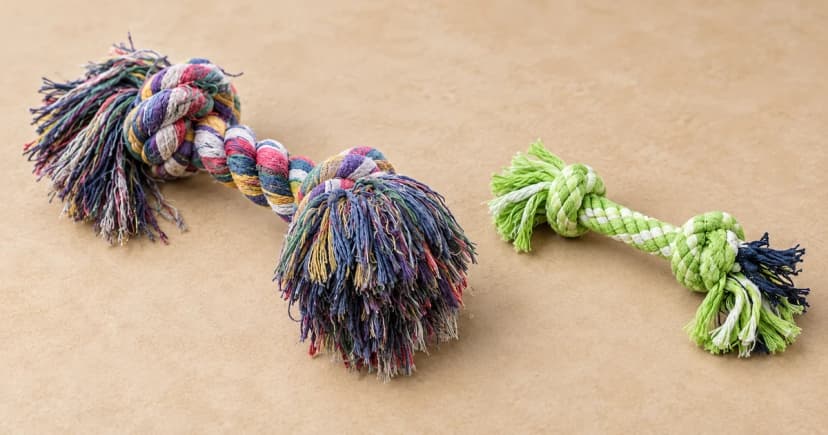
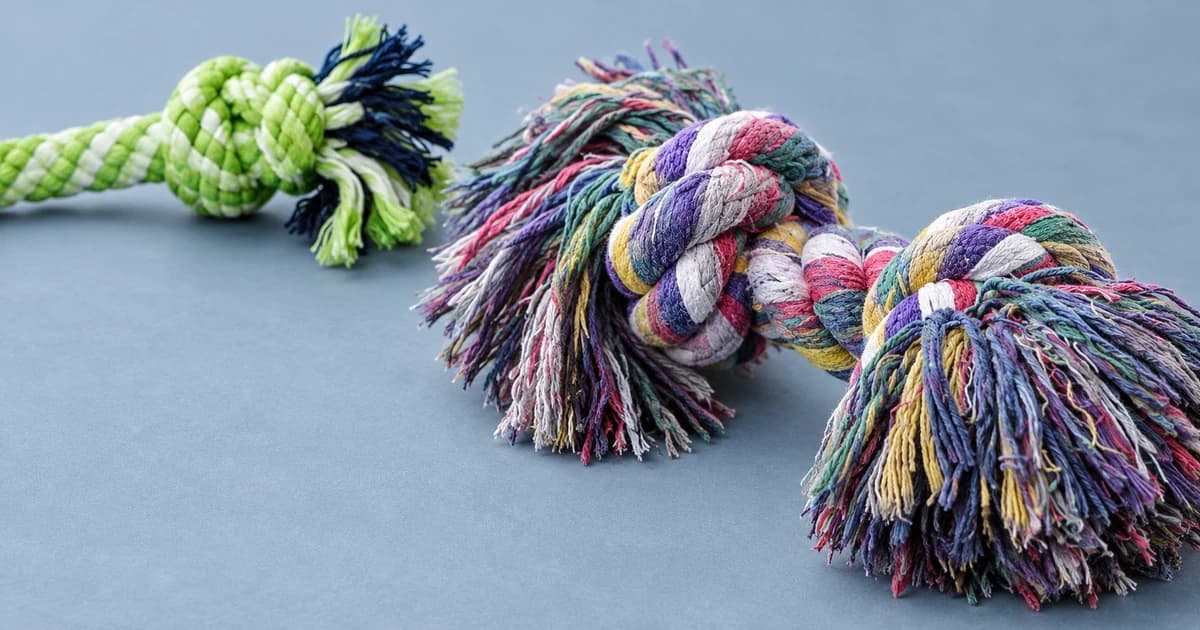
Some rope toys are made with tassel ends. That appearance alone does not tell you whether the toy is intact or suitable for continued use. Newly detached strands, unraveling or a dog actively removing fibers are reasons to stop. If you cannot confidently assess its condition, keep the toy away from your dog while you check the instructions or choose a replacement.
Do not treat washing, trimming loose strands or tying another knot as proof that a damaged toy has become suitable again. Cleaning and evaluating structural condition are separate decisions. Neither a freshly washed surface nor a tighter-looking knot establishes that pieces will stay attached during the next session.
Set up play so you can pause it
Blue Cross's play guidance recommends suitable toy sizes, checks for parts that could be chewed off and swallowed, and supervision where toy ingestion is a concern. Keep a rope session voluntary. Stop when your dog loses interest, becomes difficult to interrupt or starts dismantling the toy.
Put the rope away after the session instead of leaving it available for unattended shredding. Where a dog repeatedly destroys and eats rope toys, choosing a different supervised activity is more useful than repeatedly offering another rope and hoping it lasts. A veterinary professional can advise about concerns specific to that dog; a retail description cannot answer them.
If material is missing or may have been swallowed
Remove access to the remaining toy and call your veterinarian. Explain what happened, approximately when it happened, which parts appear missing and any changes you have noticed. Keep the remaining toy or a photograph available to help describe it. Do not use a home estimate of strand length or a claim that the rope is natural as a reason to delay the call.
Vomiting, loss of appetite, low energy, abdominal pain, diarrhea or difficulty passing stool can occur with a gut blockage. These signs do not establish a diagnosis at home, and their absence does not make suspected ingestion safe to ignore. Follow the veterinarian's instructions for assessment and treatment.
The useful routine is simple: choose for the individual dog, inspect the complete toy, watch what the dog actually does, stop when condition or behavior changes, and seek prompt veterinary advice about possible ingestion.