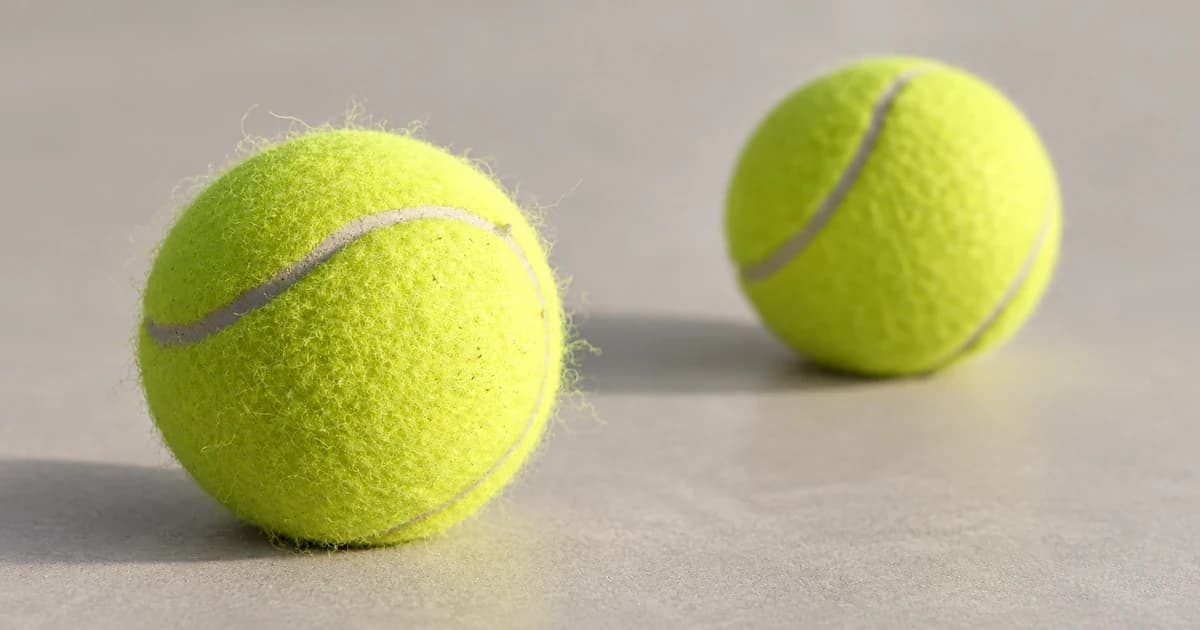
A tennis ball is familiar, but familiarity does not make it a suitable dog toy. Chewing can break the ball or remove its covering, swallowing creates separate risks, and repeated chewing on the felt can wear teeth. If your dog crushes, strips or persistently gnaws tennis balls, choose another activity and an individually suitable toy.
The guidance is not identical across organizations. Blue Cross advises avoiding tennis balls, while the American Kennel Club discusses supervised use and its limitations. Neither position establishes that the ball in front of you is safe for your particular dog.
Separate the three concerns
First, the whole ball or a broken section can obstruct an airway. A dog's ability to carry a ball does not establish that it cannot become lodged. Blue Cross also warns that chewed pieces may be swallowed and obstruct the stomach.
Second, the covering can become something the dog tears away and eats. The AKC describes ingestion risks from both the ball and its fuzz. An apparently complete ball at the start of a game can change while the dog has it.
Third, the felt is relevant even when nothing has broken off. The AKC cites a veterinary dental specialist on its abrasive quality and the additional effect of accumulated dirt and sand. Persistent chewing can contribute to tooth wear. A softer-looking surface is not a dental safety certificate.
These concerns answer different questions. Looking for missing pieces does not assess tooth wear, and buying a larger ball does not address the effect of prolonged chewing on its covering.
Watch what happens after the retrieve
Observe the part of the game that usually follows the chase. Does your dog return the object for an exchange, hold it while waiting, settle to gnaw it, or try to strip the covering? Record the actual behavior rather than describing all of it as fetch.
| What you observe | What to do next |
|---|---|
| Repeated crushing or chewing | End access to the tennis ball and select a different activity or suitable object. |
| Pieces or covering becoming detached | Stop the game; keep the damaged object out of further use. |
| The dog collects several balls | Prevent simultaneous access to multiple balls; do not turn this into a carrying challenge. |
| Retrieval turns into prolonged possession | Work on a voluntary exchange separately rather than prolonging a struggle over the ball. |
This is a set of decisions about access and play, not a home test that certifies a ball. Supervision means being able to respond to what is happening; merely being somewhere nearby does not change the object's properties.
Choose the next toy by its actual specifications
Start with the job you want the toy to do: an easy short retrieve, a supervised exchange, or a different kind of play. Review the manufacturer's intended use, size guidance and limitations for the specific product. Check for parts that could detach and whether its size suits your dog. Blue Cross emphasizes suitable size and regular toy checks.
Do not replace the word tennis with rubber and assume the assessment is finished. A material label, a dog picture on packaging, or the claim that a toy is tough does not establish mouth fit or resistance to this dog's chewing. Our dog toys and enrichment directory helps you compare product information; the category itself supplies no safety approval.
Suspected swallowing needs veterinary advice
If you think your dog has swallowed a ball, covering or a piece of toy, contact a vet straight away. PDSA's guidance on gut blockage explains that symptoms vary and that suspected ingestion needs prompt advice. Do not wait for a missing piece to produce a particular symptom or try to make your dog vomit at home.
For the next play session, make the decision before handing over the object: what is the activity, what product facts have you verified, and what behavior will end access? Those answers are more useful than treating a familiar yellow ball as automatically appropriate.