Arrange bird perches by checking three things together: room for ordinary movement, access to food and water, and what sits beneath each resting position. A perch that looks convenient from the front can still put a dish directly below a bird or block the route to a removable bowl.
Start with the equipment already in the cage. Sketch the layout, move one item at a time, and watch how your bird uses the result. This guide covers the placement of compatible cage furniture. A layout sketch cannot establish the right cage size, perch material or accommodation for a bird with limited mobility.
Map the space before adding another perch
The RSPCA's bird-environment guidance recommends different perch angles while keeping the enclosure uncluttered enough for movement. The RSPCA Australia enclosure guide also calls for room to turn without the tail contacting the cage or its furnishings. These are useful checks for a layout; they do not supply a universal number of perches for every bird.
Draw a simple view from above and a second view from the front. Mark the door opening, each dish, existing perches and any platform or hanging accessory. In the top view, note how far each object projects into the cage. In the front view, mark its height. Using both views helps reveal overlaps that a single photograph can hide.
Leave a useful area for movement instead of filling every available mounting point. If furniture already limits turning or a natural wing stretch, adding a more compact perch does not automatically solve the problem. Reconsider the layout and enclosure with advice appropriate to your bird.
Check the space beneath every resting position
A convenient high perch can become a poor choice when it sits over a dish. Both RSPCA guides advise keeping droppings away from food and water; the UK guidance also warns against positioning perches so droppings fall on other birds. Omlet's parakeet feeding-dish guide gives the same practical warning about bowls beneath perches.
Use your sketch to mark the area below each perch, including the part where the bird normally rests. Compare those areas with the dish openings and any lower resting position. This is an inspection aid, rather than a calculation of where every dropping will land. Check the actual cage after use: a neat drawing cannot account for a bird's changing position.
If a dish is below a favored perch, consider moving the compatible dish holder or changing the perch position. Keep access to the dish straightforward. Moving a bowl out of one overlap while placing it behind a crowded collection of toys simply creates another problem.
Give each perch a purpose
Look at the role of each piece before deciding where to mount it. A perch near a dish, a place for resting and a route between usable areas need different checks. There is no fixed arrangement that suits every enclosure or every bird.
| Furniture role | Placement question | What to check afterward |
|---|---|---|
| Access near a dish | Can the bird reach the opening without furniture obstructing it? | The dish remains accessible, and another resting perch is not directly above it. |
| Resting perch | What is below the part the bird actually uses? | Watch for droppings on bowls, lower perches or another bird's usual resting place. |
| Route across the cage | Does this addition connect useful areas or obstruct the open space? | Observe ordinary turning and movement without encouraging a forced maneuver. |
| Platform or hanging accessory | How much space does its whole shape occupy? | Allow for the platform surface or hanging item's position, not just its mounting point. |
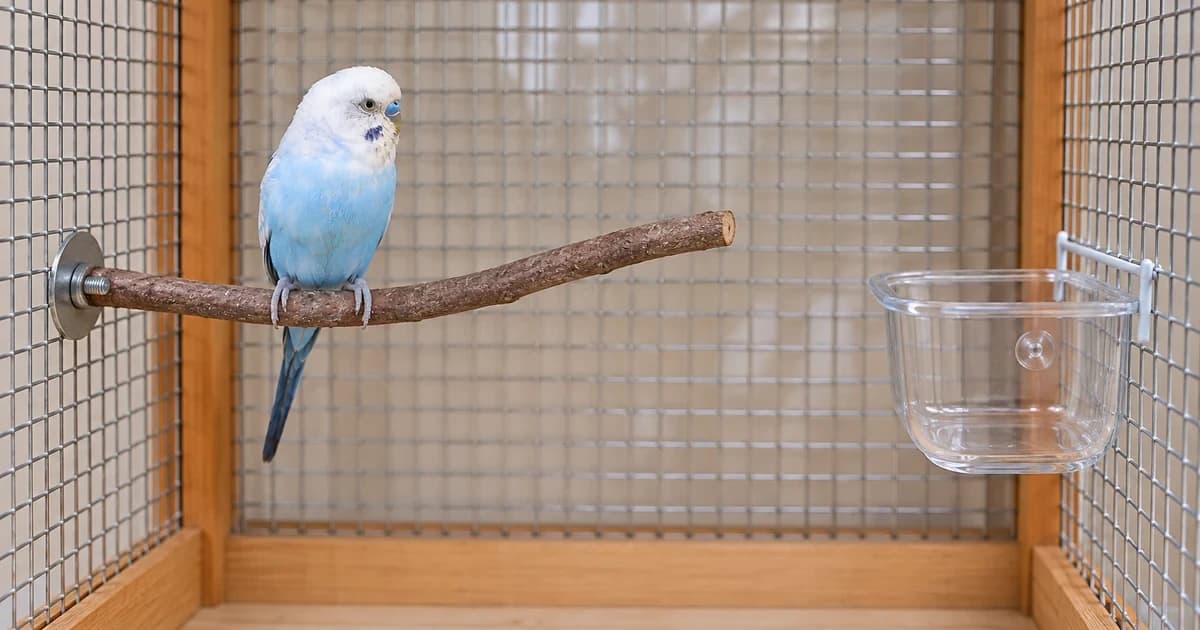
For an example, imagine a bowl attached to the right wall and a long resting perch crossing above it. Begin by identifying the overlapping section. A different compatible perch position may keep the bowl accessible while leaving more open space. The answer depends on the actual furniture and cage fittings, so a generic example is not an installation plan for your enclosure.
Check the mounting method and removal route
Before rearranging furniture, identify how the exact product attaches. Follow its instructions for the cage fitting, washers, fasteners or other supplied parts. Our natural-perch category includes different shapes and mounting arrangements; category membership does not establish a shared installation method.
Plan access for maintenance at the same time. Can you remove the bowl through the normal opening? Can you reach the perch attachment without taking apart unrelated furniture? Omlet's parakeet guide emphasizes dishes that are securely fitted and easy to remove for cleaning. These two requirements need to work together.
A platform needs the same attention. Check the entire surface and its projection into the enclosure, then follow the exact attachment instructions. Browse platform perches to compare equipment types, and verify the individual product information before choosing one.
Recheck the layout during ordinary use
After an adjustment, watch how your bird normally reaches the dishes and moves between familiar positions. Do not hold the bird in place or force a wing stretch to demonstrate clearance. If the bird repeatedly avoids a newly arranged area, reconsider it instead of assuming the drawing proves that it works.
Inspect both the arrangement and the furniture. The RSPCA Australia guide advises removing fiber perches when they become damaged. A new position does not make a worn accessory suitable for continued use. The rope-perch category covers several equipment designs, so use the exact product's care and attachment information as well.
Keep a short record of what you changed and what you observed. “Moved the bowl away from the upper perch; bowl can still be removed” is more useful than “improved the cage.” Recheck overlaps when you add or replace furniture. For multiple birds, include their actual resting positions in the observation rather than treating one bird's route as the whole layout.
How many perches should I put in a bird cage?
There is no universal count in the sources used here. Assess the enclosure, bird and furniture together. Preserve space for ordinary movement and turning, provide usable positions, and avoid crowding the cage simply because more fittings will fit.
Can I put a food bowl below a perch?
Avoid placing the bowl where droppings from a resting perch can fall into it. Check both height and position across the cage, then inspect the actual result during use. Keep the bowl accessible when changing its position.
Does a platform replace every other perch?
A platform is a different furniture shape, not a universal replacement. Its placement, projection and mounting method need their own checks. Birds with mobility limitations may need individualized accommodation; ask an avian veterinarian about those needs rather than relying on a generic arrangement.
Sources and editorial scope
This guide uses the complete relevant RSPCA UK and RSPCA Australia environment guidance and Omlet's parakeet dish guide, checked in October 2026. The two-view sketch and observation record are editorial ways to apply their placement principles; they are not published safety standards or a hands-on product test. We reviewed the catalog's English feature and A+ content to distinguish furniture types, and did not adopt unverified health, material-safety or load claims. See our editorial policy for research practices.