To learn how to clean bird perches, start with the instructions for the actual perch, then check whether your chosen cleaning tool is allowed on it. Record the perch's position, use only the permitted method, complete the required drying and inspect it before restoring its instructed attachment. A tool described for wood does not override a perch that permits only wiping.
This guide covers ordinary care of an existing perch. It compares three makers' written directions, without claiming a tested cleaning result or prescribing disinfection.
Identify the perch before removing it
Find the maker, model and care information for the perch you have. Include the branch or supporting surface and any attached fitting. A natural-looking branch, a coated perch and a rope-covered support can look familiar while having different instructions. Leave unidentified materials and finishes unresolved.
Before moving anything, photograph or note the familiar position, orientation and attachment. Check how the instructions permit removal and refitting. Do not force a fitting, cut a tie or dismantle an assembly to make washing easier.
Arrange the job within your bird's established care routine so the perch can remain out of use while you work. Treat this as maintenance rather than an opportunity to redesign the whole enclosure; the separate bird-perch layout guide covers placement around bowls and open space.
Keep wiping and washing permissions separate
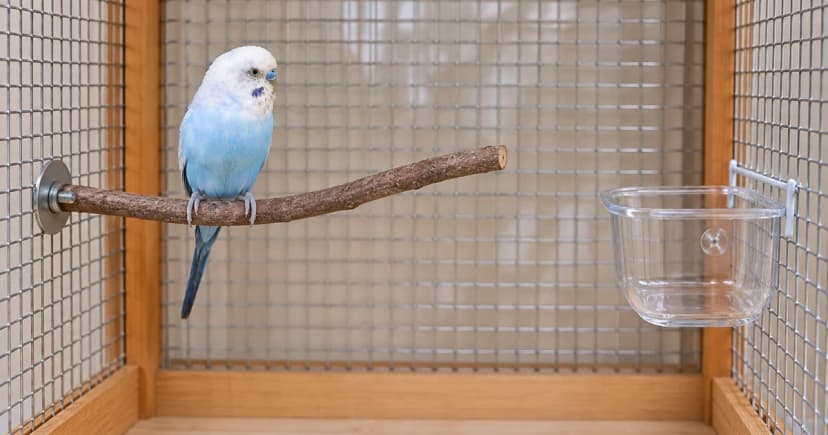
Prevue's 9-inch Branch Coffeawood Bird Perch, model 1040, lists coffeawood and stainless steel. Its care directions call for cleaning as needed with a soft cloth that is damp, followed by complete drying before reuse. The maker also calls for regular inspection and removal from use when worn or damaged.
Those directions do not supply a washing, soaking or dishwasher method for this model. A more thorough-looking wash would still be a different procedure from the one documented.
By comparison, parrotJOY's FAQ describes hot water, dish soap and a vegetable brush for its own natural toys and perches. It advises against leaving natural pieces soaking for a long period. After washing, its directions remove as much moisture as possible with an absorbent towel, then allow drying to finish.
It does not replace the different instructions for Prevue 1040.
Keep the applicable directions beside the identified perch. When a care statement gives only wiping permission, do not add immersion because another natural-wood product permits washing.
Check the cleaning tool against the perch's limits
Petmate's JW Bird Perch Cleaner, SKU 31321, has its own scope. Its directions first dampen the perch using warm water, then move the cleaner gently across it. The named surfaces are wood and cement; the maker specifically excludes sand perches.
Both permissions need to agree: the perch must allow the proposed treatment, and the tool must allow that surface. The JW description alone does not authorize using it on Prevue 1040. Likewise, a perch's washing permission does not establish that any stiff brush or scraper is suitable.
Check the actual finish rather than choosing from a broad material label. A sand-coated perch does not become eligible for this tool merely because it has a wooden core. For an unknown coating, missing tool instructions or an unanswered conflict, keep the proposed method unresolved and ask the relevant maker.
Finish drying before making a return decision
Carry out only the confirmed procedure, including any specified rinse and drying steps. Keep the perch out of use until its own drying requirement is complete. Wiping off surface moisture and completing the required drying are separate points in the job; neither another product's directions nor a generic timer settles the latter.
Then inspect the accessible supporting surface, ends and attachment for remaining debris or newly noticed wear and damage. Cleaning does not repair a split, loose connection or worn component. Follow the actual removal or replacement instructions, and leave an unresolved part out of use while obtaining an appropriate answer.
Restore the instructed attachment and familiar position
Refit the perch only by its matching instructions. Compare its position and orientation with your earlier note, account for the specified fitting parts and complete the maker's checks. Do not invent a substitute fastener or tighten an unfamiliar fitting by guesswork.
Check that the restored perch has not unintentionally blocked a dish, an opening or the intended route through the cage. Record what was cleaned, the method used, drying completed and the final status: returned to use, kept out or awaiting clarification. A clean-looking perch should not turn an unresolved attachment question into a completed job.
For work on the enclosure itself, use the whole bird-cage cleaning guide; handle separate toys through the bird-toy care guide. When comparing replacement natural wood perches, request the exact item's care and attachment information. The named examples here do not establish matching Pawlivy stock or a universally suitable cleaning method.