Learning how to brush a long haired cat starts with a calm, willing cat and a coat free of tight mats. Work gently in the direction the hair grows using a wide-toothed metal comb to check one small section at a time, and stop immediately if the comb catches, the skin looks sore, or your cat shows signs of discomfort. Completing the entire coat in one sitting is far less important than preventing a painful tug or struggle.
Check the coat before reaching for a brush
Look over the coat and visible skin before using any tool. Notice tangled patches, unusual hair loss, redness, scabs, wounds, or a change in how much your cat grooms. The RSPCA's cat grooming guidance recommends veterinary advice for skin problems, matting, and changes in coat condition because a grooming tool cannot tell you what caused a new skin or coat issue.
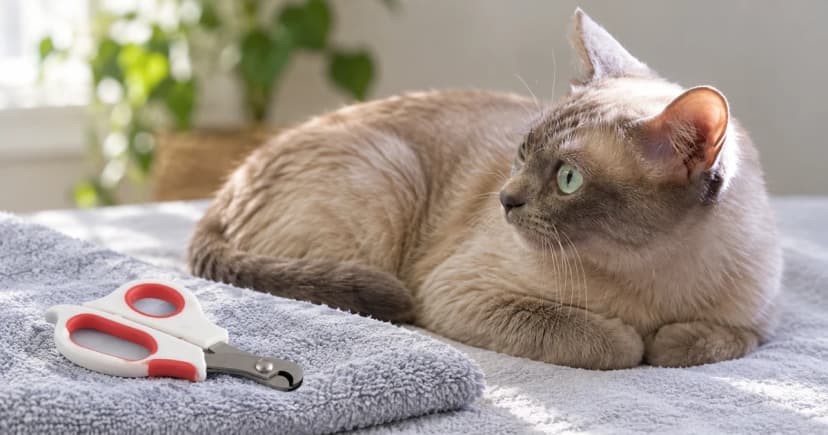
Separate routine combing of loose, untangled hair from dealing with an established mat. A compact lump, a clump pulling tightly at the skin, or resistance you cannot glide through comfortably is a clear reason to stop. PDSA advises owners against tackling mats at home and recommends speaking with your vet or a qualified professional groomer about how to proceed. Never pull harder on a snag, cut near the skin with scissors, or improvise with a razor.
Choose tools suited to your cat's long coat
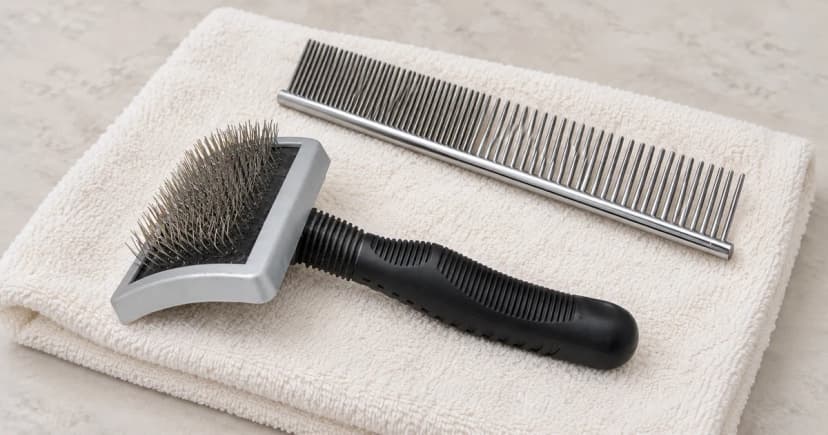
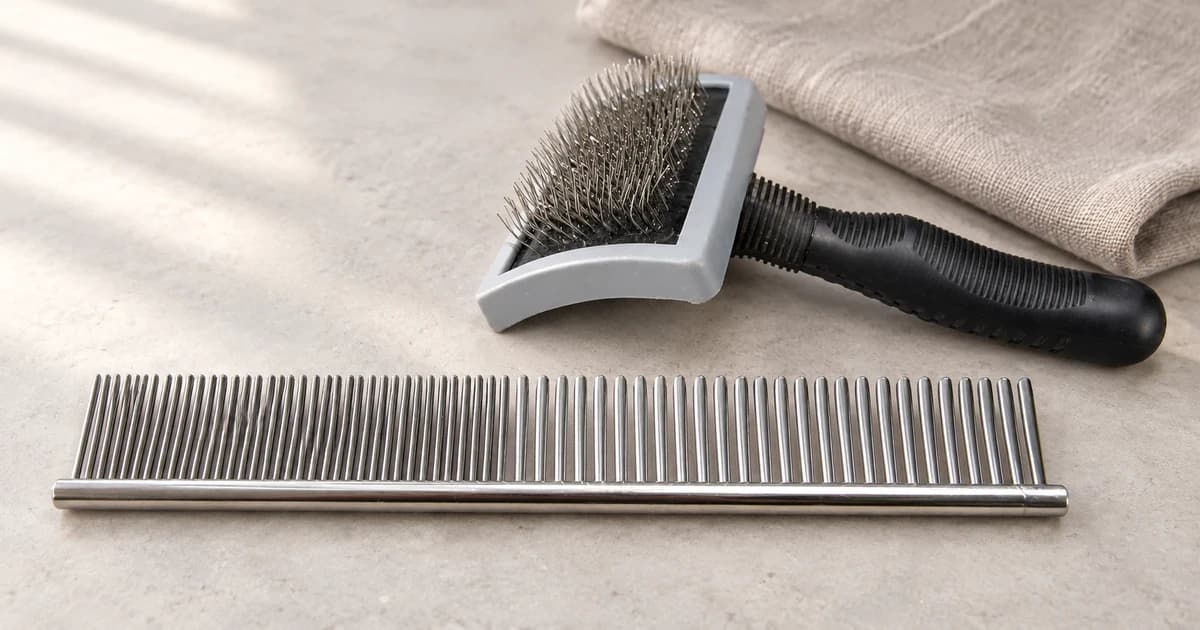
A brush and a comb perform different jobs during long-haired coat care. A brush helps lift surface debris and loose hair, whereas a comb lets you verify whether a small section of fur passes freely between the teeth. The RSPCA recommends a wide-toothed metal comb for long-haired cats, though individual coat density and sensitivity still determine which specific tool your cat accepts best.
Evaluate the coat texture, the condition of the teeth or pins, and your cat's reaction at the first touch. Cats Protection's grooming advice emphasizes matching equipment to coat length and respecting individual preferences. A finer-toothed side of a comb is never an instruction to force teeth through a knot.
You can compare comb and brush designs in Pawlivy's grooming category and combs category. Even when a comb appears under a "dematting" label, a matted coat still requires individual veterinary or professional grooming advice rather than forceful home combing.
Make the first contact easy to accept
Choose a quiet moment when your cat is settled and relaxed. Let them sniff and investigate the comb first, then introduce brief, light strokes over an area where they already enjoy being petted, such as the back or cheeks. Keep restraint minimal and pair calm contact with gentle praise or a small treat. Cats Protection recommends building tolerance across short, positive sessions rather than trying to groom the entire body at once.
If your cat already dislikes grooming, start at the stage they can comfortably tolerate—even if that means simply resting the comb nearby while offering a treat. Never pin or hold a cat down to finish brushing. Persistent grooming distress warrants guidance from your vet to rule out underlying pain alongside support from a qualified feline behavior professional.
Work through one comfortable section at a time
Blue Cross describes gentle, head-to-tail combing for long-haired cats with special care around friction zones where long fur knots easily. While some general care pages mention teasing out small knots, this guide follows PDSA's safer household boundary: if the comb catches on a suspected mat, stop that pass immediately and leave tight tangles for a vet or professional groomer rather than attempting home mat removal.
- Follow the direction of hair growth: Comb lightly from the head toward the tail along the natural lay of the coat. Glide the teeth through the fur rather than scraping the skin.
- Let the comb confirm each pass: Move to the next small section only when the wide teeth pass cleanly without tugging and your cat stays relaxed. If the teeth snag or catch, stop that stroke at once and part the hair gently to inspect the spot.
- Check easily missed friction zones only as allowed: Long hair tangles readily around the chest, abdomen, behind the ears, back legs, and armpits. Check these areas gradually when your cat is comfortable in a natural posture; never flip, stretch, or force your cat into an awkward position to reach a hidden zone.
- End the session while your cat is still calm: Leave remaining sections for a later session instead of raking repeatedly over the same spot.
| Easily Missed Coat Zone | How to Check Without Forcing Position | Pass Condition (Continue Gently) | Stop Condition (Pause & Seek Vet/Groomer Help) |
|---|---|---|---|
| Behind the ears | Comb lightly downward behind the ear base during normal head or cheek strokes while your cat sits or rests upright. | Wide-toothed comb glides cleanly through fine ear-base fur with zero skin tension. | Comb teeth catch on a tight knot behind the ear or your cat flattens their ears and turns away. |
| Chest & bib (ruff) | Use short downward strokes along the front chest while your cat sits naturally or lifts their chin. | Long chest fur separates smoothly between comb teeth without food residue or felted clumps. | Comb snags on a dense clump near the neck/chest skin or pulls at the underlying coat. |
| Armpits (front leg crease) | Check only when your cat naturally stretches a foreleg forward or lies on their side; never pull a leg outward. | Loose fur lifts away easily with a light, shallow pass of the comb. | Friction pellets or tight cords form in the crease, skin looks red, or your cat stiffens. |
| Abdomen / belly | Attempt only if your cat voluntarily rolls or stands comfortably and accepts light flank touch; skip if belly touch triggers guarding. | Surface coat passes freely through wide teeth without tugging thin abdominal skin. | Any snagging, pelting against the belly skin, tail twitching, or protective pawing/biting. |
| Back legs & britches | Stroke gently down the outer hind-leg feathering while your cat stands or walks past calmly. | Feathering combs through cleanly without litter debris or knotted strands. | Matted clumps, soiled fur pulling at the skin, or your cat crouching and moving away. |
Recognize discomfort signals and know when to stop
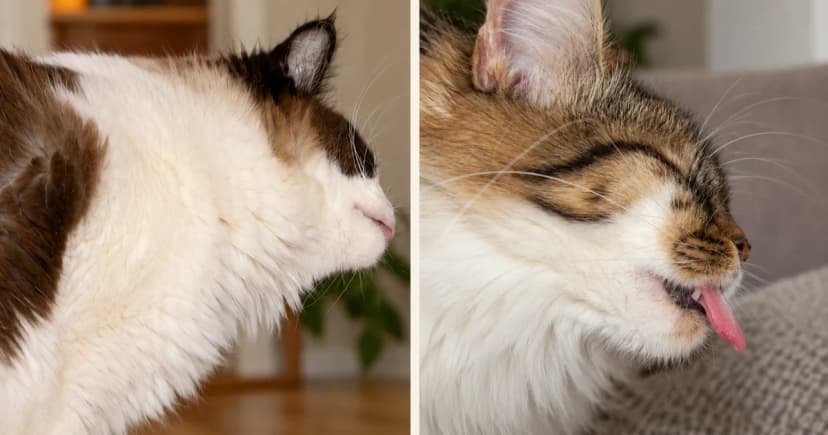
Watch your cat's body language as closely as the comb. Blue Cross highlights early signs of feline tension including tail twitching, ears rotating backward, dilated pupils, skin rippling, and shifting away. The RSPCA similarly advises stopping the session as soon as a cat looks unsettled—and well before tail thrashing, growling, hissing, scratching, or biting occurs.
Keep a brief note of where a session paused: whether a specific friction zone was difficult to reach, the comb caught on a suspected mat, or your cat resisted touch in a particular spot. That record helps you start earlier or ask your vet or groomer about that exact area next time without treating a home observation as a medical diagnosis.
For the separate question of how frequently to groom, read our guide on how often to brush your cat and combine coat condition with individual veterinary or professional grooming advice to set a sustainable schedule. Here, the priority is always safe technique: checking one comfortable section at a time without pulling, and stopping immediately when the coat or the cat needs professional help.