Learning how to trim cat nails safely starts with deciding whether clipping is needed, preparing clippers designed for cat claws, and waiting for calm, willing handling. Gently expose and inspect one claw, identify the curved tip, and stay clear of the sensitive quick inside it. Clip only when you can clearly see the tip, pause whenever your cat becomes uncomfortable, and arrange a live demonstration with your veterinarian or vet nurse if visibility or paw handling is difficult.
You do not need to finish every claw in one sitting. This preparation and handling guide is grounded in veterinary charity guidance and does not replace an in-person clinical demonstration or veterinary care for an injured or abnormal claw.
Check the need before reaching for clippers
Cats Protection's claw-care guidance explains that many cats maintain their claws through normal scratching, whereas older cats or cats with mobility limitations may need occasional help. Avoid treating a fixed calendar schedule as mandatory for every cat.
Observe your cat's everyday movement and claw condition. Claws snagging on fabric, trouble retracting, or visible thickening call for closer attention, though those signs alone do not diagnose the underlying cause. Cats Protection advises veterinary assessment whenever claws change appearance or risk growing into a paw pad. Bleeding, swelling, or a suspected ingrown claw belongs with the veterinary clinic rather than a home trim.
Keep suitable scratching surfaces available around the home. If you are selecting or introducing a post, see our guide to helping a cat use a scratching post—keeping in mind that scratching furniture does not replace checking an individual claw that looks overgrown.
Prepare the tool and the setting
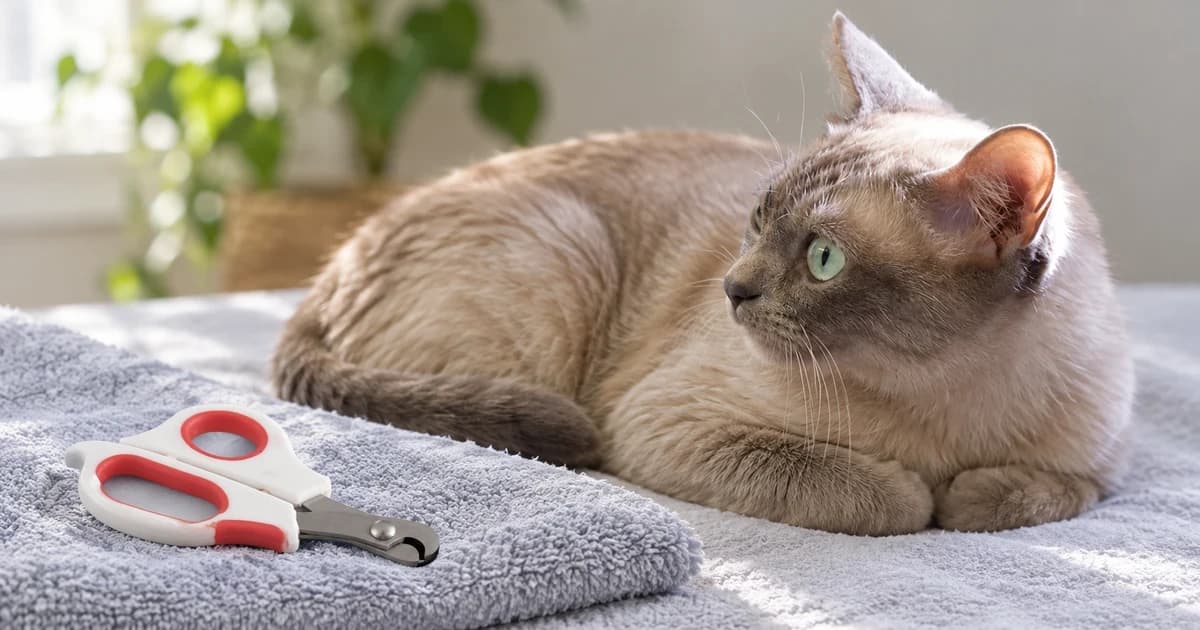
The PDSA veterinary team's cat-claw instructions call for dedicated cat nail clippers rather than household scissors or human nail clippers. Cats Protection likewise recommends clippers built specifically for feline claws.
Gather the clippers and a favourite treat before inviting your cat over. Choose a quiet, familiar room with a stable resting surface, and let your cat sniff the closed tool first; showing the clippers is separate from holding a paw and cutting. Review the clipper manual beforehand and consult your veterinary clinic if you are unsure whether a specific tool style suits your cat's claws.
Our nail-clipper category groups dog and cat grooming tools together. A shared category tag, built-in LED light, or mechanical guard cannot guarantee that a particular clipper fits your cat's claws or prevents cutting into the quick.
Build comfortable paw handling first
In its veterinary Q&A on trimming cat claws, PDSA recommends accustoming your cat to gentle paw touch before attempting any trim and stopping immediately if the cat shows stress or discomfort. (We use that article's handling guidance here rather than its pandemic-era clinic access notes.)
Start with brief, gentle paw contact that your cat accepts willingly, followed by a reward. If your cat pulls the paw back, pause instead of tightening your grip. Comfortable paw contact is a helpful foundation, though it does not guarantee instant acceptance of the clippers.
When a second person assists, their role is to support a calm routine rather than restrain a struggling cat. Ask your veterinary team to demonstrate a comfortable holding position tailored to your cat whenever you are uncertain.
Expose and inspect one claw gently
- Verify that your cat stays relaxed. If handling turns into a struggle or your cat tries to walk away, stop before bringing the clippers near the paw.
- Apply light pressure to extend a single claw. PDSA describes gentle pressure on the toe to expose the claw, and Cats Protection stresses very light pressure without squeezing the paw.
- Distinguish the sharp tip from the quick. The quick houses blood vessels and nerves and appears as a pink inner core inside light-coloured claws; cutting into it causes pain and bleeding.
- Trim only when the safe tip is unmistakable. Remove just the sharp tip while staying well clear of the quick, and leave the claw uncut if visibility is unclear.
| Claw zone or condition | What to look for on the exposed claw | Action boundary |
|---|---|---|
| Curved sharp tip (outermost hook) | The narrow, translucent white hook at the very end of a light-coloured claw, well ahead of the inner pink core. | Consider trimming only this clearly visible tip while your cat remains calm and still. |
| The quick (living inner core) | The pink area inside a light-coloured claw containing blood vessels and nerve endings. | Never cut into or crowd this zone; cutting the quick causes bleeding and pain. |
| Dark, opaque, or abnormal claw | Pigment hides the internal boundary, or the claw looks thickened, split, or curved toward the pad. | Do not guess a cut line from a diagram or rely on a clipper light; leave the claw uncut and arrange an in-person veterinary demonstration. |
Never rely on a fixed number of millimeters or a generic line drawn on an illustration as your cutting target. Actual claw shape, pigment visibility, and calm handling determine whether a home trim is appropriate.
Choose proceed, pause or help
| Current situation | Decision | Useful next step |
|---|---|---|
| Your cat accepts paw handling and you can clearly identify the tip and avoid the quick | Consider one careful tip trim. | Observe the response before deciding whether another claw is appropriate. |
| Your cat withdraws, becomes uncomfortable or tries to leave | Pause. | Release the paw and let the interaction end; return to comfortable preparation another time. |
| The cutting area is unclear, handling is difficult or the claw looks abnormal | Arrange veterinary help. | Book professional care or an in-clinic demonstration rather than experimenting with grip, tool guards or a deeper cut. |
This table serves as a handling decision aid rather than a certification that any specific claw or restraint position is risk-free.
A short session can be enough
The PDSA Q&A suggests starting with a single claw and stopping right away if your cat becomes unhappy or wants to leave. Cats Protection similarly recommends spreading nail care across separate sessions and respecting how your cat responds—whether they prefer a food treat, play, or quiet time alone.
Do not treat a full ten-claw count as the goal of a session. If bleeding occurs, stop immediately and speak with your veterinary clinic for guidance; this article does not provide home cauterizing recipes, medications, or sedation instructions.
Pawlivy has not conducted hands-on clipper trials or clinical review for this guide. Our editorial policy explains how we cite veterinary charities and structure editorial guidance.