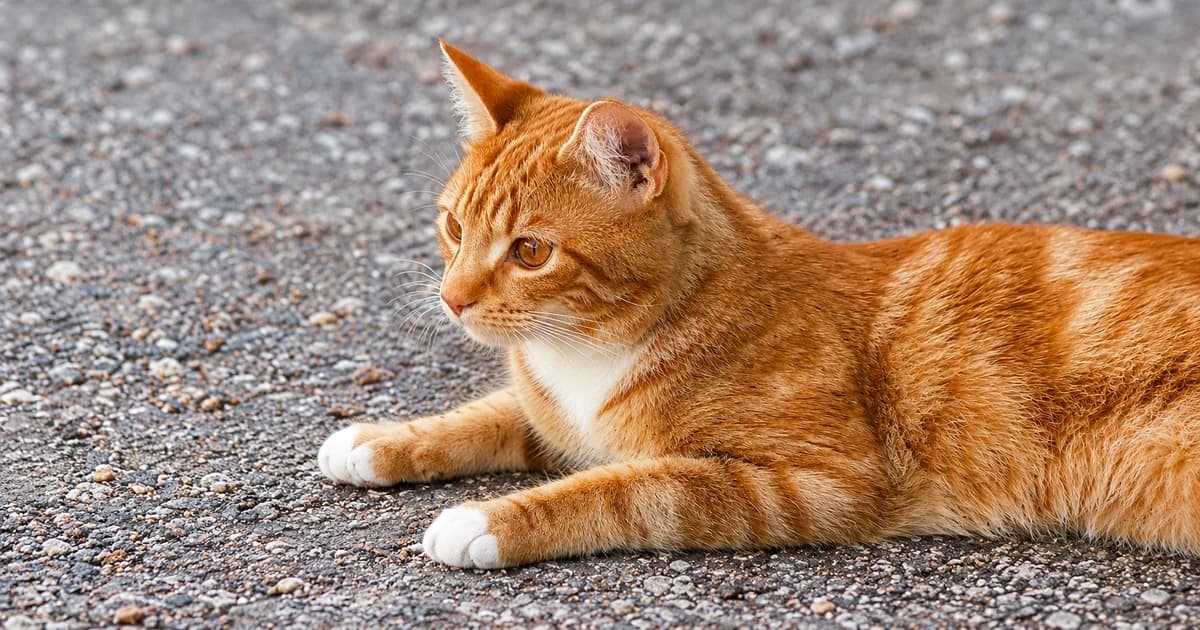
When owners wonder why do cats roll in dirt, a cat rolling on bare ground may be greeting you, stretching or settling into a rest. Scope note: current animal-welfare sources explain the everyday contexts of back-rolling, not a verified soil-specific purpose. The setting alone does not tell you which explanation fits, and it does not establish that dirt provides coat cleaning, scent masking or pest control.
Start with what happened around the movement: did your cat approach as you arrived, pause during a rest, or behave differently from usual? That gives you a clearer question than assuming the ground is providing a special benefit.
Consider the moment around the roll
In Cats Protection's explanation of back-rolling, clinical animal behaviourist Daniel Warren-Cummings describes several everyday contexts. A cat may roll when greeting an owner, seeking attention, relaxing, stretching or resting. These are possibilities to consider alongside the situation, rather than a way to read one movement with certainty.
For example, a roll immediately after your arrival gives you a greeting context to note. A roll while already resting gives you a different context. Neither observation, by itself, explains the choice of soil.
You do not have to make something happen in response. Cats Protection also cautions that a displayed belly is not automatically an invitation to stroke it. Leave room for the cat to choose its next movement instead of treating the pose as a request for a tummy rub. See Cats Protection's guide to back-rolling.
Read the surrounding behavior, not a single signal
Cats Protection's body-language guide recommends combining context with the cat's visible signals; even purring can occur in different situations. Notice posture, ears, eyes and whiskers together, rather than using one feature as a verdict.
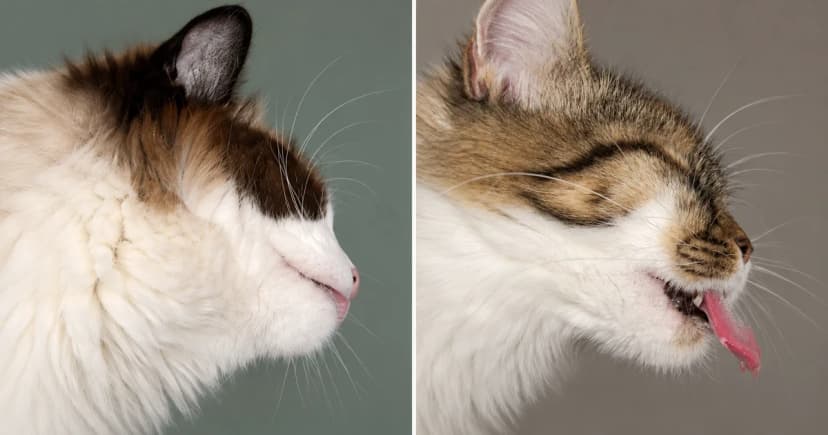
A photograph captures only a moment. It cannot show the full sequence or establish a cat's motive or health. Likewise, an exposed belly or a purr does not settle whether a particular interaction is welcome. The useful comparison is with the same cat in its usual circumstances. Read Cats Protection's body-language guidance for that broader context.
Make a short, factual observation
If you want to understand a recurring episode, separate the movement from your interpretation. A few plain notes can preserve the sequence:
- Before: where the cat was and what happened just before the roll, such as your arrival or a pause in a resting period.
- During: what you actually saw. Write “turned onto one side, then onto the back” if that happened, rather than “had a dust bath.”
- After: what the cat did next, including whether it moved away, continued resting or began licking or scratching.
- Compared with usual: what has changed for this cat, rather than how it compares with a clip of somebody else's cat.
| Observation stage | Factual record to write down | Unverified assumption to avoid |
|---|---|---|
| Before | Cat walked to the bare soil patch by the patio step as I opened the back door | Assuming the cat sought out soil for a medicinal or grooming purpose |
| During | Turned onto one side, rolled briefly onto the back with belly visible, then stood up | Labeling the movement a “dust bath” or an automatic request for a belly rub |
| After | Walked past me into the house without scratching, biting at fur or shaking | Concluding that rolling in dirt cleaned the coat or relieved skin irritation |
| Compared with usual | Matches this cat's usual doorway greeting roll, or notes any new licking, scratching or coat change | Comparing a single photo or video against an unrelated cat's habit |
“Rolled when I opened the door, then walked away” is an observation. “Needed dirt to clean its coat” adds a cause that this sequence has not demonstrated. Keep those two kinds of statement separate when describing an episode to someone else.
When to ask your vet
PDSA's guidance on itchy skin advises contacting a vet when a cat is itchy or is licking or scratching more than usual. Report accompanying changes such as lost fur, sore skin or wounds, rather than deciding what caused them. PDSA also advises speaking with a vet before trying home treatment.
This is a reason to report those observations, not to label a ground-roll as an itch diagnosis. If licking or scratching has changed, include it in your description. See PDSA's veterinary guidance on itchy skin in cats.
Keep different behaviors separate
Whole-body rolling is a different observation from alternating front-paw presses. If the latter is what you are seeing, our guide to why cats knead blankets addresses that separate behavior. For general supplies, browse the cat category; a ground-roll alone does not identify a product your cat needs.