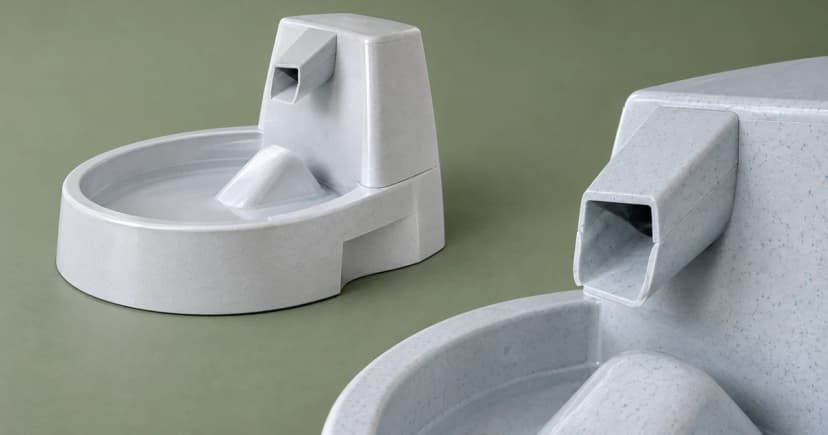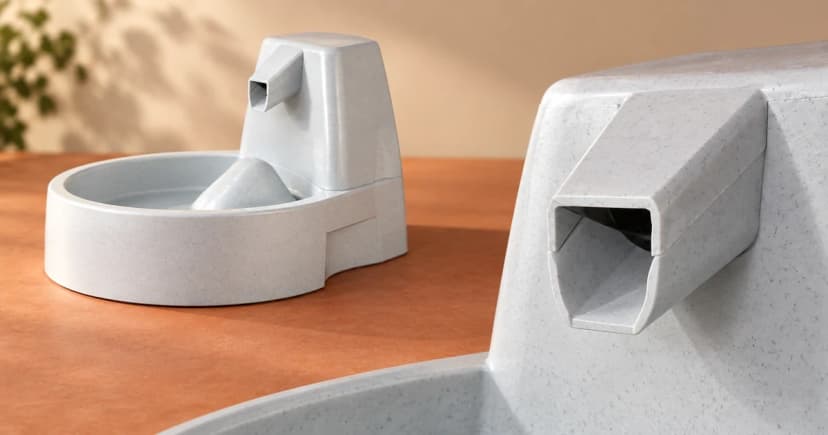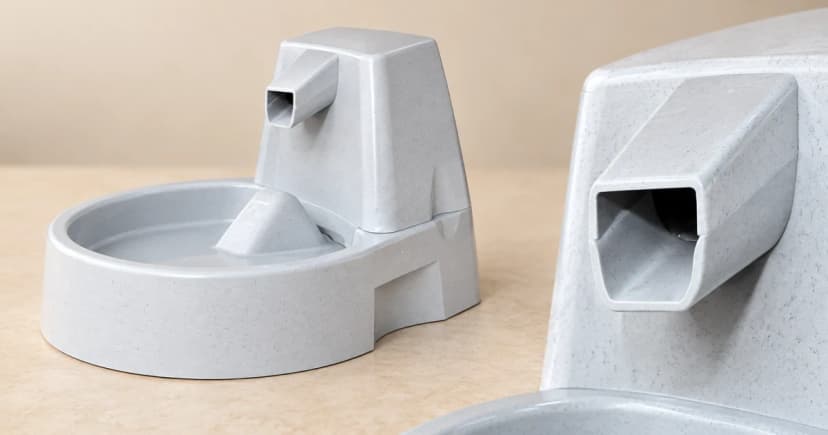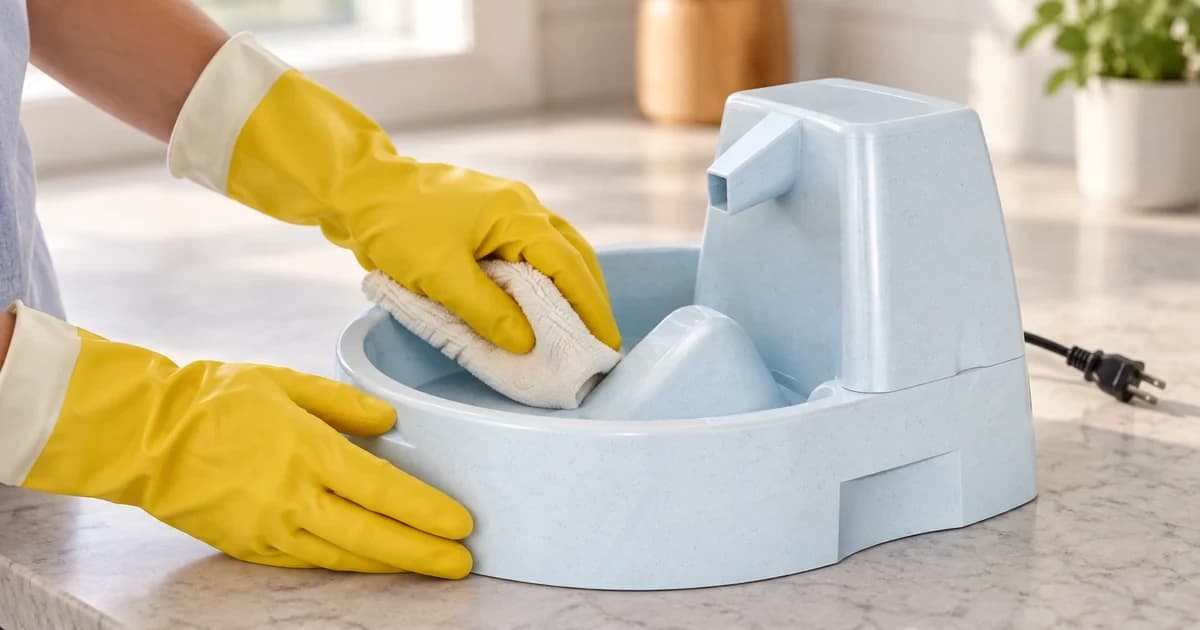
Clean a cat water fountain on the schedule for its exact model, and bring that cleaning forward when the manufacturer’s condition checks call for it. Reservoir washing, pump maintenance, and filter replacement are separate jobs. A clean-looking bowl or a filter reminder does not show that all three have been done.
For a cat water fountain cleaning routine, record the reservoir wash, pump maintenance and filter replacement separately. A reminder that one job is due does not tell you that the other two have been completed. Keep the exact model’s wet-cleaning permissions with that record before removing or washing any component.
Start with the model name and its current care instructions. Fountains that look alike can have different pumps, electrical connections, and washable parts. The examples below explain how to make a maintenance plan; they do not supply care instructions for an unidentified fountain.
How often? Compare the same job before comparing intervals
“Clean the fountain” may mean washing its accessible water-contact surfaces or taking it apart for a deeper service. Keep those tasks separate on your calendar. These manufacturer examples illustrate the difference:
| Named model | Manufacturer’s cleaning guidance | What the interval does not replace |
|---|---|---|
| Catit PIXI Stainless Steel UV-C Fountain | Clean its reservoir and trays regularly, preferably weekly. Deep-clean all parts monthly, or more often with more pets or frequent dirt. | The model’s separate filter instructions and rules for keeping electrical ports dry. |
| PetSafe Drinkwell Stainless Multi-Pet Fountain | Its care page recommends monthly cleaning in a one-pet home and at least every two weeks in a multi-pet home. | Cleaning the pump interior and checking both filter types. |
| Catit Easy Clean Flower Fountain | Its cleaning guide calls for regular cleaning and replacement of an excessively dirty filter; it gives no universal weekly interval. | The restrictions on washing its base and pump. |
Read the current Catit PIXI Stainless Steel UV-C guide, Drinkwell Stainless Multi-Pet guide, or Easy Clean Flower Fountain guide only when it matches your product. A monthly deep-clean example is not permission to ignore dirt until the month ends. Likewise, a weekly recommendation for one model is not a proven schedule for every fountain.
Identify what can get wet before dismantling the fountain
Unplug the fountain with dry hands before removing or handling its parts. Put the manual beside your work area and identify the reservoir, washable covers, filters, pump, and electrical connections. Use a small container for removable pieces so an impeller or cap does not disappear into the sink.
The Easy Clean Flower Fountain makes a useful cautionary example. Catit permits washing its removable reservoir components, but says to wipe the base or pump with a dry or lightly damp cloth and never submerge them. Its impeller is removed from the reservoir. That construction is different from a conventional submerged pump that the maker instructs you to take apart and rinse.
For the PIXI Stainless Steel UV-C model, Catit says its Type-C charging port, DC socket, and pump DC port must stay dry. Its dishwasher permission covers only stainless steel parts. Washing a metal bowl therefore does not authorize washing the electronic module alongside it.
A cleaning sequence that keeps the filter out of the soap
- Disconnect and drain. Follow the model’s disassembly order. Photograph unfamiliar parts in place before removing them; do not force a cap or connector because another brand’s diagram shows a twist fitting.
- Separate the filters. Place them apart from the parts being washed. Check whether each filter should be rinsed, retained, or replaced, and whether its orientation matters.
- Clean the permitted water-contact parts. Use the tools and cleaning agent specified for those parts. Work around seams, outlets, and tubes that your cloth cannot reach. Keep non-washable electronics outside the washing area.
- Service the pump as directed. Cleaning a bowl does not automatically clean an enclosed impeller. Use the exact pump diagram and return every specified component to its proper place.
- Rinse and inspect. Remove cleaning residue as directed. Account for loose parts, check the assembled water path, and confirm that connections required to remain dry are dry.
- Refill before restarting. Reassemble and fill to the model’s prescribed level before reconnecting power. Check operation using its setup instructions rather than repeatedly powering an incorrectly assembled unit.
The sequence is a planning aid, not permission to use dish soap on every component. Both the Catit Easy Clean and Drinkwell Stainless Multi-Pet instructions distinguish washable parts from filters that should be rinsed without soap or cleaning solutions.
Pump cleaning: the outside is only part of the job
PetSafe’s Drinkwell pump-cleaning guide shows removing a faceplate, stator, and magnetic impeller, then cleaning the interior and separate pieces. It links mineral deposits with an impeller that may stop turning properly. This is a worked example for the pump shown, not a reason to pry open an unfamiliar sealed motor.
For the illustrated Drinkwell pump, PetSafe calls for pump cleaning each time the fountain is disassembled and cleaned. Separate records do not mean that required pump service can be postponed.
That guide permits mild dish soap and warm water, and a diluted white-vinegar soak for mineral deposits; it rejects bleach and harsh chemicals. Check the matching instructions for the permitted mixture and soaking time. Do not transfer a pump-soaking method to the Easy Clean model’s non-submersible base, or use a descaling instruction as a disinfection recipe.
Catit says to retain, rinse, and reinstall the small sponge in its PIXI Stainless Steel UV-C pump. Identify specified parts before throwing anything away.
When should you change a cat water fountain filter?
Record the filter type and installation date separately from the last full cleaning. Catit’s PIXI Stainless Steel UV-C guidance replaces the main filter after about a month’s continuous use or when visibly saturated, depending on water quality and use. This excludes the separate pump sponge.
The Drinkwell Stainless Multi-Pet page discusses charcoal and foam filters separately. It allows rinsing and reuse when they are not heavily soiled, advises more frequent changes in multi-pet homes, and gives an every-other-cleaning example. That conditional wording should not become a universal two-month promise. Follow the matching replacement instructions and inspect the filter’s condition.
A replacement that happens to fit in the tray is not enough to establish compatibility. Match the fountain model and specified filter or pump before ordering. Our pet water-fountain category is a place to compare listed designs; the care instructions and replacement parts for each design still need individual verification.
Make one maintenance card for your fountain
Keep a short record near your supplies or in a phone note:
- Identification: brand, exact model, manual link, and replacement-part references.
- Routine surfaces: permitted cleaning method, maker’s interval, last cleaning, and anything that needs attention sooner.
- Deeper service: pump diagram, parts that detach, parts that must stay dry, and last completed service.
- Consumables: filter type, fitted date, replacement condition, and the next reminder.
- After assembly: required water level, all parts accounted for, dry connections, and normal operation checked.
For example, two entries on the same day might read “quick surface wipe completed” and “full cleaning, including required pump service, still due.” A quick wipe should not be recorded as a completed manufacturer-prescribed cleaning cycle.
This is source-based equipment maintenance guidance. Pawlivy has not tested these fountains or established that a wash removes particular pathogens, improves a pet’s health, or applies to an unspecified product. Our editorial policy explains how manufacturer instructions and hands-on testing are distinguished.