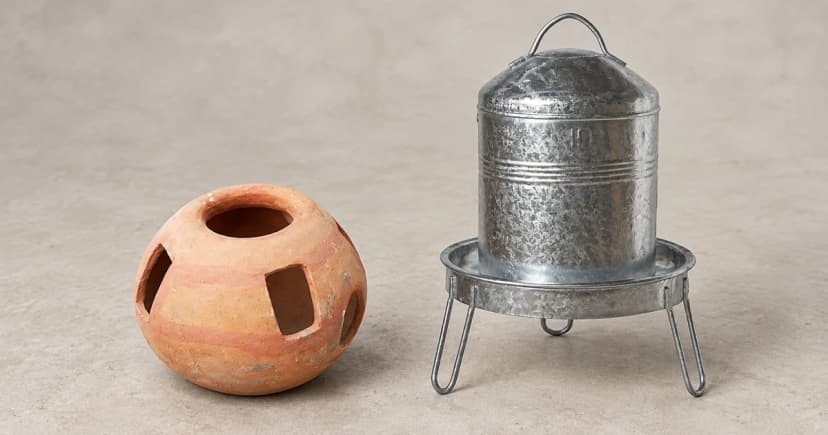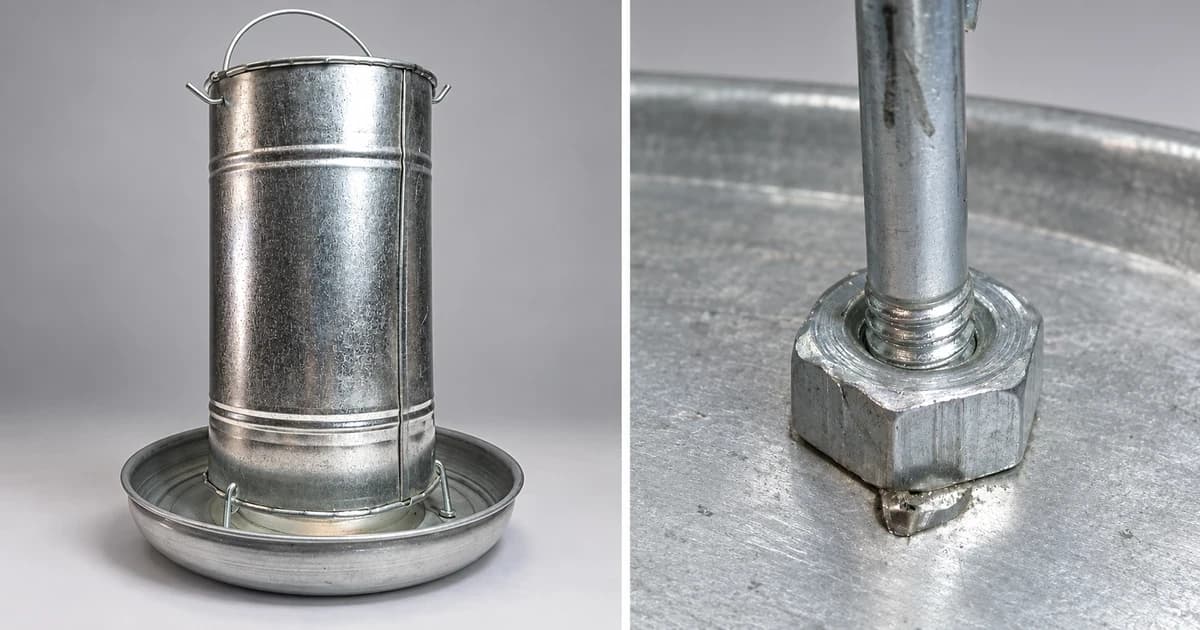
Choose a chicken feeder by matching its documented use and feed compatibility with your setup, then checking capacity, feeding access, refill space and care instructions together. A larger hopper label answers only one part of that comparison. You also need room for its tray or ports and a practical route to fill, remove and maintain the equipment.
Make a short list before comparing models: the feed form you already intend to use, available floor or hanging space, the information supplied about feeding openings, and how you will reach the hopper and removable parts. Leave missing specifications as questions for the maker.
Identify the exact feeder and its permitted feed forms
Omlet's non-smart No Waste Chicken Feeder support page permits crumble, scratch and pellets, while excluding particularly dusty feeds, wet or fermented food, and grit. The maker identifies this family for adult chickens and does not recommend it for chicks or other poultry. Its care directions belong to that named family; an electronic feeder needs its own instructions.
Use this as an example of checking mechanical compatibility. It does not choose a diet for your birds. Confirm the actual model and the maker's permitted contents before treating a hopper, trough or feeding port as interchangeable with another design.
Read the capacity label beside the dimensions
Miller Manufacturing's Hanging Metal Poultry Feeder lists 12-, 30- and 40-pound versions. Its larger variants have separate tube and pan dimensions. For example, the 40-pound version has an 11-inch-diameter tube and a 17-inch-diameter pan. The same listing includes a hanging handle and identifies the cover as a separate purchase.
Keep the selected variant's rated capacity, overall dimensions and included accessories on the same comparison line. Check the widest part when planning its position. A tube diameter alone can omit the tray extending around it.
A rated weight does not establish how much usable feed you personally loaded, a portion size or the number of days you can leave the feeder unattended. Ask what the stated capacity refers to and retain any fill-limit instructions. Plan refilling from the equipment's actual use and your care arrangements.
Compare feeding access as well as storage space
A circular tray and separate ports provide different access arrangements. A lid's locking-tab count is not a port count. The sources used here do not establish one universal number of chickens per feeder.
Mark the proposed footprint and approach space on your layout. Include nearby walls, posts and other equipment that could obstruct an opening.
Also separate the feeding area from your handling route. You should be able to reach the lid or filling point and carry out the specified removal process without discovering that a shelf or roof blocks the movement.
Check placement and refill access before choosing a mount
Omlet recommends a sheltered position for its non-smart feeder, avoiding rain from any direction and excessive direct sunlight. For hanging, it specifies its purpose-designed strap and approved support arrangements; its guidance does not permit hanging directly from run mesh.
An included handle does not, by itself, verify an arbitrary hook or structure. Check whether filling happens in place or requires removal, and account for the space needed to lift or open the permitted components. Resolve an unsupported mounting proposal with the maker.
Inspect the care route while comparing designs
The University of New Hampshire Extension's equipment guidance discusses round metal hanging feeders and troughs, and calls for a cleanable design. That makes access for care a useful selection question alongside shape and size.
Omlet's non-smart instructions describe taking parts apart for dust removal, hosing parts or using a soft cloth, and completing drying before adding fresh feed. That permission does not establish how to wash electronics or remove an unidentified feeder's fasteners.
Finish with a comparison you can use: documented contents, rated capacity, footprint and openings, filling route, mounting requirements and care access. Compare individual options in Pawlivy's poultry feeders and waterers category, then confirm the remaining model-specific details before choosing.