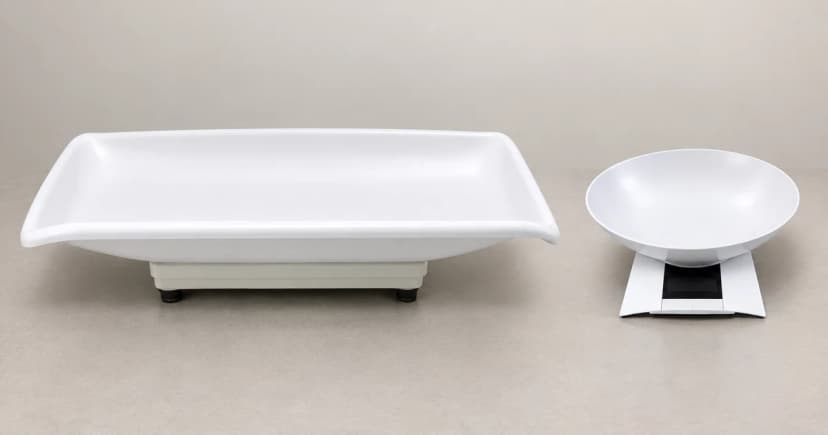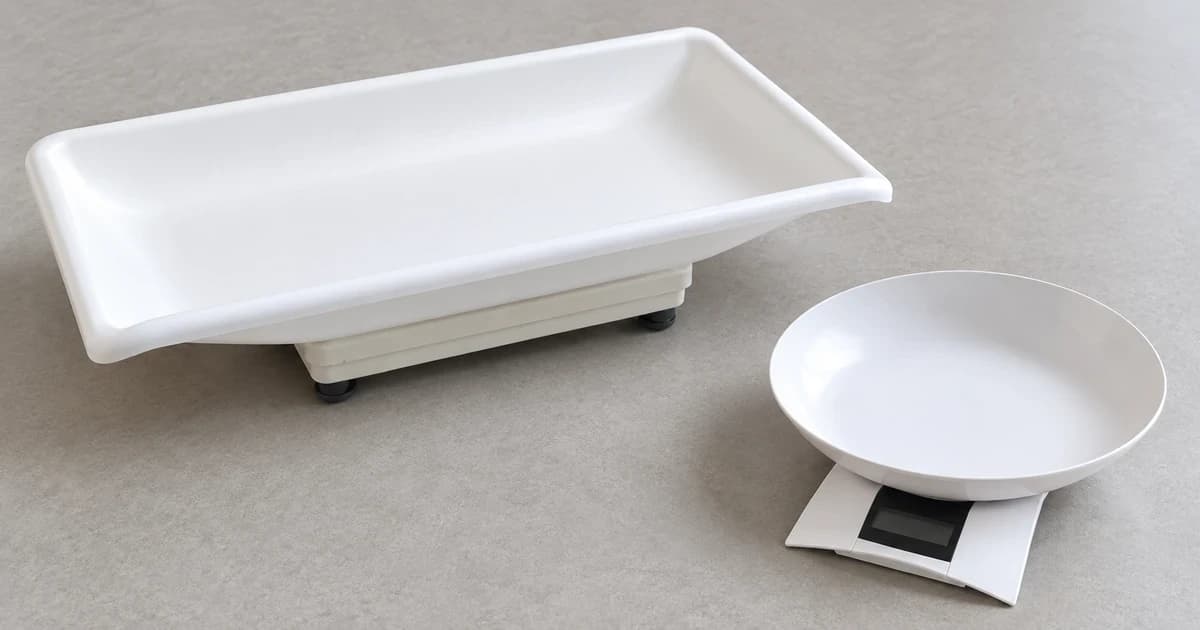
To choose a pet scale, compare its rated capacity, usable weighing surface and display division as separate specifications. Then check the exact model's display arrangement, power supply, supported accessories and care instructions. A higher capacity does not necessarily mean a larger platform, and more decimal places do not establish accuracy.
Start with the equipment requirements you need confirmed. Keep the model name beside each specification, and leave an unanswered field open rather than filling it from a similar-looking scale.
Compare capacity and platform size separately
Distinguish that surface from the instrument's overall footprint, which can include a base, display pillar or other parts. If an accessory is needed, obtain its compatibility and loading conditions from the manufacturer.
The Adam CPWplus 200P page lists a 200 kg capacity, 0.05 kg readability and a 300 × 300 mm pan. Its overall dimensions are separately listed as 300 × 355 × 503 mm. The family also includes different configurations: the P version has a pillar-mounted display, while M and L versions offer larger platforms. Do not transfer one configuration's dimensions to another.
The current KERN EOS 150K-2, in the EOS-A family, lists a 150 kg maximum and a 900 × 550 mm weighing surface. Its listed platform dimensions are 900 × 550 × 60 mm. These two examples show why capacity and surface area need separate columns: the higher-capacity Adam example has the smaller listed pan.
Neither example establishes that a particular animal or accessory fits. Confirm the required supported area and permitted setup with the maker before deciding. This comparison is about specifications, not positioning or restraining an animal.
Read the division without treating it as proven accuracy
The EOS-A page lists 0.05 kg readability, 0.05 kg reproducibility and ±0.15 kg linearity in separate fields. Preserve those labels when comparing equipment. A displayed division is not a tested error limit or a promise that the scale can reliably detect a particular change in a pet's weight.
The Marsden V-100 page lists 100 kg capacity and 50 g graduations. It also gives 715 × 410 × 40 mm under “Dimensions,” without separately identifying a usable weighing surface.
If your decision depends on a particular measurement requirement, get that requirement and the instrument's relevant performance documentation clarified. Do not choose from the number of displayed digits alone.
Check the complete configuration you would use
Identify where the display would sit, which units it supports, and whether the required accessories are included or separate.
The current CPWplus 200P page specifies a backlit display, a 15 V DC adapter supply and six AA batteries. Keep those details with this exact listing; an older manual or another family member is not confirmation of the power arrangement supplied with a different unit.
Marsden lists kg/lb units, two AAA batteries, Tare and Hold for the V-100. These are features to verify against your requirements, not a universal operating procedure. Its approval and IP-rating fields say N/A; neither establishes a particular certification or water resistance.
Resolve care and documentation before ordering
The EOS-A page describes a stainless weighing plate but lists no IP protection for its display, platform or load cell. Surface material and easy-cleaning language do not grant permission to immerse or wash down an instrument.
Before comparing pet scales, complete a short checklist: exact model and revision; rated range; supported surface; display division and separately stated performance fields; indicator position; power and accessories; and permitted care. Leave unresolved specifications marked unknown. Once you own the matched instrument, use its instructions to zero, tare and record a reading. Choosing equipment does not establish a health assessment or a verified weighing result.