To clean a bird bath, identify the basin and its care instructions, empty the old water, remove debris and use a cleaning method permitted for that material and finish. Complete the method's rinsing and any required drying before refilling. Treat routine water replacement and a stubborn-stain problem as separate decisions.
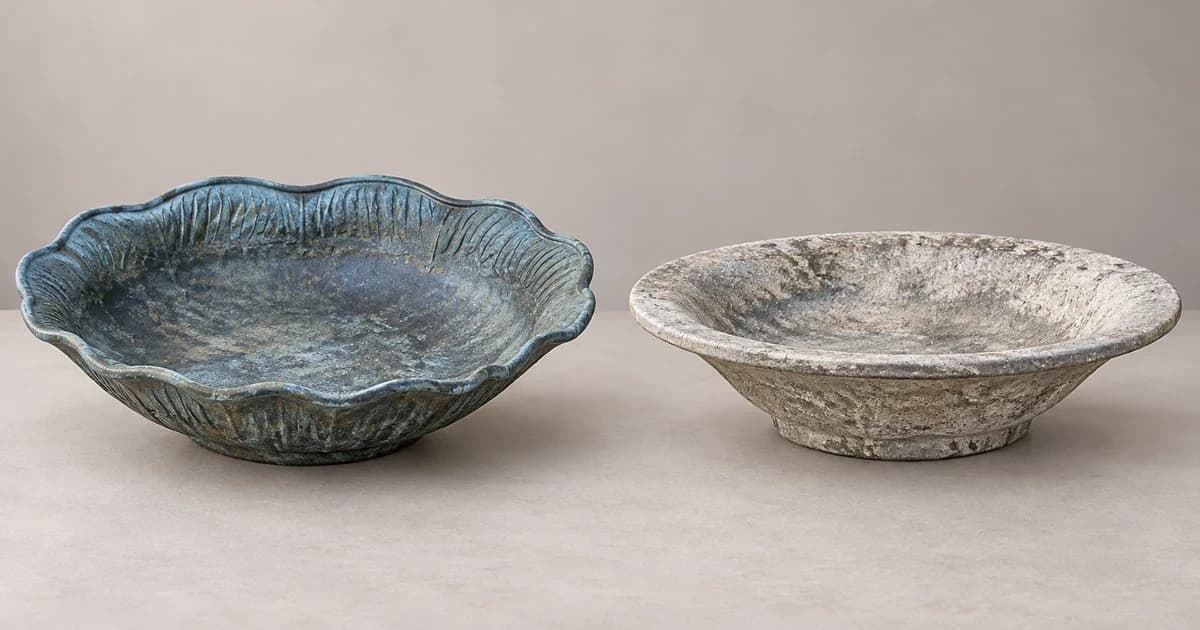
A gray bowl is not enough information to choose a cleaner. Natural stone, coated metal, glazed surfaces and molded materials may have different care limits. This guide explains a complete maintenance workflow using three named sources, rather than combining their cleaning advice into one recipe.
Check the basin before choosing supplies
Find the maker's care directions for the actual bath, including its surface finish and any removable bowl. Check which brush or cloth is allowed, whether a cleaner is specified, and how the basin should be emptied. Do not assume a bowl can be detached from its support or tipped simply because another bath works that way.
If the bath is unidentified, photograph its label and the affected surface when asking the maker or supplier for help. A useful question is specific: “Can I use this cleaning product and this brush on this basin?” A general material description does not answer that question.
Empty the bath and remove loose material
The RSPB Shop's cleaning guide starts its bird-bath sequence by emptying old water and removing leaves or twigs. Its bath instructions then describe scrubbing dirty or algal areas, applying its recommended disinfectant, rinsing, air-drying and refilling with fresh tap water. It also advises working outside with waterproof gloves and washing hands afterward.
Keep those bath instructions separate from the same page's feeder section. A feeder's dismantling directions or bleach wording do not establish how to treat an unidentified bath.
Use your bath's permitted emptying method, then inspect the accessible basin and rim. Note where material remains before choosing the next step. If emptying requires moving a heavy or fixed assembly, resolve its handling instructions rather than improvising a lifting or disassembly method.
Choose one material-compatible cleaning route
A concrete maker example comes from Foras's stone-care guide, page 6. Its bird-bath section describes using fresh water and a stiff brush to remove dirt and algae from its stone bowls.
The section also discusses stronger stain treatments and requests photographs before advice about calcium deposits.
Audubon's maintenance article offers a different approach: rinsing and scrubbing with nine parts water to one part vinegar, while advising against synthetic soaps and cleansers. This is a separate source's advice, not an extra stage to add after the RSPB route or a compatibility test for your finish.
Select a method that agrees with the actual bath's instructions. Do not layer vinegar, a disinfectant and a stone-cleaning chemical into a sequence assembled from these pages.
Carry out only the chosen, permitted process. Use its specified cleaning product and application instructions where required. This article supplies no universal disinfectant concentration, soaking interval or contact time.
Finish the rinse before refilling
Include the complete rinse required by the selected instructions, and finish any required drying. Do not count an emptied bottle or a cleaner-looking surface as evidence that all the necessary steps are complete.
Refill using the water and method specified by the applicable care guidance. This researched workflow does not establish a measured cleaning result, disinfectant performance or drinking-water safety.
Keep a record of water changes and cleaning
The sources give different intervals: the RSPB guide calls for daily water changes and at least weekly cleaning; Audubon suggests refilling every other day. Foras's stone bird-bath section gives a six-week maintenance interval. Keep those recommendations attached to their sources and purposes. The stone-care interval should not silently replace routine water replacement or the wildlife guidance's cleaning schedule.
A short note can distinguish the tasks: date the water was replaced, debris observed, cleaning method used, required rinse or drying completed, and any unresolved stain or material question. Record what you actually did, rather than marking every water change as a full clean.
When comparing replacements in our wild bird baths category, check the individual basin's material, finish, emptying design and care instructions. Choose equipment you can maintain by its documented method.