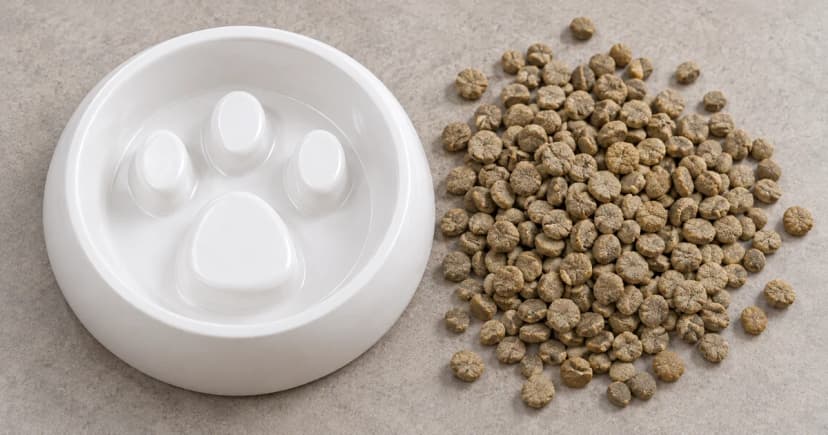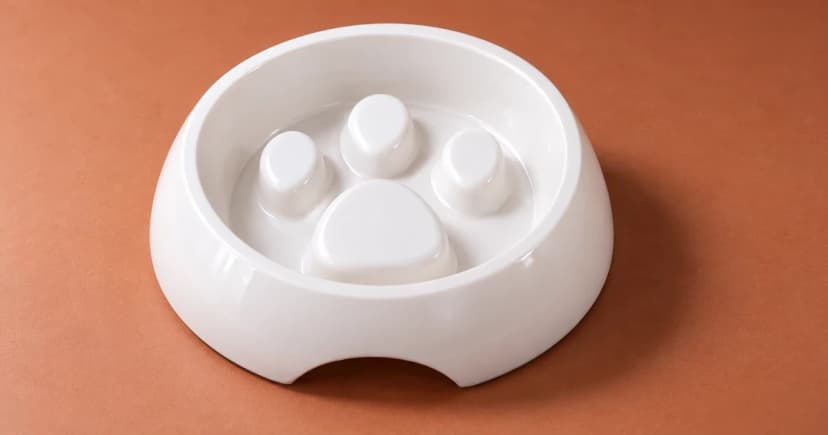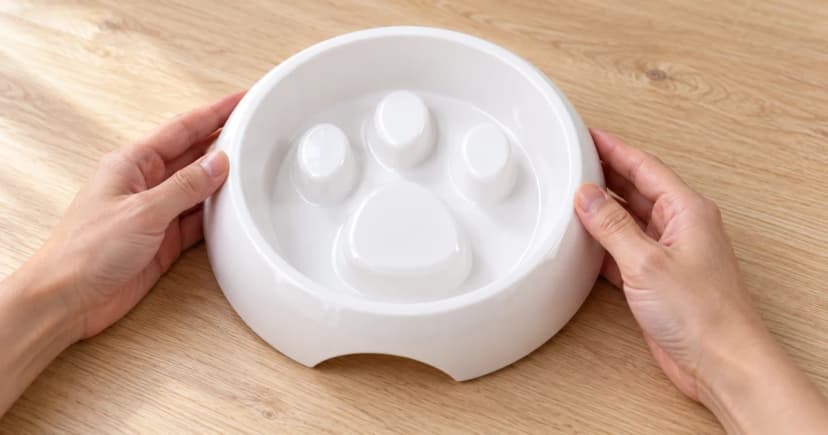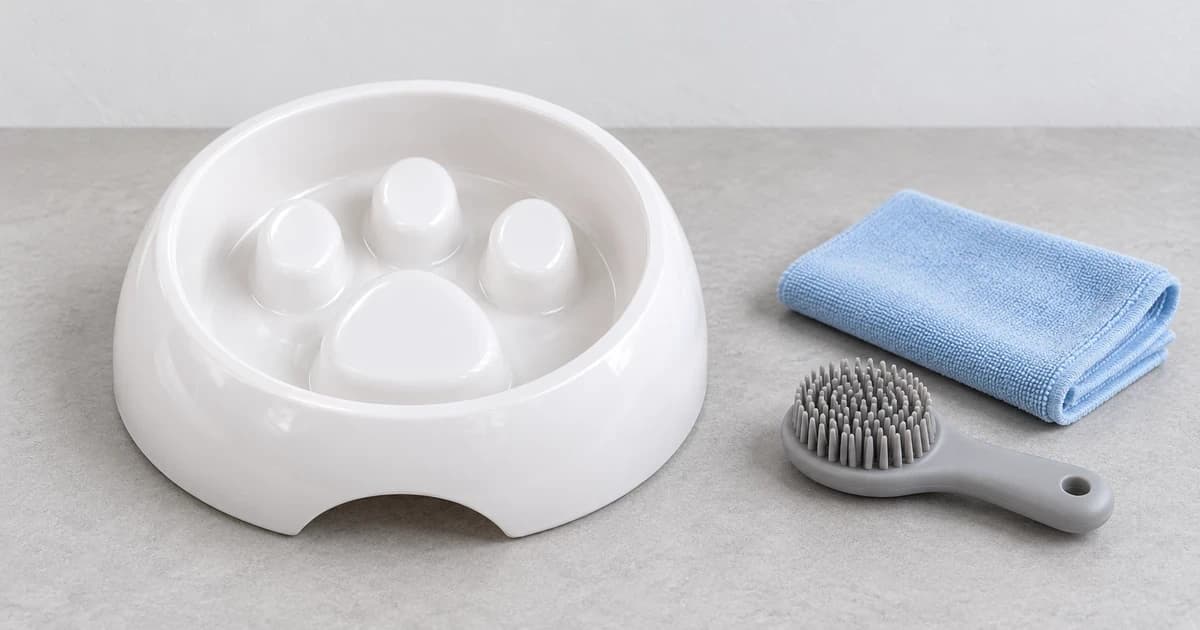
Clean a slow feeder using the method allowed for its exact model, paying attention to the spaces around raised shapes, then complete its drying instructions before stacking or storing it. A smooth rim is only part of the equipment: check the food-contact recesses, the base and any separately identified components.
There is no single dishwasher setting or removable-base arrangement shared by every slow feeder. The examples below separate a documented cleaning sequence from permissions that belong to other named products. They are published instructions, not a report of bowls we washed or tested.
Identify which parts the washing instructions cover
Find the model and variant before choosing the wash route. Note whether the raised shapes are continuous with the bowl, whether there is a separate insert, and whether the maker identifies any detachable component. A visible join, rubber-looking edge or non-slip feature is not permission to pull it off.
Permission to wash an insert does not establish a method for the host bowl.
Our slow feeder selection and setup guide covers construction, portion capacity and access. Here, the question is narrower: which surfaces need attention after use, and what method is permitted for them?
A documented example: clean the recesses and finish drying
Super Feedy's cleaning article describes the following actions for its Small 4-in-1 system:
- Rinse with warm water after a meal to remove remaining food.
- Use the maker's specified mild washing product and a soft sponge or silicone brush on the ridges and patterns.
- Inspect the small corners, base and suction edges for remaining residue. This is an inspection of reachable surfaces, not an instruction to dismantle the suction base.
- For its dishwasher route, place the named bowl and reversible lick mat on the top rack.
- Allow the washed bowl to air-dry completely before stacking or storing it, with airflow available; the article suggests storing the lick-mat side facing outward.
These instructions belong to that system. They do not establish a washing product, brush or drying method for an unidentified bowl.
When your item's instructions permit hand washing, direct the permitted cleaning tool into the spaces beside the obstacles rather than working only around the outer rim. Keep the tool and washing product within the item's instructions.
Keep dishwasher placement specific to the model
The Outward Hound medium Fun Feeder Notch care instructions permit the dishwasher's top rack on a low-heat setting. They also say not to microwave the feeder and to remove and replace it if damaged. “Dishwasher safe” should therefore be read with the placement and heat conditions, not as permission for every rack or cycle.
The LickiMat Australia Wobble product page gives a different construction-specific instruction: its reversible bowl is dishwasher safe and should be inverted when washing. That does not tell you to invert a rigid bowl, bend an unknown item or detach a base.
Save the actual instructions alongside the item name. If your dishwasher cannot provide the specified setting, obtain an approved alternative. Neither a low-heat permission nor an inversion instruction supplies a general drying temperature, cycle length or disassembly method.
Inspect the recesses before putting the equipment away
After the permitted wash and rinse are complete, look around each raised obstacle and along the food-contact corners. Check the reachable surfaces identified by the maker. Looking only at the rim can leave the areas between the barriers unexamined.
| What you find | Next decision |
|---|---|
| Visible food remains in a recess | Return to the item's permitted cleaning method; do not cover it with the next meal. |
| A seam or base cannot be reached | |
| Damage or a loose component | Follow the item's removal or replacement instructions rather than improvising a repair. |
| Drying instructions are missing |
Visible residue is something you can describe. Its absence does not establish microbiological cleanliness, and an empty-looking bowl does not prove that hidden surfaces are dry. Keep the maker's drying stage separate from the washing stage; do not invent a number of minutes or use extra heat to finish sooner.
When browsing slow feeder bowls or the wider feeding equipment collection, look for instructions that cover the actual assembly, permitted tools, wash route and drying or storage. A category name does not establish those details or confirm that a pictured bowl is the model you own.