To clean a horse feed bucket, first identify the actual container and its care instructions. Empty the leftovers, rinse after use, and choose a thorough-cleaning method that is permitted for that bucket and its components. Finish the required rinsing and drying before putting it away, while keeping each horse's bowl and designated mixing tools identifiable.
The useful question is not simply whether a bucket looks dirty. It is whether you know what it is made from, which cleaning route applies, and where it belongs when the job is finished.
Start with the bucket, not a general cleaning recipe
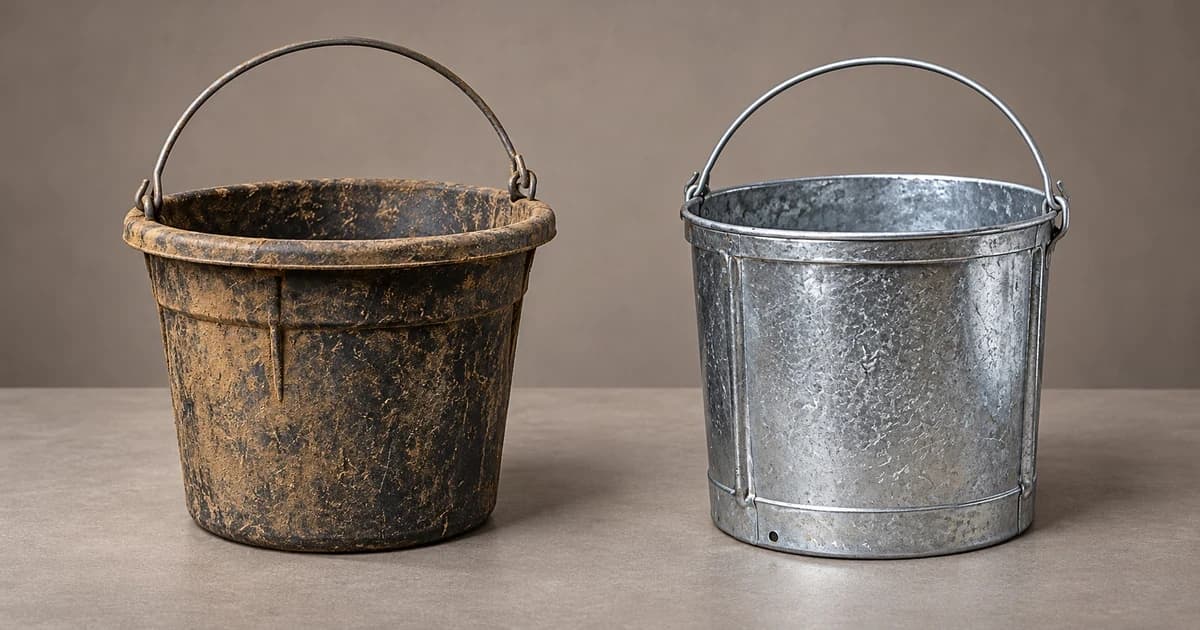
Find a maker name, model, material marking or retained care sheet. Check the body, rim, handle and handle attachments separately. A flexible tub, a rigid pail and a metal container can look equally usable while having different care requirements. If you cannot identify the container, resolve that uncertainty before choosing a cleaner or a hotter washing method.
Miller Manufacturing's explanation of its Little Giant buckets identifies HDPE in its plastic buckets and galvanized metal bails. That illustrates why the body and hardware deserve separate attention. The same article describes chemical resistance and manufacturer testing; neither supplies a household cleaning recipe or permission to use a particular product on an unidentified bucket.
Look for cracks, a damaged rim, loose attachments or a broken handle. Set an unresolved damaged container aside rather than treating washing as a repair. A readable capacity marking also does not establish a suitable feed quantity or a carrying or hanging load.
Separate the after-use rinse from a thorough clean
World Horse Welfare's feeding guidance calls for rinsing feed buckets after each use and cleaning them thoroughly as often as possible. It also recommends regular cleaning of mixing utensils, individual feed bowls for each horse, and separate mixing utensils for feeds containing medication. These are distinct equipment routines: a quick rinse does not replace the thorough-cleaning step, and a shared mixing tool should not become indistinguishable from a designated one.
Empty leftover material before washing and keep the bowl's assigned identity clear. Follow the yard's established arrangements for any designated medication equipment; this guide does not decide how medication should be prepared or administered. The source does not give a fixed calendar for thorough cleaning, so avoid turning its wording into an invented weekly rule.
Use the method allowed for the exact container
For a concrete example, Red Gorilla's Small Gorilla Tub 14L is described as LDPE, with its smooth interior cleaned using warm, soapy water. This permission belongs to that named product. It does not establish the right detergent, temperature or method for every rubber, metal or HDPE bucket, or for a container with unknown coatings, repairs or markings.
Use the actual bucket's directions to choose the washing materials and method. Work through accessible interior surfaces, the rim and the permitted exterior areas, checking the handle attachments without dismantling them unless instructions require it.
Complete the rinsing required by the relevant product and cleaner instructions. Look again for remaining material and visible residue. Appearance is a practical observation, not proof of disinfection or a completed safety test.
Finish the job with an identifiable storage place
Complete any specified drying step and check the actual condition before stacking or covering the bucket. Do not assign every material the same drying time. Red Gorilla describes its named tub as stackable and advises appropriate storage when unused; that does not mean a damp stack is ready to put away.
A short record can prevent the next person from guessing: bucket identity, assigned horse, care instructions used, rinse completed, drying still pending or completed, and any damage awaiting a decision. Give mixing utensils their own assigned place instead of dropping every tool into whichever bowl is nearest.
When replacing an unresolved container, compare the material and care information in the horse buckets and feeders category. Keep the replacement decision separate from feed quantities, load ratings and assumptions about a bucket's appearance.