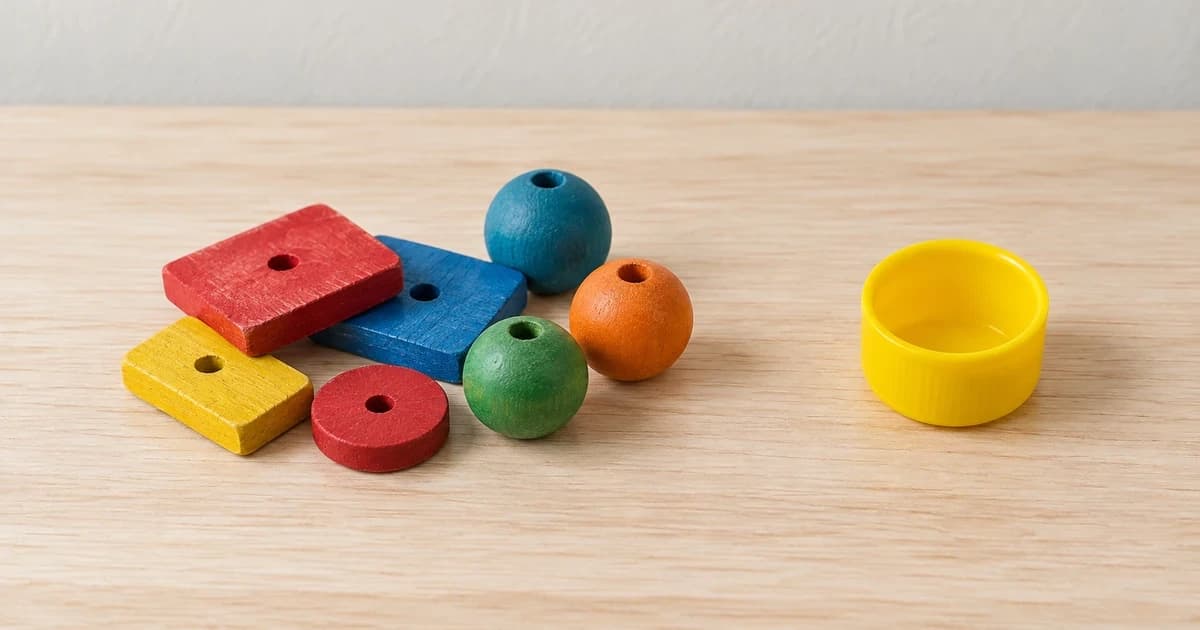
To understand how to clean bird toys by material, inspect each component off the cage first and separate parts that have wash permission from destructible refills that must be kept dry or replaced. A stainless-steel or plastic foraging base, hardwood block, cotton rope, vegetable-tanned leather strip, and shredded paper refill react differently to water—even when they are strung together on a single toy.
Never toss mixed-material bird toys into one shared soaking bucket. A dishwasher-safe foraging base does not make its wood, rope, leather, or paper refills washable, and a dry-looking outer surface does not prove that a thick wooden block or knotted rope core is dry inside.
Make a Component List Before Getting Anything Wet
Check the toy's packaging, model page, and any separate refill instructions before adding water. List every material in the assembly: quick-link connectors, chains, bells, acrylic or metal bases, wooden blocks, sisal or cotton rope, leather ties, and shredded paper or soft pith inside baskets.
Keep general material names separate from actual cleaning instructions. "Stainless steel" alone does not specify which dishwasher cycle or disassembly method a bell or foraging base allows, and "all-natural" never means paper, pith, wood, and rope can all be washed and reused.
Component Decision Table: Choose the Right Route for Each Part
Use this five-row decision table to sort every part of a bird toy into a clear wash, pause, or replace action before touching water:
| What You Find on the Toy | Next Decision | Boundary & What Remains Uncertain |
|---|---|---|
| Intact component with clear wash instructions | Clean using the exact method, water limit, and rinse steps stated for that part, then dry completely. | Wash permission for this single component does not cover other materials attached to it. |
| Reusable base with removable refills | Detach refills as the design allows; wash only the permitted base and handle each refill by its own material rule. | A base's dishwasher permission (such as on Beaktivity bases) never applies to wood, rope, leather, or paper refills. |
| "Do not wash" label or conflicting care notes | Keep the component out of water while verifying the exact model's care rule from its documentation. | General material labels (such as "metal" or "natural wood") cannot resolve a conflict between a tag and a web listing. |
| Soiled or frayed rope, or cracked/broken hardware | Remove from the cage immediately and replace the damaged toy or rope component. | Washing cannot repair frayed fibers, tangled loops, cracked plastic, or weakened quick-links. |
| Dirty paper, soft pith, or other destructible refill with no cleaning permission | Remove the soiled destructible piece from use and check for a compatible dry replacement refill rather than wetting or soaking it. | Absorbent paper, cardboard, and soft plant pith have no soaking, drying-time, or wet-reuse permission. |
Compare Named Manufacturer Care Examples
Two documented bird-toy makers show why instructions stay tied to the specific brand and component:
- parrotJOY Natural Bird Toys: parrotJOY's FAQ describes scrubbing its own natural wood toys and perches with hot water, dish soap, and a vegetable brush, warning against prolonged soaking, and blotting moisture with a towel before air drying completes.
- Beaktivity Foraging Toys: Beaktivity's FAQ allows dishwasher cleaning for its reusable toy base while warning against prolonged soaking and requiring thorough drying—and explicitly separates that washable base from its wood, rope, and leather refill parts.
Keep home maintenance for a single bird distinct from multi-bird shelter turnover: the Avian Welfare Coalition's shelter housing document addresses shelter sanitation and toy replacement between different birds, which is a separate context from routine home care.
Dry Washable Parts Completely and Inspect Rope Daily
Never treat "washed and towel-blotted" as ready to hang back in the cage. Wait until recessed drill holes, wooden cores, and connector joints are completely dry inside and out, and discard any part that warped, split, or softened during cleaning.
PEAC's Parrot Toys & Toy Safety sheet (citing LafeberVet.com) emphasizes daily toy damage checks, prompt cleaning of droppings or food spills, and frequent rope inspection—removing any rope that becomes soiled or frayed. When rehanging clean, intact toys, check our perch placement guide so toys are not hung directly underneath high perches where droppings fall.
Keep an Owner-Filled Bird Toy Care Record
When maintaining multi-part foraging or shredding toys, log your observations and final disposition in this seven-field table:
| Record Field | What to Log for Your Toy Component |
|---|---|
| Toy model & component | Brand, toy name, and specific part (e.g., reusable acrylic base vs. wood/paper refill). |
| Published care source | Package tag or brand FAQ URL consulted for this exact component. |
| Observed soil or wear | Food splatters, droppings, frayed rope fibers, or hardware wear spotted before cleaning. |
| Component permission | Classified as washable, dry-wipe only, replaceable consumable refill, or non-washable. |
| Cleaning & rinse method used | Permitted soap/water brush scrub or base dishwasher cycle completed, plus clean-water rinse. |
| Drying verification | Confirmation that interior holes, joints, and thick materials are completely dry. |
| Final status and reattachment check | Final decision—returned to cage, kept out of use, or replaced—and verification that connectors and refills are secured per the toy's instructions. |
When replacing worn toys or refills, compare construction across Pawlivy's bird toy categories, including shredding toys, foraging toys, and toy-making parts (confirming dimensions and compatibility before adding parts to an existing toy base).