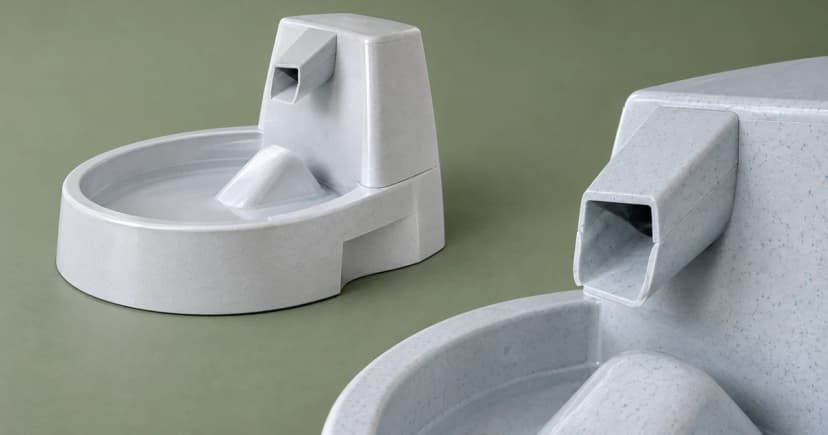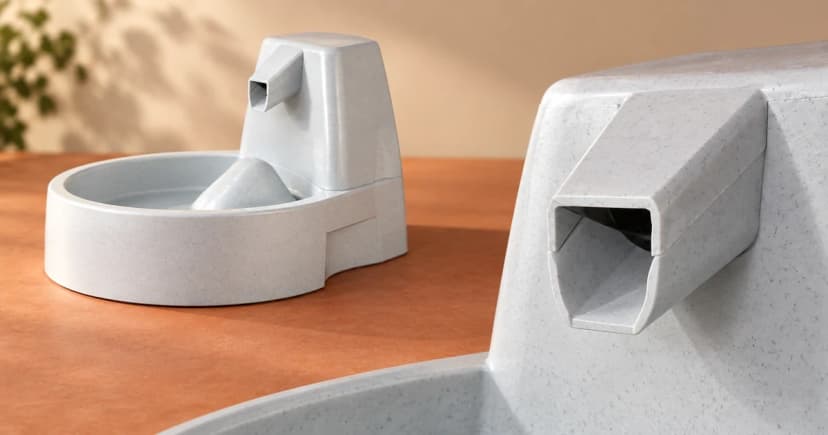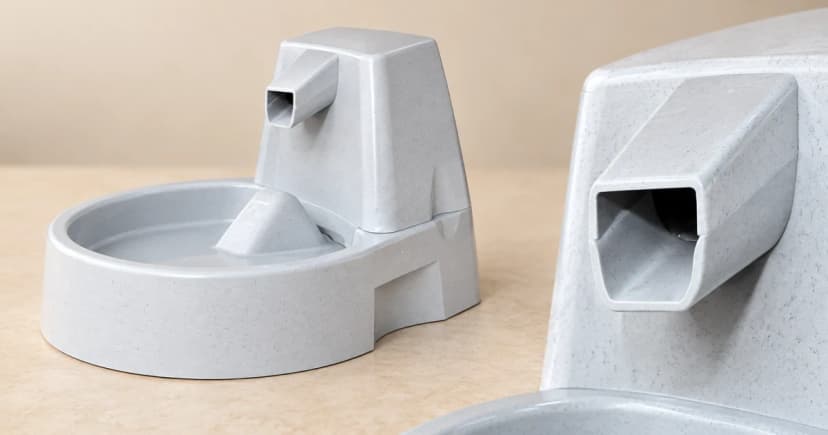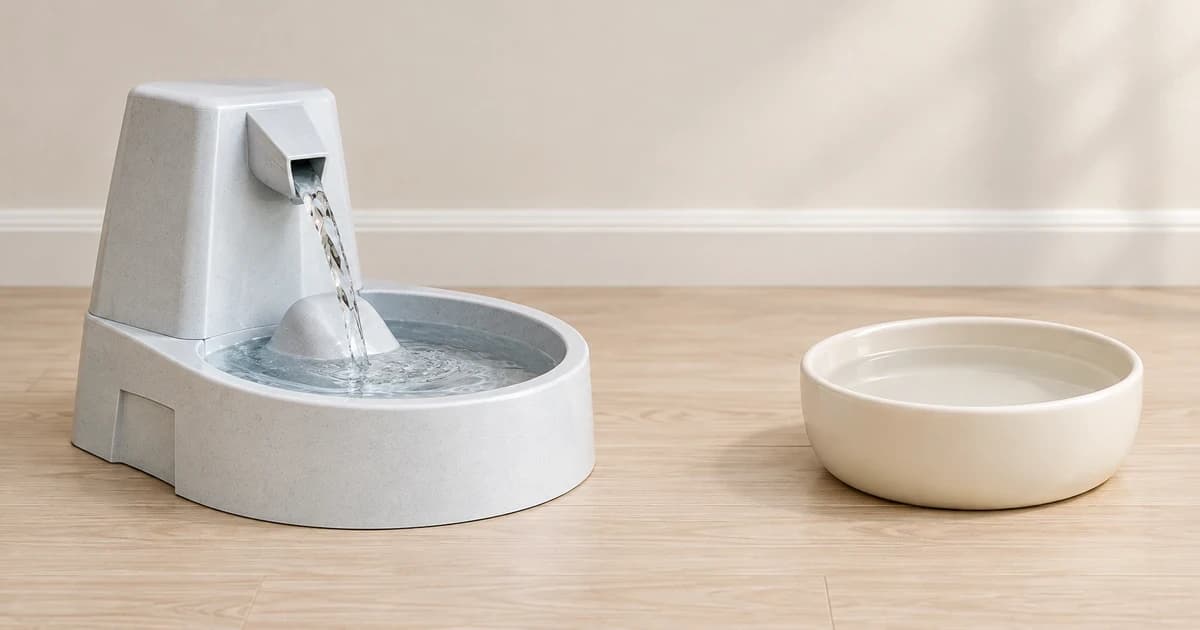
Some cats prefer moving water, but that does not mean every cat prefers a fountain over a still bowl. It also does not mean a cat that uses a fountain drinks more water overall or achieves better hydration. Individual preference, measured water intake and a clinical health effect are three separate questions.
Answering “do cats prefer running water?” therefore requires separating everyday observation from controlled measurement. Care guidance recognizes that individual cats have distinct preferences, while original research shows why enjoying a water source and proving a hydration benefit are not interchangeable.
What would count as a preference?
Seeing a cat drink from one source shows that the cat used it at that moment. Repeated voluntary choices across days tell you more about that individual cat, though the comparison still reflects the bowl shape, placement and household routine as much as water motion.
Battersea's water guidance notes that some cats enjoy running water, tumblers or wide bowls and recommends offering options to discover what an individual cat prefers. It does not state that all cats need a fountain, and comfortable daily use of a still bowl remains a valid outcome.
Similarly, a cat watching or batting at a stream has not necessarily chosen it for drinking. Recording what actually occurred—approached, sniffed, pawed or drank—prevents a playful visit from being mislabeled as a drinking preference.
Three claims need different evidence
| Claim | What the evidence would need to establish |
|---|---|
| This cat chooses this water source. | Repeated voluntary drinking choices when options are accessible in that cat's home. |
| This source increases total daily drinking. | Measured intake across conditions while accounting for wet-food moisture, other bowls and evaporation or spillage. |
| This source improves hydration or urinary health. | Veterinary assessment or controlled research measuring urine concentration or clinical outcomes. |
The first observation guides which container to keep out at home, but it cannot by itself prove the second or third claim.
What one original fountain study actually tested
David C. Grant's 2010 randomized crossover study evaluated whether water source altered daily intake and urine concentration in healthy indoor cats. The table below summarizes the study parameters and boundaries so you can see exactly what it can and cannot answer:
| Study dimension | Documented detail in Grant (2010) |
|---|---|
| Publication year & design | 2010 randomized crossover trial comparing a still bowl and a single circulating fountain model sequentially (not a simultaneous preference choice). |
| Subjects | 13 healthy indoor cats from single-pet households enrolled; 1 cat did not tolerate the fountain and withdrew, leaving 12 cats analyzed. |
| Measured metrics | Measured daily water intake and urine osmolality (a laboratory measure of urine concentration). |
| Main findings | Initial analysis showed higher measured intake on the fountain without a significant change in urine osmolality; after excluding one cat whose diet changed mid-study, the intake difference was no longer statistically significant. |
| Methodological limits | Small sample size, short measurement periods, a single fountain model, potential water-loss measurement artifacts, and supervised restriction of other water sources that does not apply to normal home care. |
Because the study tested one fountain sequentially in 12 analyzed cats, it cannot prove that no individual cat prefers running water, nor does it establish that buying any fountain dilutes urine at home.
Daily water needs are not a device preference score
Cats Protection's drinking advice explains that age, body size, diet and health all influence how much a cat drinks. Wet food contributes substantial moisture, so counting visible trips to a bowl or spout never captures total fluid intake. Offering fresh, clean water in more than one quiet location supports access regardless of whether the water is still or moving.
Use individual choices without promising a health effect
International Cat Care's 2024 caregiver guide emphasizes catering to individual cat preferences and making gradual changes while noting that cats often drink in private.
If you want to try a pet water fountain alongside existing food and water bowls, treat your cat's response as an individual comfort experiment rather than a medical treatment. Follow our guide to introducing a cat water fountain so the familiar bowl remains available during the transition. Any sudden increase or drop in drinking warrants veterinary advice rather than a container swap.