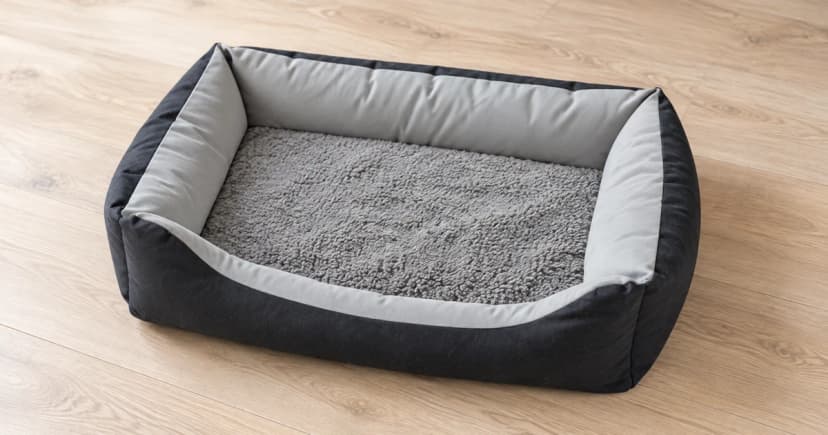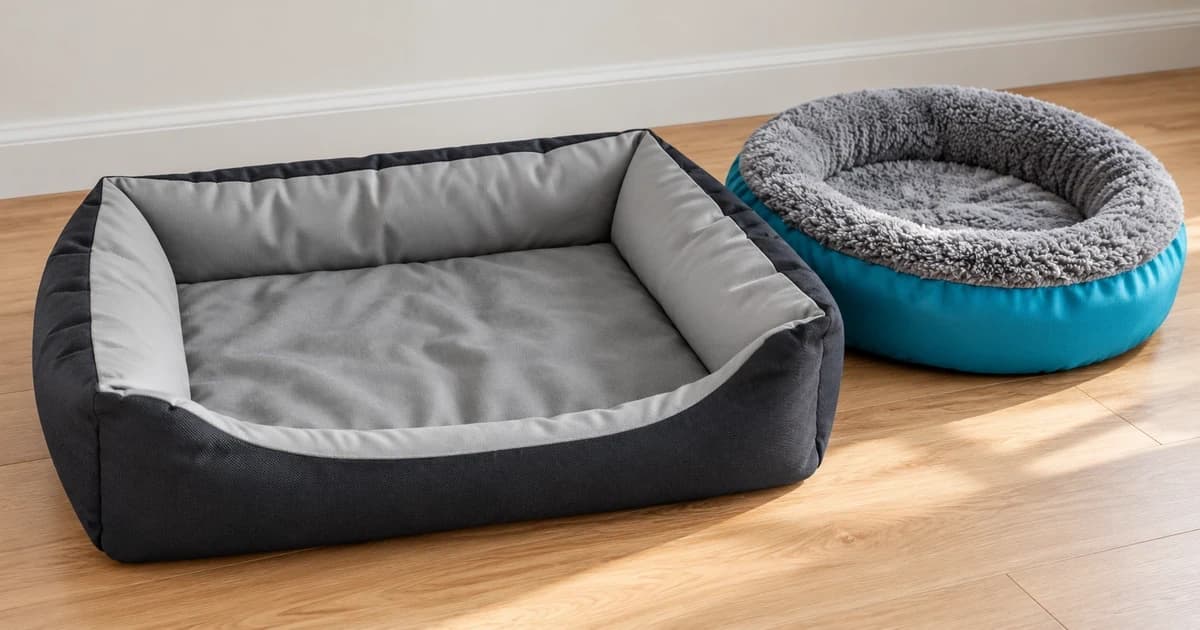
The word orthopedic does not settle whether a particular bed meets your dog's needs. The sources below discuss comfortable bedding and individual care; they do not establish that every dog needs a bed carrying that label. Start with two separate questions: has something changed in your dog's movement or resting routine, and what can you actually verify about the proposed bed?
A change in movement comes before a shopping decision
PDSA's guidance on limping and stiffness says to contact a vet if your dog is limping or stiff. Contact a vet immediately for severe pain, an inability to put a leg down, or a serious wound. Its page is written by vets and vet nurses for UK pet owners and was published in July 2019.
A dog that has started limping needs a different next step from an owner comparing two undamaged beds. Buying a thicker mattress, changing the label you search for, or waiting for a delivery does not answer the first question. Describe the change to your vet rather than trying to identify its cause from the bed.
Keep the description concrete: what happened when the dog approached its usual bed, lay down, or got up? Report what you saw without repeatedly asking the dog to demonstrate it. "They paused at the edge yesterday" is an observation; "the mattress has caused arthritis" is an explanation you have not established.
What the advice actually says about bedding
In its arthritis home-care guidance, PDSA recommends a choice of comfortable beds, including enclosed or flat options according to the dog's preference. It mentions memory foam as kind to joints. This is part of arthritis care guidance, written by vets and vet nurses for UK pet owners and published in June 2019. It is not a test of a particular mattress, foam specification, or product bearing an orthopedic label.
Dogs Trust's older-dog guidance also includes a comfortable bed and adapting care to the individual dog's changing needs. That older-dog welfare context does not identify a compulsory bed type or a clinical performance standard.
These are three pages from two organisations. Their useful contribution to this decision is a reason to consider the individual dog and the actual resting equipment. They do not supply a universal age at which to buy an orthopedic bed or a thickness, density, or firmness that you can apply to every dog.
Turn a recommendation into questions you can answer
If your vet recommends changing the resting setup, ask what that recommendation means for your dog before choosing a product. For example, is there a specific concern about stepping over an edge, the resting surface, or the space available to change position? Those are questions for an individual recommendation, not a prescription to choose the lowest, softest, or thickest option.
Then separate the information you need from the information the listing supplies:
- Construction: what filling or core does the seller actually identify? A category name and a photograph do not reveal the interior.
- Access: are the entry shape and dimensions stated clearly enough to discuss the recommendation? A low-looking edge in a photograph is not a measurement.
- Usable space: distinguish the sleeping area from the outer dimensions. Use the separate dog-bed sizing guide for that measurement task.
- Unanswered claims: if the description promises support or comfort without explaining the construction or the basis for the claim, keep that question open rather than filling in the missing facts yourself.
An owner comparing an unspecified "orthopedic" bed with one whose construction is described has an information problem to resolve. The label alone cannot tell that owner which surface suits their dog's individual care needs. This guide has not tested either product.
Keep preference, access, and product evidence separate
A dog choosing the floor once does not establish a diagnosis or prove that the bed's filling has failed. Equally, a photograph of a dog lying on a mattress does not establish pain relief, improved sleep, or the properties of the foam underneath. Treat a resting preference, a movement change, and a product specification as different kinds of information.
If the task is helping a dog approach and settle on an otherwise suitable bed, the separate guide to getting a dog to use a bed covers that learning process. It does not replace the veterinary discussion when movement or comfort has changed.
Browse by a feature you can verify
Use Beds & Bedding to compare the available descriptions. The Memory Foam Support Beds and Flat & Pillow Beds categories are starting points for checking individual construction and dimensions. Their names do not certify a filling, a medical benefit, or suitability for your dog.
Before choosing, identify the question the change is meant to answer, record any relevant veterinary recommendation, and confirm the proposed bed's actual details. Keep missing details marked as missing. That gives you a more useful basis for a decision than the orthopedic label by itself.