To clean a dog grooming loop safely, perform all maintenance while the loop is off the animal and detached from the grooming arm: identify the exact strap and fastener materials, separate surface dirt from structural wear, wash within the model's permitted strap and hardware limits, and dry every joint completely before inspecting the clip and slider.
A clean strap appearance does not certify pull strength, sanitation, or restraint readiness. Keep routine dirt removal, hardware defect checks, and unknown material compatibility as three distinct decisions before returning any loop to your grooming table kit.
Step 1: Identify the Strap, Fasteners, and Care Limits
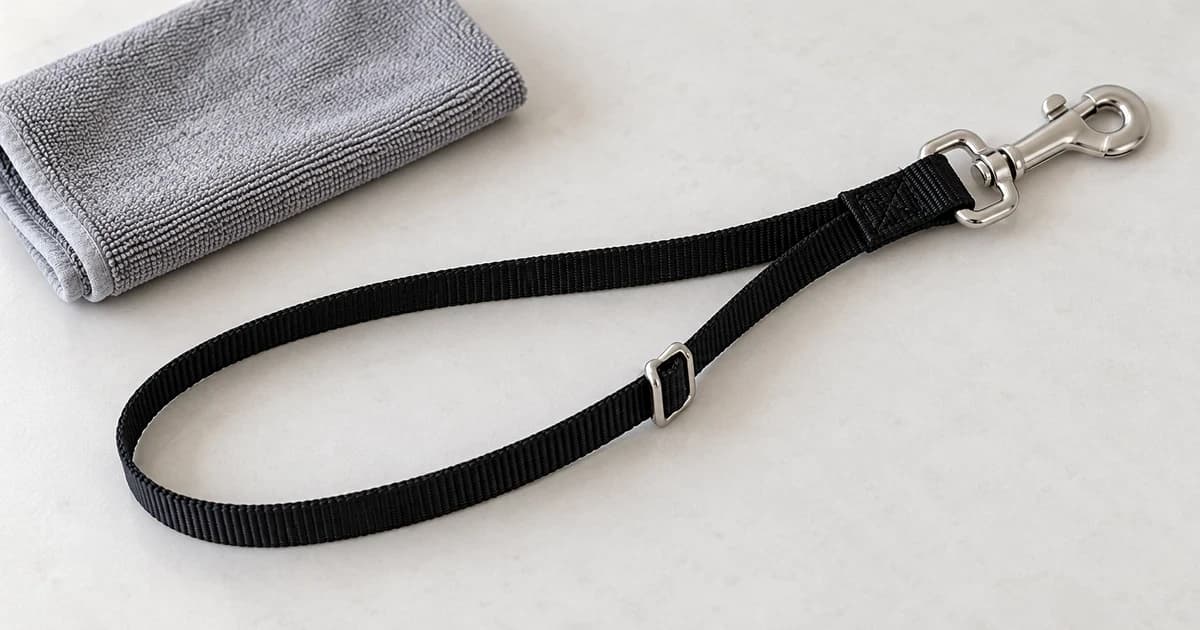
A grooming loop supplied with a table arm or bought as a replacement combines a flexible strap (such as coated BioThane webbing or woven fabric) with metal or plastic hardware (snaps, rings, sliders, rivets, or stitched joints). Record only the materials confirmed on your product page or label—a shiny snap is not automatically stainless steel, and a smooth strap is not automatically waterproof BioThane.
| Named Grooming Loop Example | Published Strap & Hardware Care | Material & Usage Boundary |
|---|---|---|
| Vivid Canine BioThane Grooming Loop | Hand wash with mild soap and water, then dry with a soft cloth; clean and thoroughly dry the stainless-steel or solid-brass hardware separately | Applies to this maker's coated webbing and named metals; the page notes its loops are not rated to specific pull or load thresholds |
| Groom Loop LLC Pink Taffy Loop | Hand wash and air dry | Does not authorize machine washing or soaking; the page also distinguishes its metal slider from a locking device |
| Backwoods Dog Waterproof BioThane Loop & Hardware Guide | Wipe down or rinse the strap after use; follow the metal-specific branch for routine wiping, mild soap-and-water cleaning, and complete drying | Hardware care branches depend on the documented metal finish; damaged or uncertain hardware must be retired rather than polished |
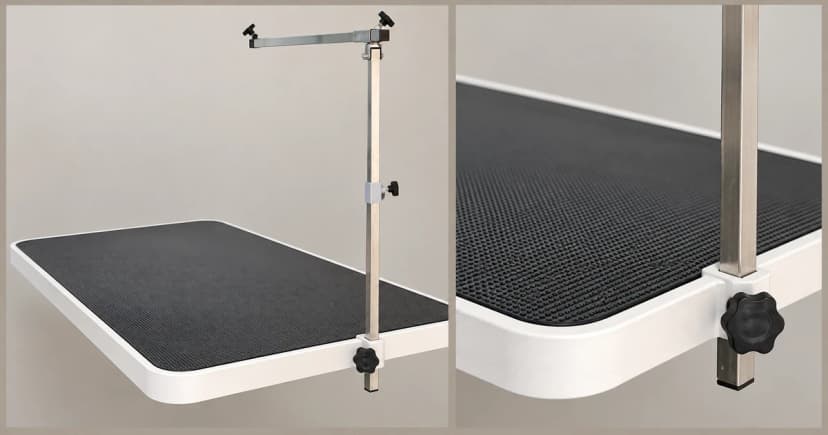
When comparing grooming tables and related equipment, check whether the arm clamp, tabletop, and removable loop carry separate cleaning instructions.
Step 2: Separate Surface Dirt from Hardware or Joint Damage
Lay the detached loop flat under good light to inspect both sides of the strap, its edges, and every hardware junction before adding water. Treat surface grime, structural wear, and unknown material rules as three separate conditions:
- Surface dirt (cleaning task): Hair, shampoo residue, or smudges on an intact strap and working clip that can be washed using the model's approved method.
- Structural wear or hardware defects (retirement condition): Backwoods Dog's hardware guide flags bent pieces, cracks, sharp edges, loose rivets, corrosion, and weakened snap springs as reasons to stop use and replace hardware. Scrubbing cannot fix a sticky gate spring, frayed stitching, or a loose rivet.
- Unidentified strap or disinfectant compatibility: If a sewn fabric loop has no care tag or requires a shared-salon sanitation protocol, do not improvise bleach mixtures, alcohol soaks, or heated drying cycles that could weaken webbing or corrode plated snaps.
Step 3: Clean the Strap and Hardware Within Shared Limits
Use only the water temperature and mild cleanser allowed for both the strap and its attached metal parts. Work along accessible strap surfaces and around rings without dismantling rivets, prying snap springs, or altering sewn folds. Even when a strap is described as waterproof coated webbing, keep bleach, harsh solvents, washing machines, and tumble dryers out of the routine unless the specific loop manual explicitly permits them.
Step 4: Dry Completely, Re-Inspect, and Log Essential Fields
Finish the exact drying method required for your loop—such as soft-cloth drying on both strap and metal for the Vivid Canine example or full air drying for the Pink Taffy example—paying close attention to folded webbing around rings and rivets where moisture hides. Once dry, test the snap gate action and inspect joints that were previously covered by hair or soap buildup. Never oil an unknown snap spring, bend a deformed hook back into place, or hang weights to improvise a load test.
Store dry, serviceable loops away from damp towels and keep retired or questionable loops in a separate bin. Maintain a concise four-field note for each loop in your kit:
- Model & materials: Brand, loop name, documented strap type, and hardware metal or finish.
- Approved care method: Permitted cleanser, hand-wash or wipe-down limit, and cloth or air drying rule.
- Post-dry hardware check: Snap spring return, rivet/stitching integrity, and slider movement (recording actual observations rather than assuming a non-locking slider locks).
- Current status: Ready for dry storage, or retired from use due to wear or hardware defects.
Keep separate maintenance records for other grooming equipment and follow our guide to cleaning a dog harness when caring for walking gear. See our editorial policy for how we document manufacturer care standards.