To know how to wash a dog harness safely, match the cleaning method to your exact model's care label, air dry the entire assembly completely, and inspect all straps, stitching, and buckles before the next walk. Even when the outer webbing looks like simple nylon, a complete dog harness combines foam padding, mesh linings, coated panels, plastic quick-release buckles, and metal leash rings that react differently to water temperature, detergent, and spin cycles.
Check the sewn care tag or product page before soaking the harness or placing it in a washing machine. Washing removes surface mud and sweat, but it never repairs frayed load-bearing webbing or corroded hardware.
Compare Manufacturer Care Labels Before Choosing a Wash Route
A visible fabric panel does not tell you how the internal foam or buckle assembly should be cleaned. For instance, Ruffwear lists a polyester shell, closed-cell foam padding, polyester mesh lining, nylon webbing, aluminum V-ring, and plastic side-release buckles on its Front Range Harness—and specifies hand washing and air drying. Compare how four documented manufacturers separate their washing and drying rules:
| Specific Source | Label Permission & Wash Method | Drying Rule & Model Boundary |
|---|---|---|
| Ruffwear Front Range Harness | Hand wash with mild detergent | Air dry; hand-wash directions for this padded model do not authorize machine cycles |
| Kurgo Tru-Fit Smart Dog Walking Harness | Gentle machine wash or spot clean | Air dry; applies to this quick-release walking model rather than every harness construction |
| Julius-K9 washing and storage guide | Hand wash only; machine washing and bleach are prohibited | Dry completely and store away from direct sunlight; tumble drying and ironing are prohibited |
| LupinePet care FAQ | Warm (not hot) water and mild soap by hand or machine for standard webbing; damp wipe only for the Splash BioThane collection | Air dry completely; collection-specific rules like coated BioThane must be kept separate from woven nylon |
When browsing replacements in our dog-harness category, keep each model's care tag separate rather than applying one brand's machine-wash rule to every harness.
Step 1: Inspect Straps and Hardware Before Washing
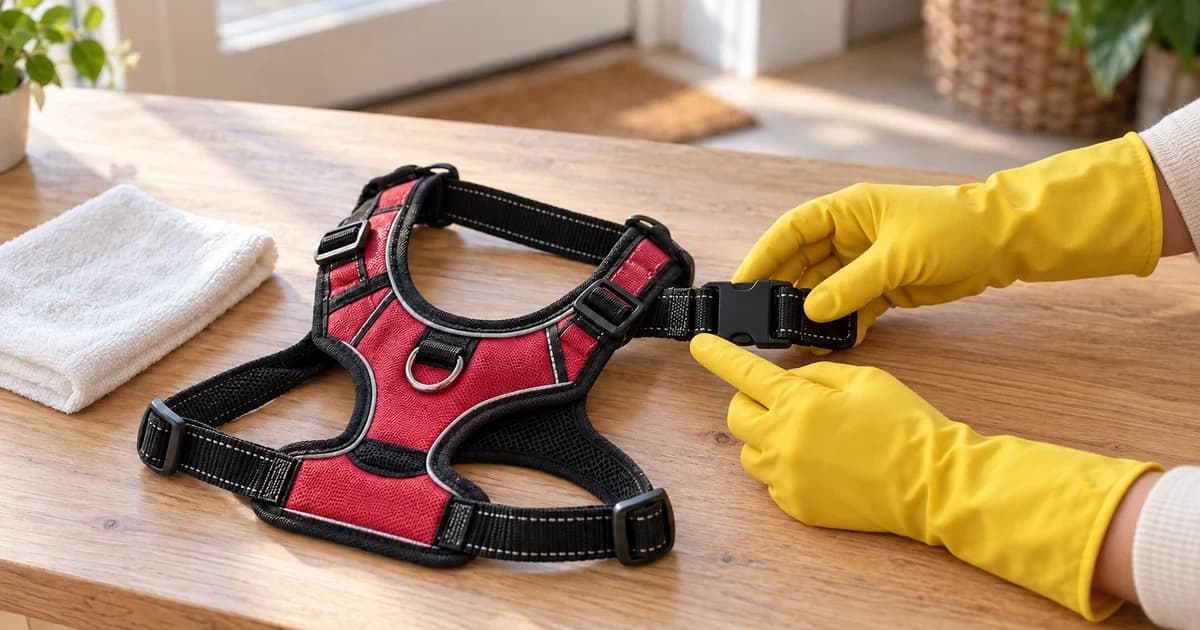
Take the harness off your dog and examine the full assembly under bright light before adding water. Snap a quick reference photo of the strap routing and slider positions so you can spot twisted webbing after drying. Check load-bearing points for structural wear:
- Stitching and webbing edges: Look for frayed straps, pulled box-stitching, or cuts near leash rings. EzyDog's harness-care guide specifically advises checking for frayed stitching and rusted buckles and replacing worn components or gear as needed.
- Buckles and metal rings: Test side-release clasps and inspect D-rings or V-rings for rust, cracks, or deformation. Retire any harness with damaged load-bearing stitching or faulty clasps instead of relying on home patching.
Step 2: Follow the Wash Route Your Care Label Allows
Once the harness passes its pre-wash structural check, select the cleaning branch permitted by your model's instructions and avoid adding bleach, fabric softeners, solvents, or vinegar mixes unless explicitly approved:
Route A: Surface or Spot Cleaning
Use a damp cloth or sponge with the permitted mild soap on muddy panels when your harness specifies spot cleaning (or uses coated materials such as LupinePet's Splash BioThane line). Remove loose grit gently without forcing sand through stitched seams or buckle housings, and detach removable patches or accessories only when they are designed to come off for separate care.
Route B: Hand Washing
For padded or structured harnesses that specify hand washing—such as the Ruffwear Front Range or Julius-K9 models—wash in cool or warm (never hot) water with the recommended mild detergent. Work cleaner gently through padded chest and belly panels, then rinse thoroughly in clean water so soap residue does not stay trapped inside foam folds or irritate your dog's skin.
Route C: Gentle Machine Washing
Use a washing machine only when your exact model's care label explicitly permits it, such as Kurgo's Tru-Fit Smart Walking Harness or standard woven LupinePet gear. Fasten buckles, place the harness inside a mesh laundry bag if recommended to protect the drum and hardware, and select a cool or warm gentle cycle with mild soap. Machine-wash permission never implies dryer permission—every example in the table above requires air drying.
Step 3: Air Dry, Re-Check Closures, and Verify Fit Before Reuse
Hang or lay the harness to air dry in a well-ventilated indoor area out of direct sunlight and away from heaters or tumble dryers. Wait until thick chest padding, multi-layer webbing joins, and buckle slots are completely dry inside and out before storing or fitting the harness.
Before clipping a leash on for the next walk, complete a four-point reuse check:
- Label permission & method: Confirm the harness was washed and air dried within its stated temperature and cycle limits.
- Complete drying: Press padded panels and folded webbing joins to ensure no dampness remains trapped.
- Hardware & seam re-inspection: Verify that washing did not expose hidden seam separation and that every buckle clicks shut and releases cleanly.
- On-dog fit check: Because washing and handling can shift tri-glide sliders, re-verify chest and neck adjustment on your dog using our harness measurement and fit guide rather than assuming old slider positions still fit properly.
Jot down the model name, permitted wash route, and drying rule for each piece of dog-walking gear you own so care instructions never get mixed up. See our editorial policy for how we verify manufacturer care documentation.