

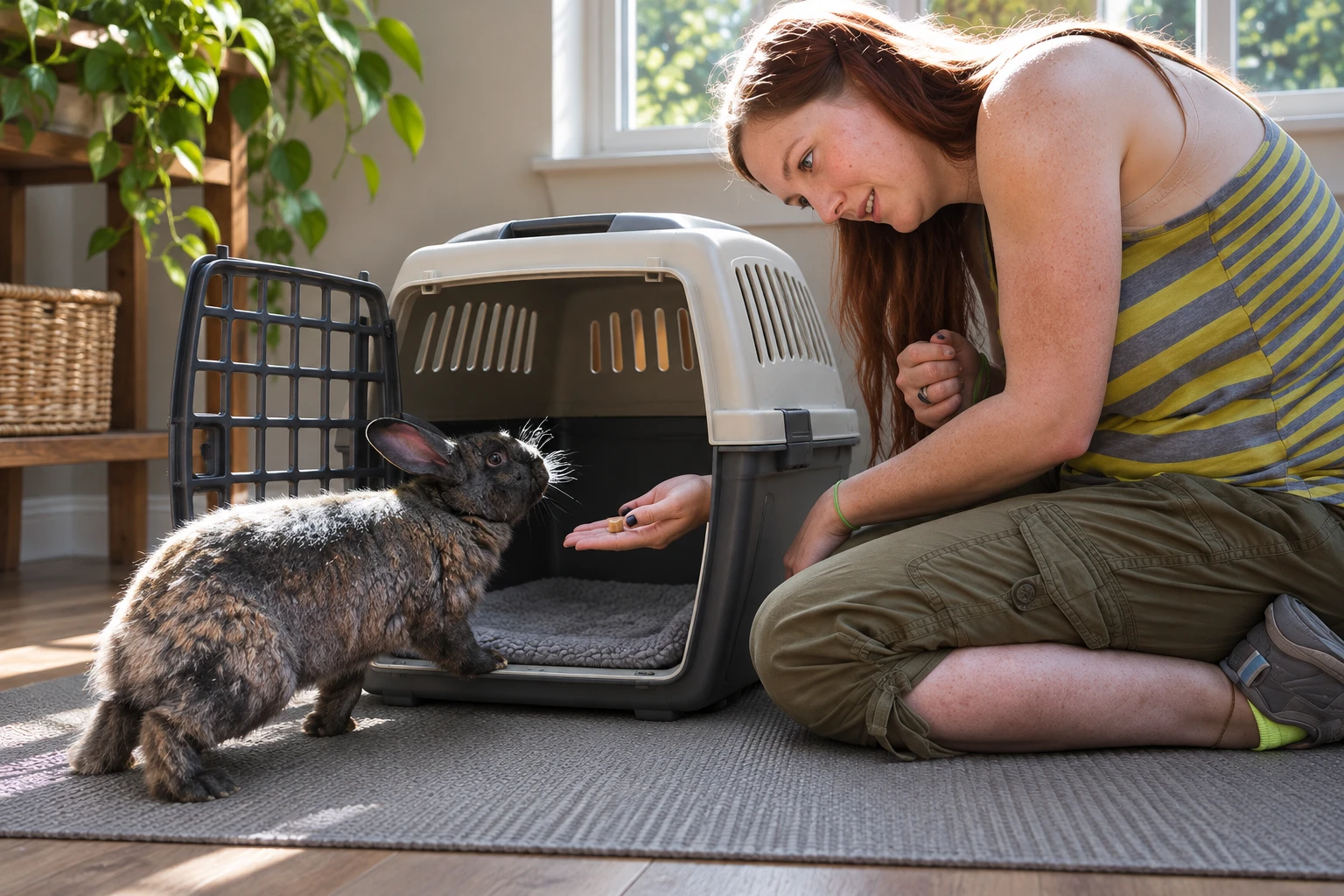
To encourage a rabbit into a carrier, practise with the door open so your rabbit can investigate, enter, and can leave freely without being shut inside. This open-door routine records voluntary approach and entry around familiar, unsoiled bedding and hay; it does not evaluate closing the door, lifting the carrier, or readiness for a journey.
Prepare the open entrance
RSPCA advises leaving a front-open carrier in the rabbits' living space before travel. Put familiar-smelling, unsoiled bedding and hay inside. A healthy snack or greens can encourage them to enter.
Check its actual opening and assembly instructions. Resolve a damaged or unclear fitting before practice; our carrier assembly guide covers that separate job.
Invite, then observe with a shared open-door log
Allow investigation first. Watch whether your rabbit stays nearby, approaches the entrance or goes inside.
RSPCA's behaviour guide recommends positive, reward-based training and rejects physical coercion or punishment. Do not push your rabbit into the opening or hold them there.
If they leave, keep the way out available. Offer the familiar setup again another time, rather than closing faster to catch them.
| Stays nearby | Approaches open entrance | Enters voluntarily (door open) | Leaves voluntarily (can leave at will) |
|---|---|---|---|
| Note whether the rabbit settled or explored near the carrier in its living area. | Note whether the rabbit sniffed the doorway or took hay/greens from the threshold. | Note whether all four feet entered while the door stayed open (describes this session only, not closure or travel clearance). | Confirm the exit remained unobstructed and note when the rabbit chose to hop out. |
Pause at open-door entry
Full entry with the door open does not establish readiness for closure, lifting or a journey. This routine stops at open-door practice.
Notice changes from your rabbit's usual behaviour. Sudden changes or persistent concerns deserve veterinary or qualified behavioural advice, rather than increasingly insistent invitations.
Keep clinic advice in context
In the consultation room, PDSA advises keeping a rabbit in its carrier while you explain concerns. Then open the door and let them emerge; do not tip or force them out.
That is a clinic-specific endpoint. Do not delay veterinary care for an unwell rabbit while trying to finish practice.