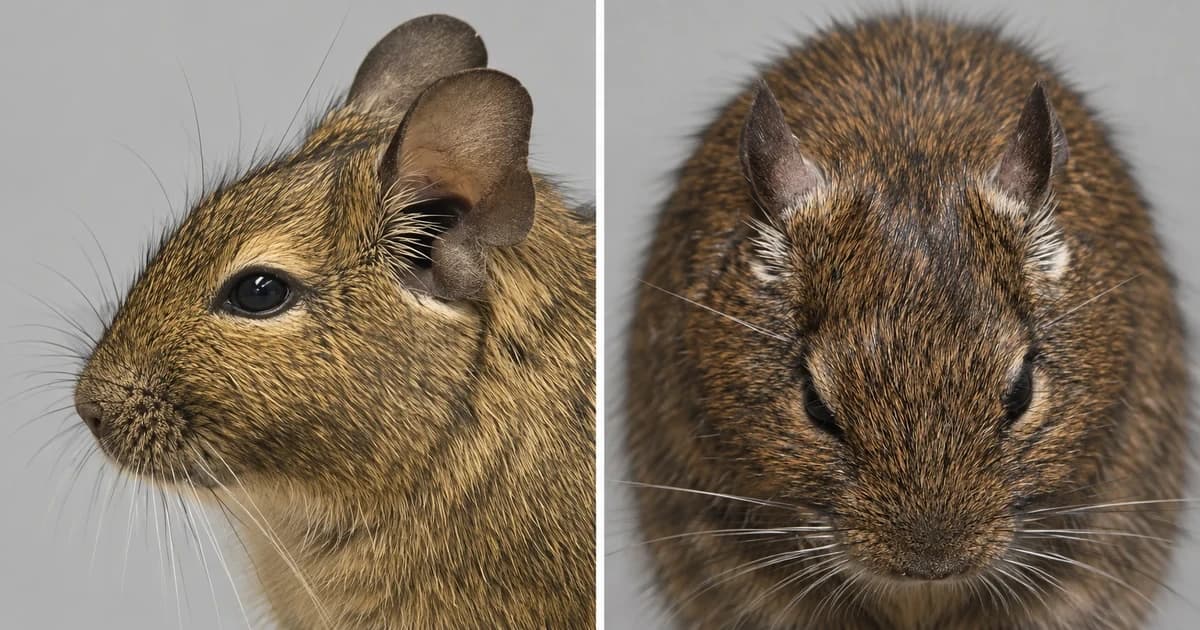
Handling a degu can end with three valid outcomes: staying with cage-side petting or treats, completing a necessary low-height transfer using PDSA's chest-and-hind-leg support or voluntary tube method, or stopping immediately if the degu withdraws.
Begin at the enclosure
Degus usually prefer petting or treats in their cage to being picked up. Let the interaction stay there when no move is needed.
Work quietly and gently, with an accessible hiding place. Leave room for withdrawal rather than pursuing contact. Never shout or punish.
Check the degu enclosure setup for damage that could cause injury or escape. Prepare the return area before lifting.
Choose a supported transfer
When a degu does need to leave the cage, choose between PDSA's two supported transfer paths and keep the entire movement close to the ground:
Option 1: Direct chest and hind-leg support (PDSA)
For a direct hand lift, follow PDSA's degu handling method: place one hand around the chest and use the other hand to support the hind legs, holding the degu close to your body.
Option 2: Voluntary tube transfer (PDSA)
If your degu prefers not to be scooped directly, PDSA describes letting the degu walk into a tube voluntarily, then positioning the tube near your hands or arm at a low height so they can walk out on their own terms without being tipped or forced.
| Transfer Stage | Option 1: Direct Two-Handed Support (PDSA) | Option 2: Voluntary Tube Transfer (PDSA) |
|---|---|---|
| How It Starts | Approach calmly at the open enclosure after preparing the destination area. | Present a familiar tube inside the enclosure and allow the degu to walk in voluntarily. |
| Support & Height Rules | One hand around the chest and the second hand supporting the hind legs, held close to your body near the ground (never pull or lift by the tail). | Carry the supported tube at a low height away from shelves or jump hazards, then position it beside your hands or arm (never tip or shake the degu out, and never touch the tail). |
| Return Endpoint & Stop Rule | Maintain chest and rear support until lowered onto the prepared surface; stop the attempt immediately if the degu withdraws. | Hold the tube steady at the prepared return area so the degu walks out voluntarily; leave contact at cage level if the degu retreats. |
In both options, keep handling near the ground, away from shelves or furniture they might jump towards. Never pull or lift a degu by the tail, which can be shed and badly injured.
Return and reassess
Maintain chest and rear support while lowering to the prepared area. If this is difficult, ask your vet to demonstrate.
If the degu withdraws, end the attempt. You can leave contact at cage level; there is no requirement to achieve longer holding.
Ask your vet or a clinical animal behaviourist about changed behaviour or repeated fear or stress. These observations need assessment, rather than a stronger grip.