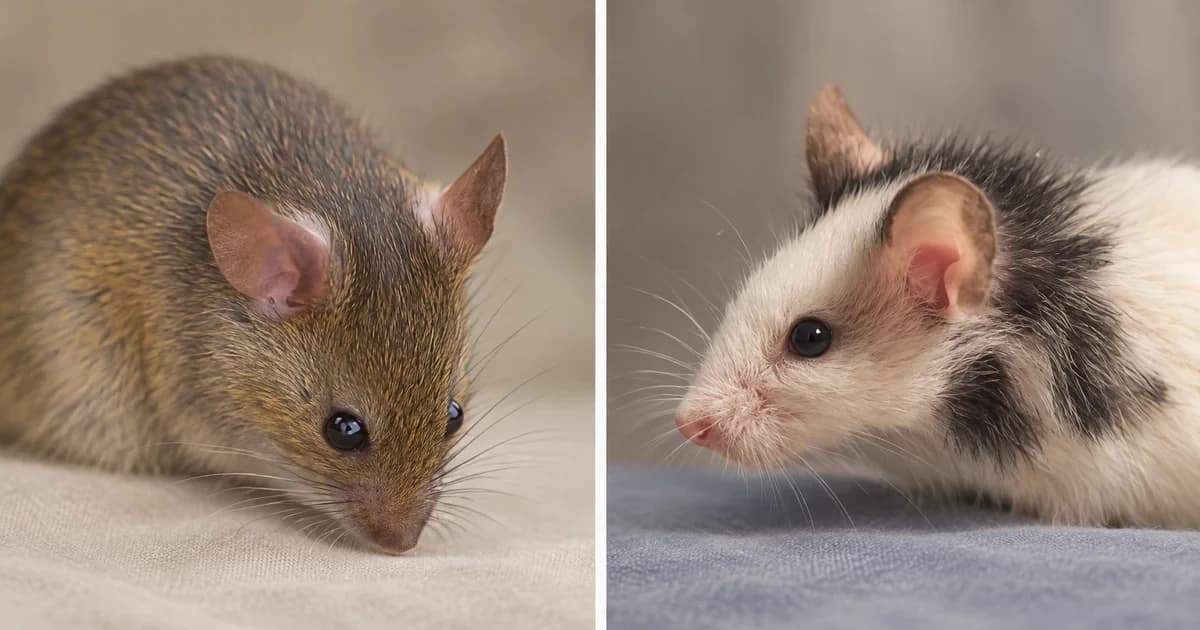
Knowing how to handle a pet mouse safely starts by separating everyday voluntary contact from veterinary examination restraint. For daily interaction and cage transfers, wait for your mouse to sniff and approach on its own, then support its entire body using either a scent-familiar home-cage tunnel or two cupped palms held low over a safe surface—never pick up a mouse by its tail or scruff its neck.
1. Wait for voluntary approach inside the cage
RSPCA Australia's mouse-handling guide recommends resting your hand quietly in the enclosure so the mouse can sniff and investigate at its own pace, avoiding pickup whenever the mouse retreats or hides. PDSA's pet-mouse guidance likewise emphasizes calm, patient contact—such as offering a small treat or gentle stroke inside the cage—before attempting to lift a mouse out.
2. Compare the two supported transfer methods step by step
Use this side-by-side table to follow either the RSPCA UK scent-familiar tunnel transfer or the RSPCA Australia and PDSA two-handed cupped scoop, including how to transition from tunnel to palm and back onto the cage floor:
| Handling stage | Method A: Scent-familiar cage tunnel (RSPCA UK) | Method B: Two-handed cupped scoop (RSPCA Australia & PDSA) |
|---|---|---|
| 1. Prerequisite & best use case | Ideal for shy mice, early taming, or routine cage-cleaning transfers using a cardboard or plastic tube that lives permanently in the cage and carries familiar scent. | Suitable once a mouse comfortably approaches and steps onto your resting hands inside the enclosure. |
| 2. Entry or pickup position | Lay the familiar tunnel flat on the cage floor in front of the mouse and wait for the mouse to walk inside voluntarily—never chase the mouse around the bedding with the tube. | Slide one open palm gently underneath the mouse's belly from the side or front to scoop the whole body—never grab from directly overhead like a predator, and never lift by the tail. |
| 3. Tunnel-to-palm & full-body support | Cup your hands over both ends or hold your cupped palms directly beneath the open tunnel exit so the mouse can walk out onto your supported palms at its own pace. | Rest the mouse in one cupped palm while curving your other palm loosely over the top (without squeezing) to prevent sudden leaps. |
| 4. Height & body posture during hold | Keep both the tunnel and your receiving hands close to your body and low over a table, lap, or beddings tray in case the mouse darts forward. | PDSA and RSPCA Australia both stress keeping your hands low over a soft, secure surface and close to your chest so a sudden jump cannot result in a high fall. |
| 5. Palm-to-cage surface return | Lower your cupped hands or the tunnel all the way down until touching the cage bedding or platform, then let the mouse step off onto solid footing before lifting your hands away. | Lower both cupped hands right down to the cage floor level first, uncover your top hand once touching the bedding, and let the mouse walk off onto the substrate on all four feet. |
3. Supervise children and separate health checks from daily contact
PDSA notes that children should always be closely supervised by an adult when interacting with mice so small bodies are never squeezed or dropped from standing height. If a normally confident mouse suddenly hides, vocalizes, bites, or shows physical changes, pause handling and speak with your veterinarian—and if a mouse needs a medical examination, ask your veterinary team to demonstrate safe clinical holding rather than gripping tighter at home. To arrange hides, tunnels, and bedding so transfers stay low-stress, see our pet-mouse cage setup guide.