
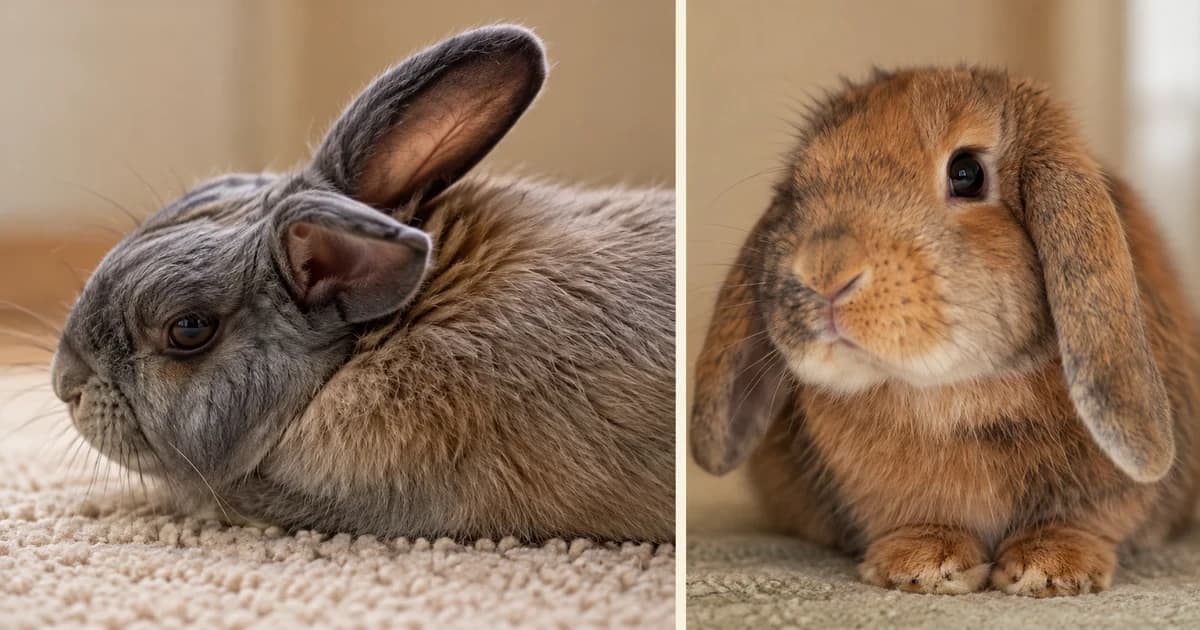
Brush gently, checking loose undercoat rather than only smoothing the surface.
Prepare contact and tools
Start when your rabbit accepts gentle touch. Blue Cross allows grooming on the enclosure floor when lifting is stressful, with short sessions built up gradually.
The RWAF moulting guide also recommends ground-level brushing. Avoid sharp-ended slickers that can scratch rabbit skin.
Its grooming guide describes soft brushes for routine care and soft rubber brushes or mitts for loose moulting fur. Even rubber needs careful use; combs require care too.
Ask a rabbit-experienced professional to demonstrate an appropriate tool.
Work beneath the surface
Following Blue Cross's brushing route, brush gently with hair growth. Part the fur as you go to reach loose undercoat, without scraping the skin. Stop if the tool catches rather than pulling harder.
RWAF distinguishes a soft surface brush from the additional help a moulting coat may need. Removing visible hairs from the top alone can leave loose undercoat beneath.
A smooth top does not show whether loose undercoat remains. Stop at resistance rather than increasing force.
Recognise the stopping points
For mats you cannot gently loosen, ask your vet or a rabbit-experienced groomer. This guide follows Blue Cross's advice against cutting mats out yourself.
Blue Cross calls for specialist grooming for Angoras. Report coat or skin abnormalities to your vet.
Plan the next session
Blue Cross recommends at least weekly brushing for short coats, daily for long coats and more during moulting.
RWAF notes that domestic shedding patterns vary and recommends daily grooming during a moult. Several short sessions may be needed.
Keep enclosure cleaning separate.