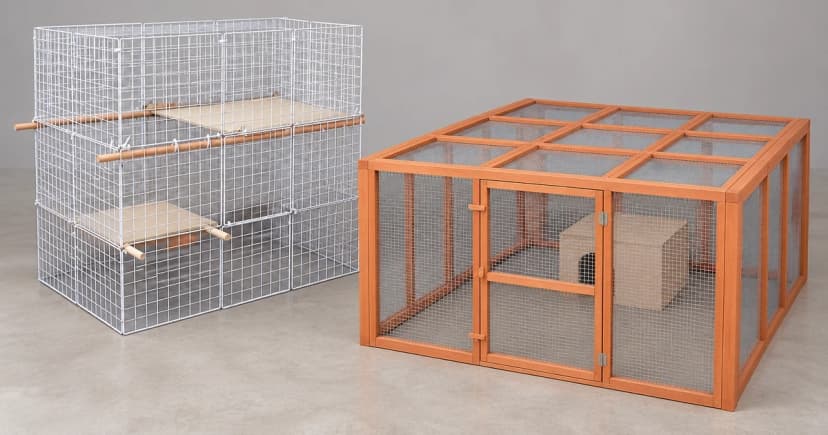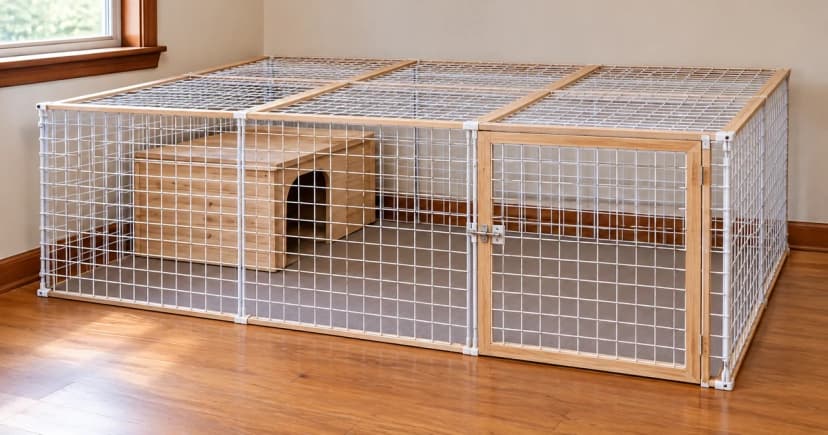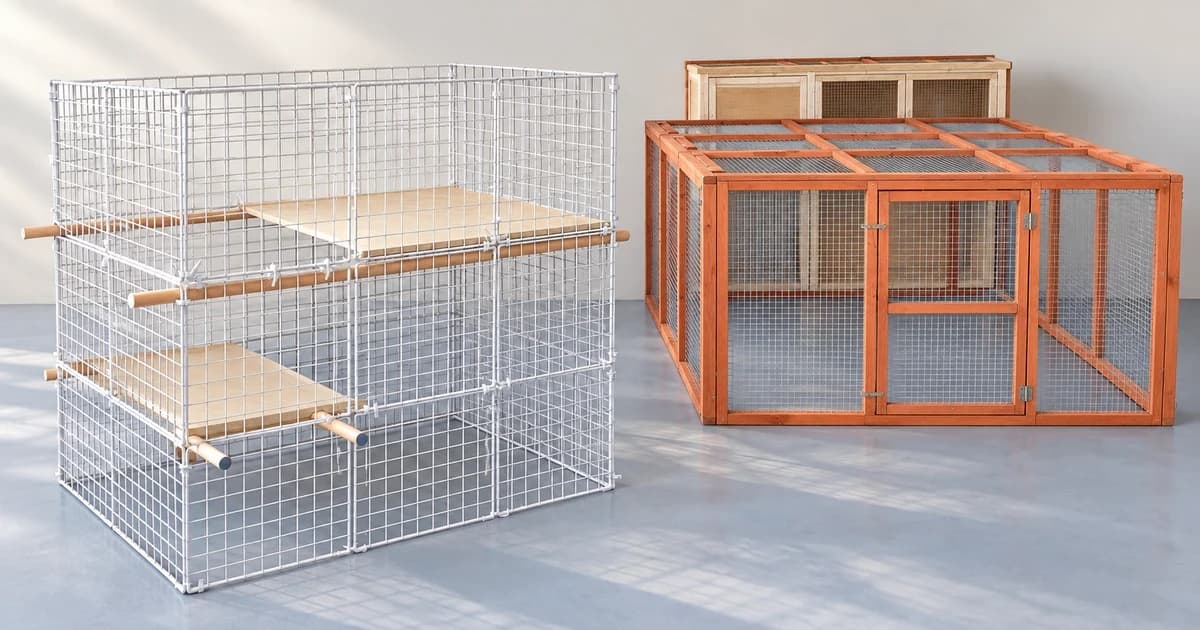
How do you clean a rabbit cage? Treat the shelter, exercise area and removable equipment as one cleaning job: remove soiled material and loose debris, check each component's permitted cleaning method, finish any required rinsing and drying, then restore the living arrangement. Emptying a toilet tray alone does not complete that route.
The right method depends on the actual housing and its materials. A small purchased cage is not a complete permanent rabbit home; use the whole living-space guide when assessing the arrangement itself.
Plan where the rabbits and their resources will remain
The RSPCA's housing guidance distinguishes the whole enclosure from its shelter and exercise area. It also calls for access to essentials such as food, water, hiding and toilet areas. Plan an adequately prepared alternative area before making a section unavailable for cleaning; do not turn the job into confinement in a tiny container.
Work out the route before removing fittings. Identify what can be taken out under the equipment's instructions and what remains structural. Do not dismantle panels, joints or fastenings simply because they look detachable. Keep the rabbits away from the active cleaning area without chasing or forcing them into position.
Gather rabbit cage cleaning supplies by task
Choose tools for the surfaces and components you will actually clean. Keep a separate place for waste and dirty items so they do not get mixed with clean supplies or bedding reserved for return.
| Task | What to prepare | Permission to check |
|---|---|---|
| Remove loose debris | Blue Cross describes a dustpan and brush for sweeping remaining material from corners, sides and the door. | Reach the exercise area as well as the sleeping enclosure. |
| Clean a housing surface | The exact permitted cleaner and application tool. | Rabbit-use labeling, material compatibility and the housing instructions. |
| Clean removable equipment | A separate place for bowls, bottles, trays and other permitted removable parts. | Each item's own wash, rinse, drying and reassembly directions. |
| Restore the arrangement | Clean replacement supplies and separately kept unsoiled familiar bedding. | Completion of the applicable cleaning and drying steps. |
A cage category or product photograph does not establish that wood, coatings, joints or accessories can be soaked, sprayed or put in a dishwasher.
Separate waste removal from the larger clean
PDSA distinguishes daily cleaning from a weekly deeper clean. Its daily tasks include removing wet or dirty bedding and uneaten greens and pellet food. Its deeper-clean guidance involves removing contents, cleaning and complete drying before bedding returns.
Blue Cross says to check bedding and the environment daily, with a deeper clean once in a while. For its hutch-and-run route, it specifically sets aside some unsoiled bedding, removes soiled material, sweeps remaining debris and includes the exercise area. Keep that reserved material separate from waste.
RSPCA describes daily toilet-area cleaning and a whole-enclosure clean around weekly, more frequently when soiling warrants it. Its familiarity advice uses the broader wording “used bedding.” Keep that wording distinct from Blue Cross's unsoiled condition; this routine does not instruct retaining urine, droppings or soiled waste.
These are attributed schedules with different wording. Inspect the actual condition rather than treating one calendar interval as permission to leave soiled areas untouched. For tray location and voluntary training, use the separate rabbit litter-tray guide.
Resolve wet-cleaning instructions before applying a product
Blue Cross's deeper-clean instructions name a pet-safe disinfectant, a sponge, thorough washing with warm water and complete air-drying. They do not identify a specific product, dilution or contact time. Check the exact label and equipment restrictions rather than inventing those details or extending the method to every material.
Keep ordinary debris removal separate from a product's disinfection directions. If the permitted use or material compatibility is unclear, ask the relevant manufacturers. Do not mix cleaners or improvise a chemical recipe.
PDSA also includes checking food and water containers, then cleaning, rinsing and drying them before refilling. Its general washing options do not establish that your particular bottle, bowl or attachment is dishwasher-compatible. Use each item's actual instructions.
Restore access after the applicable work is complete
Finish the required rinse and drying steps before replacing bedding or returning rabbits to a cleaned section. Restore permitted fittings according to their instructions, return the separately reserved unsoiled bedding where appropriate, and check that routes between shelter, exercise, food, water and toilet areas are clear.
Keep a short record of the areas checked, material removed, components cleaned, instructions followed and any unresolved damage or care question. That record helps the next person continue the routine; it does not certify disinfection, disease prevention or the suitability of the housing.