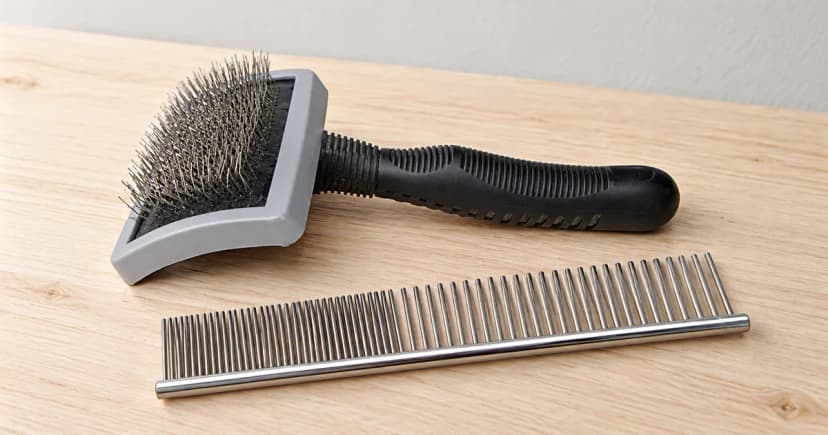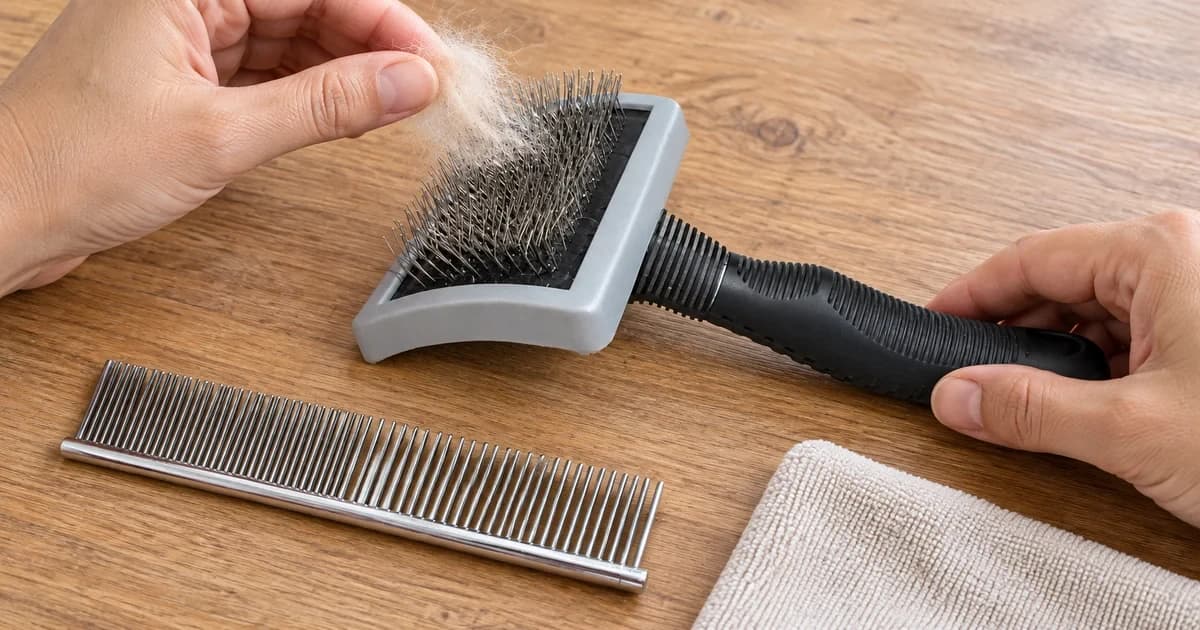
To clean a dog brush, remove trapped hair first, identify its construction, then follow the maker’s instructions for the permitted wet cleaning and drying. A metal shedding edge, a cushioned pin brush and a molded plastic brush need different treatment. A hair-release button also does not tell you whether the whole brush may be soaked.
Start with the brush empty of loose fur. This guide concerns the equipment; it is not a method for treating skin problems or cutting out coat mats.
Identify the parts before choosing a cleaning method
Look at the head, handle and any moving parts. Note whether the teeth are fixed into metal, set in a flexible cushion, or molded into the body. Check for wood, an air hole, a retracting plate, glued joints or a power connection. A familiar-looking head does not establish the same cleaning permission as another brand.
| Construction or example | Verified maker instruction | Boundary to retain |
|---|---|---|
| FURminator undercoat deShedding edge | Warm water and mild soap on the edge if needed; dry the tool completely before storage | Permission for the named edge does not authorize soaking every brush or moving mechanism |
| Chris Christensen cushioned pin brush | Remove hair, use a cleaning brush, then controlled lather and rinsing with the handle raised | Keep water from the pad’s air hole; follow its specified drying position |
| Tangle Teezer Detangling Dog Grooming Brush | Remove hair; warm water and mild soap or shampoo for buildup | The current page gives conflicting drying orientations; confirm the instruction for your model |
| EquiGroomer lacquer-coated steel blade | The FAQ warns that repeated water exposure can cause rust and shorten blade life | A metal blade is not automatically a washable stainless-steel comb |
| KONG ZoomGroom rubber tool | Its grooming guide describes wet, shampooed use and setting the tool somewhere safe to dry | This does not supply dishwasher, soaking or disinfectant permission for other rubber brushes |
Remove hair without forcing the pins
Work over a surface where the removed fur can be collected. Gently lift loose strands without dragging hard sideways against pins or scraping a shedding edge. Where closely packed or sharp teeth make finger access awkward, use the manufacturer’s recommended cleaning tool instead of pressing fingertips down between them.
Chris Christensen Australia’s pin-brush instructions begin with lifting woven hair using fingers, then drawing a purpose-made cleaning brush across the pad. The regional site identifies itself as an authorized distributor; these are instructions for that brand’s pin brushes, not a general recipe for every slicker.
For a self-cleaning brush, use the hair-release control only as its instructions describe. Remove the released hair and check whether any remains around the plate. Do not pry the plate out or bend the teeth to reach concealed debris. “Self-cleaning” can refer to releasing fur; it does not establish washing, detergent or immersion permission.
The FURminator FAQ also describes an Edge Guard operated with its FURejector button. Follow that model’s storage instruction; do not assume another brush’s release button locks an equivalent guard.
A named shedding edge
FURminator permits warm water and mild soap on its undercoat deShedding edge when needed and requires complete drying before storage. Clean the permitted area gently, remove the soap and let the tool dry. The FAQ warns against dropping the tool because its teeth can be damaged. It does not tell you to sharpen the edge, scrape it with a knife or apply the same wash method to all of its brush and rake designs.
A cushion with an air hole
Chris Christensen Australia specifies lather made from lukewarm water and shampoo, applied with its small cleaning brush. Dip that cleaner into the lather, not the water. Hold the pin brush face up, handle raised and pad sloping down, to keep water out of the air hole.
For rinsing, wet the cleaning tool with clean water and repeat that position and movement. Shake out excess moisture; dry on its end, handle up and pad down, until fully dry. Keep oil and spirits away from its rubber pad. This controlled method does not authorize immersing the handle and cushion.
Molded plastic teeth
The Tangle Teezer dog-brush page allows warm water and mild soap or shampoo for product buildup. Its FAQ describes gentle cleaning between the teeth and base using a clean toothbrush, followed by rinsing and natural drying. It also warns against heat for its Detangling range.
There is an unresolved detail on that page: the Care & Cleaning paragraph says bristles down or on the side, while the cleaning FAQ says teeth up. We cannot resolve that conflict by selecting whichever sentence is more convenient.
A blade or rubber tool with different limits
EquiGroomer’s FAQ describes its hardened steel blade and lacquer finish, and warns that repeated exposure to water can cause rust. That warning is a reason to seek its exact cleaning guidance before treating it like the FURminator edge. The fact that both tools remove loose hair does not give them interchangeable care instructions.
KONG’s ZoomGroom guide describes using that rubber tool with shampoo during bathing and putting it somewhere safe to dry afterward. Wet-use permission for this model is not a blanket grant to boil, disinfect or put an unfamiliar rubber brush in a dishwasher.
Dry, inspect and store the brush
Use the drying position in the actual instructions, and wait for complete drying where the maker requires it. Check the pad, seams and moving plate rather than judging only the visible teeth. Do not add a hair dryer or heated setting unless the maker permits it.
Before the next use, inspect for bent or broken teeth, corrosion, a split cushion, loose handle or a release plate that no longer moves normally. Do not straighten sharp pins against your hand or improvise a stronger cleaner to fix mechanical damage.
Powered vacuum-grooming heads, heated tools and motorized brushes need their own manual for power isolation and removable parts. The wet-cleaning examples above do not cover their electrical housings. Likewise, removing visible fur does not establish disinfection: follow separate professional advice if the tool needs a specific hygiene procedure.
Compare construction and available care information in our deshedding tools and combs and dematting tools categories. Match the exact product instructions before transferring a method. Our editorial policy explains the distinction between source-based equipment guidance and hands-on tests.