How often you should brush a dog depends on the coat your dog has now. Some short coats can start with weekly care, while long coats may need daily attention. Other coats fall between those examples. Use a coat-specific recommendation as your starting point, then review loose hair, developing tangles, the actual tool instructions and your dog's response.
A useful plan answers two questions separately: when does this coat need attention, and which tool is appropriate for that job? A daily brushing recommendation does not mean daily use of every rake or shedding edge in a grooming kit.
Start with a coat-related example
PDSA's grooming guidance gives the following dog examples. Treat them as starting points for the described coats, rather than a timetable for every dog with the same breed label.
| PDSA coat example | Its suggested frequency | Check before adopting it |
|---|---|---|
| Long coats, including long-haired Yorkshire Terriers and Lhasa Apsos | Daily | Current length, including any clipped areas |
| Medium coats, including German Shepherds and some spaniels | A few times a week | Texture, undercoat and loose hair |
| Short coats, including Labradors and Staffordshire Bull Terriers | May need weekly brushing | Undercoat and present shedding |
| Curly poodle-cross examples, including Cockapoos and Labradoodles | A few times a week | Individual curl pattern and developing tangles |
Blue Cross recommends at least weekly care for short, smooth coats and usually daily attention for rough or long coats between professional appointments. Its separate clipping interval is not a brushing interval. The AKC's home grooming guide gives broader advice of several brushing sessions a week, often daily for long coats, while emphasizing individual coat and lifestyle.
These sources use different groups and examples. Do not average their numbers into a supposedly precise rule. If your dog's coat does not clearly match an example, take that uncertainty to a groomer who can examine it and demonstrate a suitable routine.
Describe the coat your dog has now
Write down length and texture separately. A short coat can still have an undercoat: the AKC's double-coat guide includes Labradors among short double-coated dogs. That guide also gives weekly examples for short and medium double coats, with more frequent attention for heavier coats and shedding periods. The word “short” alone does not identify the layers or choose the tool.
Describe what is actually in front of you: short and smooth, longer and straight, rough, curly, or a combination across the body. Note a recent professional clip and any areas left longer. A breed name or crossbreed label cannot tell you the present length of every area.
Ask a groomer three practical questions: which areas need attention between visits, which brush or comb suits those areas, and how often to check them initially? Keep the answers with your equipment. This makes it easier to distinguish an ordinary maintenance task from work that belongs at the next appointment.
Separate the routine from the tool
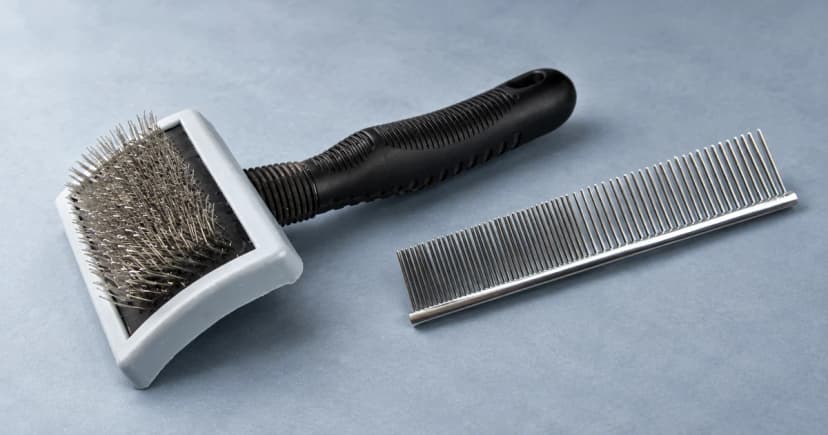
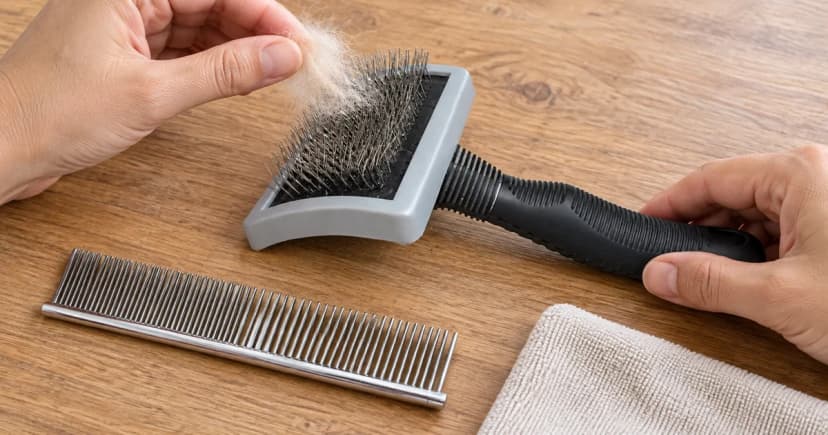
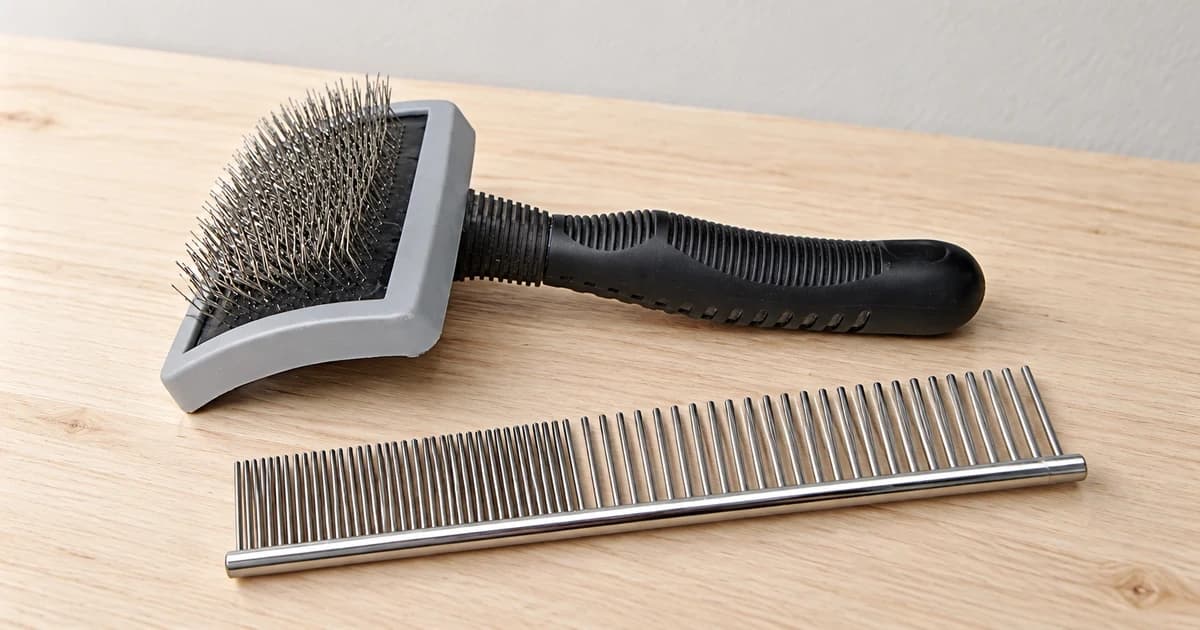
Choose the job before reaching for a head. Blue Cross describes pin brushes, rubber tools, bristles and undercoat rakes with different uses; it also warns against excessive pressure with slicker pins. A tool that looks familiar can still differ in pin length, spacing, edge construction or permitted use.
Category names help organize a search; they do not establish suitability or a safe pressure.
Keep ordinary brushing separate from specialist edge or rake work. A recommendation to brush frequently does not authorize repeated passes with a blade, daily undercoat removal, wet use, or cutting through a knot. For a tool whose purpose or cadence is unclear, ask before using it more often. Do not increase frequency simply because a product title says “daily.”
Before use, look for broken or bent teeth, a split cushion, loose parts or an edge you cannot identify. Set damaged or unfamiliar equipment aside for advice or replacement. Our dog brush cleaning guide covers hair removal and model-specific care; cleaning permission is separate from permission to use a tool on this coat.
Adjust for shedding and changes between appointments
PDSA notes that seasonal shedding, often in spring and fall, can call for additional grooming. Use the coat in front of you to decide when to review the plan. A calendar reminder should prompt a check, rather than require a long session regardless of what you find.
Do not respond by automatically adding force, a sharper edge or repeated work on the same spot. If you are seeing new tangles despite the routine, ask a groomer to check both the equipment and the areas you may be missing.
Keep each session manageable for your dog. There is no fixed number of minutes that establishes complete or safe grooming for every coat. Agree on the intended job in advance, watch the dog's response and stop before trying to complete a checklist through discomfort. A professional clipping appointment and the home maintenance between visits remain separate decisions.
Stop before a problem becomes a longer session
Do not make a worried dog stay for more brushing just because the calendar says it is due. Blue Cross suggests returning to seeing the tools without using them and, when appropriate, introducing brief gentle contact gradually. Persistent difficulty calls for advice, rather than restraint or a more ambitious schedule.
Stop if a tool catches, the dog appears painful, or you find a mat you cannot comfortably assess. PDSA advises leaving mats to a reputable groomer. Do not pull through them, cut close to skin or use a dematting tool as permission to attempt an unfamiliar procedure. Seek veterinary advice for pain, injury or concerning skin and coat changes.
The practical question is what needs changing before the next attempt: equipment, coat assessment, handling support or professional care. Extra sessions do not solve every problem. Keep any pain or skin concern separate from your routine notes so that it receives the appropriate help.
Keep a simple coat care record
Use this blank record for observations you actually make. A few clear entries can show a groomer what you mean by “more hair” or “this area keeps catching,” without pretending that the notes measure a treatment effect.
| Record | Owner's notes |
|---|---|
| Date and time since last brushing | ________________ |
| Current coat length, texture and recent clip | ________________ |
| Exact tool and instructions checked | ________________ |
| Areas checked; loose hair or tangles noticed | ________________ |
| Dog's response and reason for stopping | ________________ |
| Next decision or question for a professional | ________________ |
Record the exact tool, not just “brush.” If a problem followed an equipment change, those details matter. Leave an entry blank when you did not check something; do not turn an incomplete session into a claim that the whole coat was clear.
Review the plan when the coat changes
Revisit your starting routine after a clip, as longer areas grow, during heavier shedding, or when the current approach becomes difficult. Keep a plan you can follow consistently, with clear reasons to pause and seek help.
Our grooming equipment categories include combs and dematting tools and deshedding tools. Compare the actual head and available instructions before choosing one. A new tool should answer a specific coat-care need, rather than serve as an automatic response to every missed brushing session.