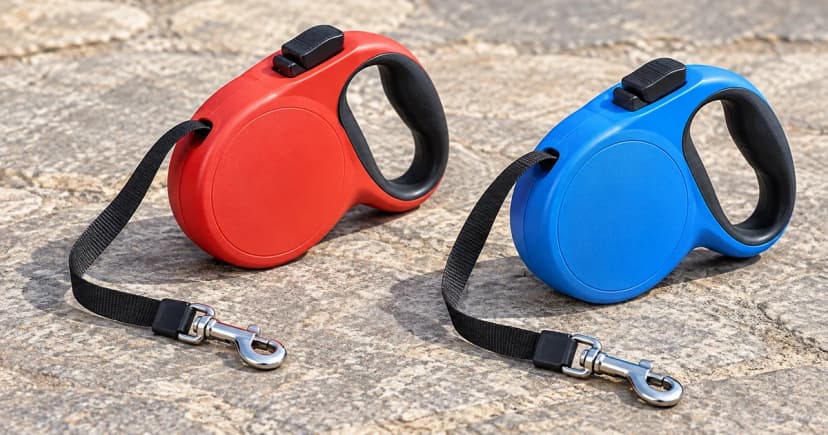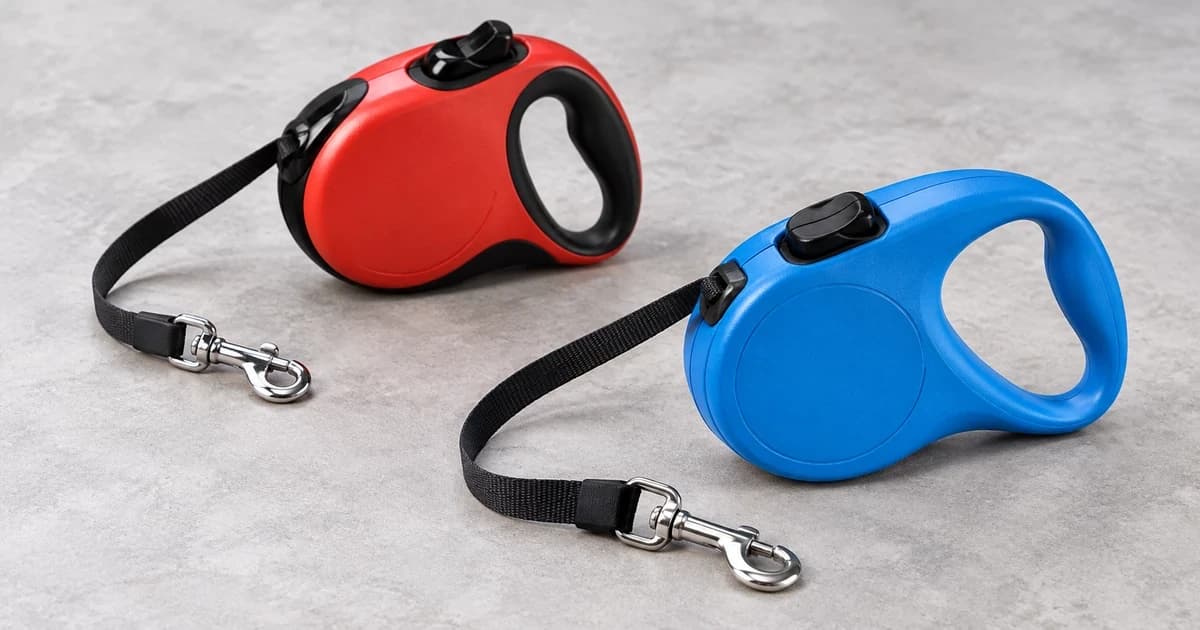
To clean a retractable dog leash, identify the exact model before choosing a method for its case and working line. Dirt removal, accidental wetting and drying need separate decisions. A wipe-clean housing does not establish that the cord, tape or mechanism can be washed.
The two manufacturer examples below give different instructions. Use the matching directions for your equipment; if the model or permitted treatment is unclear, ask its maker before adding water or a cleaner.
Identify the leash before starting care
Keep the model name and complete instructions beside the equipment. Check whether the directions distinguish the outer case from the cord or tape, what they say about accidental wetting and how they require you to control retraction.
Do care away from the dog, after following the model's detachment directions. Both named manuals below require the dog to be under control and the line fully retracted before detachment. Plan a drying location where the extended line will not be accessible to children or pets; do not turn a passing area into a drying route.
For flexi: remove dirt before retraction and dry a wet line extended
Flexi North America's instructions say to remove adherent dirt from the tape or cord and casing before retracting the leash. If the working line gets wet, pull it completely out of the case, engage the brake lock and leave it extended to dry overnight. The drying directions specify a place beyond children's reach.
When the line is dry, retract carefully and slowly. Its dirt-removal instruction supplies no detergent recipe or permission to immerse the case.
Stop using a flexi line with strong abrasion or damage. The maker prohibits opening or repairing the pre-wound spring housing. Exterior cleaning does not resolve damage or mechanism faults.
For Wigzi Dual Doggie: keep the case and cord rules separate
The Wigzi Dual Doggie manufacturer's leaflet specifies a damp cloth for the case only and says not to get the cord wet. This is the named two-dog model's instruction, rather than a cleaning rule for every retractable leash.
If its cord gets wet accidentally, the leaflet says to extend it fully, use the lock to keep it outside the case and dry it where children and pets cannot reach it for 24 hours. Once fully dry, secure the metal hook and retract slowly. The leaflet warns that the extended line can snap back quickly.
Follow that complete sequence. A case-only damp wipe is not permission to wet the cord deliberately, soak the housing or copy another brand's cleaning mixture. The same leaflet directs storage out of reach of children and pets.
Finish drying before putting the line back inside
Keep the corresponding drying directions with the model record. Flexi's overnight wording and Wigzi's 24-hour wording are not interchangeable promises that every wet line will be ready at the same time. Both instructions make dryness part of the retraction decision.
Do not add a hair dryer, a chemical treatment or an improvised casing-opening step to shorten the process.
AKC explains the mechanism distinction: a brake or lock prevents further line paying out, while retraction requires slack. A lock is not a powered reel for bringing a pulling dog back. This explanation supplies no cleaning permission.
Separate a finished care task from the next walking decision
Before putting the leash away, note any remaining dirt, visible damage, uncertain care permission or control that does not work as described. A clean-looking case does not answer those questions. Keep unresolved equipment out of the next walking setup and contact its maker rather than hiding the question inside the retracted case.
Our retractable-leash setting guide covers the separate decision about the dog, walker and surroundings. The ordinary long-line care guide concerns detachable lines; its washing permissions do not apply to a retractable housing.
When comparing retractable leashes, look for identifiable models and complete case, line and drying instructions. This guide describes published care directions, without establishing sanitation, internal condition, reliable braking or a tested service life.