Clean cat toys by identifying what is inside and attached before choosing a wash method. A fabric shell can contain catnip; a feather can connect to a moving rod; a plastic track can surround a different material. Look for care instructions for the whole assembly, then separate any parts the maker actually allows you to remove.
The useful first decision is what needs wiping, what has an approved washing method and what needs a compatible replacement. Here is how to make that decision without assuming every small cat toy belongs in the same sink or laundry load.
Sort the assemblies before cleaning
Check the packaging, model name and care label. Describe each toy as a collection of parts rather than only “plush” or “plastic.” For example, note a sealed fabric filling, a refill opening, a lure attached to a wand, or an electronic base with a removable feather.
| Part or assembly | What to check | Decision before cleaning |
|---|---|---|
| Sealed catnip-filled fabric | Whether the maker supplies a surface or whole-toy wash method | Fabric composition alone does not establish washing permission. |
| Refillable fabric shell | Designed opening, removable filling and separate shell-care instructions | A refill opening identifies how to load the toy; washing needs its own instruction. |
| Feather or wand attachment | Connector, replacement part and any specified cleaning method | Separate removal or replacement permission from permission to soak the lure. |
| Electronic toy with a moving lure | Model manual, switch position, plastic housing and battery compartment | Use the permitted exterior-care method; do not transfer a plain plastic toy's method to a motorized assembly. |
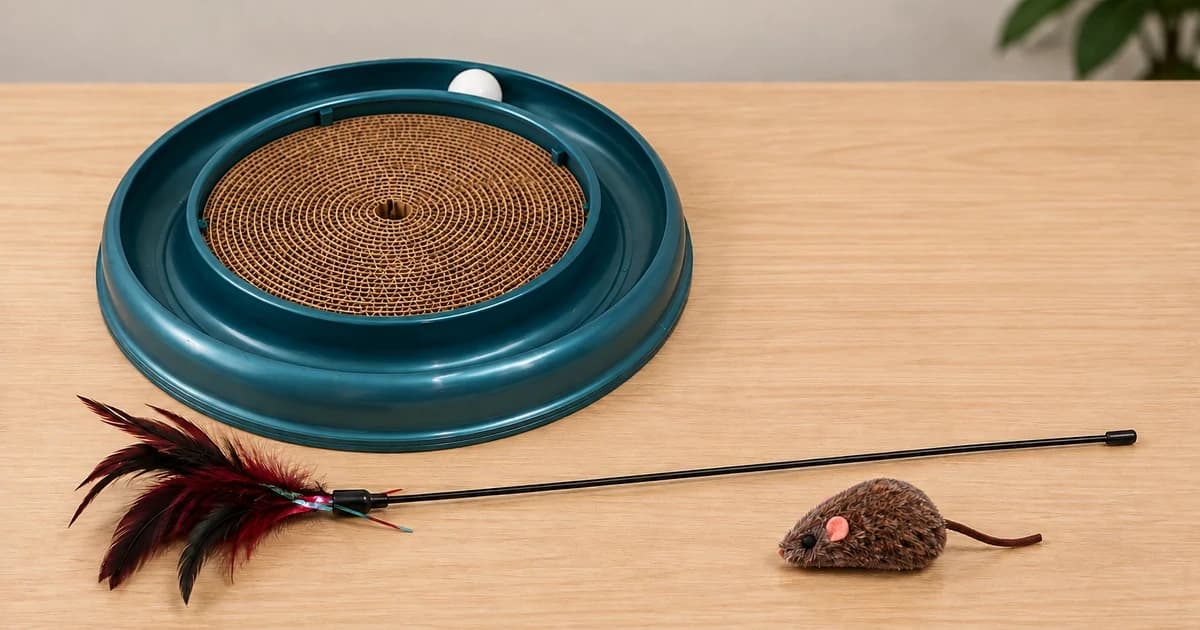
| Mixed plastic, cardboard or fabric toy | Care instructions for the insert and the surrounding parts | Keep the whole assembly out of a wash process until its parts have been identified. |
This is a sorting aid, not a list of universal wash permissions. Keep the toy's model and care instructions beside the record so that an approved method stays attached to the correct item.
Identify the filling in fabric toys
Yeowww!'s FAQ describes its toys as cotton twill completely filled with catnip. That construction differs from an empty cover or ordinary fiber-filled toy. The inspected FAQ does not provide a washing method, so it cannot support a generic machine cycle or soak for those toys.
For a sealed toy, find the maker's care guidance before applying liquid. Do not cut it open to make a washable cover. For a toy with a designed refill compartment, check how the maker says to open and close it, whether the filling comes out, and how the empty shell may be cleaned.
When the maker permits removal, keep the filling and shell-care jobs separate. Record what the instructions say about reassembly and drying before putting the toy back into use. Do not record “washable” merely because the compartment opens.
Check replacement compatibility for feathers and wands
A replacement connector can be more important than the appearance of the feather. SmartyKat's FAQ says its Universal Wand works with many SmartyKat products, while its Loco-Motion Wand is listed for Pure Commotion and Wild Wand. “Many” does not establish compatibility with every product or an unrelated motorized toy.
Identify the toy and the replacement part before pulling on a string or fitting a new accessory. The FAQ's replacement listings do not provide a feather-washing procedure.
For the Catit Senses Mushroom, model 43142, the maker identifies replacement feathers separately as 43143. Its product page and manual describe a particular connector. Do not treat that attachment as instructions for every cat toy.
A documented example: care for the Catit Senses Mushroom
The Mushroom's English manual specifies damp-cloth cleaning for its plastic parts, prohibits immersion and says the toy is not dishwasher safe. The central switch position is OFF. This example concerns that complete electronic design, not an unidentified plastic toy.
- Identify the model and switch it off. Confirm 43142 and move its Sensor/Off/Continuous switch to the middle OFF setting before handling the assembly.
- Use its stated exterior-care method. Wipe the plastic parts with a damp cloth. Keep the assembly out of a sink, bucket or dishwasher; the manual does not authorize immersion.
- If replacing the feather, follow the connector sequence. Hold the base, twist the top cover counterclockwise and lift it off. Gently move the plastic rod toward the center. Hold the rod by its silicone tip and the feather by the string inside it, then gently separate them.
- Fit the named replacement as directed. The manual says to reverse that attachment motion to reconnect the feather. It does not give a soak or machine-wash instruction for the feather accessory.
- Check the battery instructions separately. The model uses three AA batteries with the marked polarity. Remove exhausted batteries and do not mix old and new batteries or different types. Restore the battery compartment according to the assembly instructions.
The manual also calls for supervised play, indoor use on a flat, even surface, and removal of a visibly deteriorated toy from the cat. Cleaning does not resolve a damaged attachment or housing.
Keep a short care record for each assembly
Record the model, filling, removable parts, permitted cleaning method, drying instructions and replacement code. Add the actual task and date: “wiped permitted plastic exterior” or “replaced specified feather,” for example. Those entries describe different work, even when both happen during the same tidy-up.
A photograph can help identify the parts, but does not itself prove a washing method.
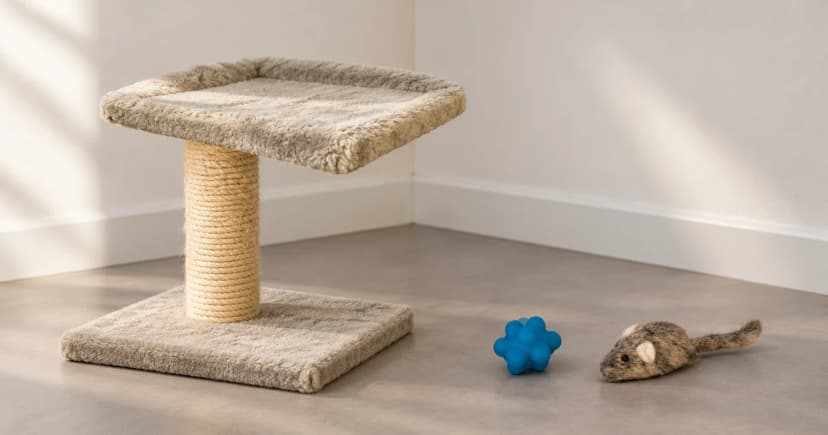
Larger fixed fabric and scratching surfaces need their own component instructions when you inspect cat furniture.
No universal cleaning interval, disinfection result or hands-on product test is claimed here. The editorial policy explains the source-based process.